Posts

Showing posts with the label love

WILDERNESS TRACKS & SIGNS COURSE

Image
  Learn more at https://abt-edu.com Contact us at Info@africanbushtraining.com DURATION: 7 Days Full-time Ever wondered what it was like before technology? When you had to follow an animal on foot to understand its habits and behaviour, if your answer is yes then this course is for you!!! Learning to track is a sacred art. It gives you the ability to merge with the wilderness and become one with nature... The course has been developed in partnership with renowned tracking specialists and experts, to provide students with an overview of animal tracks and tracking in remote wilderness areas. The course will give you a comprehensive understanding of the traditional skills of tracking animals, in their natural environment. During the course, learners will develop a keen awareness for all tracks and signs as well as following and finding animals in the bushveld. INCLUDED: Meals, Accommodation, Study Material, Shirt, Cap & Certificate STUDENT FEE: R 8 700:00

2-YEAR EXCLUSIVE BUSH CAREER PROGRAM

Image
  Learn more at https://abt-edu.com 2 Years = 20 Certificates + 1 Year Work Placement   This is the ultimate BUSH CAREER kick-starter...With no prior knowledge or experience needed, this 2-YEAR EXCLUSIVE BUSH CAREER PROGRAM could help you take the biggest step in your life towards a successful career in the African bush... There are few global sectors as large, lucrative or resilient as the Field Guiding, Wildlife and Hospitality industry. An incredibly diverse sector that creates millions of job openings each year, offering career opportunities that are enjoyable, accessible and rewarding in the extreme. Lodges, reserves and operators throughout Southern Africa and Africa are constantly on the lookout for talented individuals and leadership figures to add to their ranks. More importantly, the wildlife and hospitality sector is known for its commitment to promoting from within, investing heavily in the career development of employees at all levels. Even from an entry-l...

The purple-crested turaco (Tauraco porphyreolophus) is a species of bird in the family Musophagidae.

Image
  Learn more at https:abt-edu.com The purple-crested turaco (Tauraco porphyreolophus) is a species of bird in the family Musophagidae. It clambers acrobatically through riverine woodland and savanna thickets. In flight it explodes from the canopy with distinctive deep red panels in the wings. It produces a distinctive croaking “khoh-khoh-khoh-khoh….” that gets progressively louder before suddenly stopping. The Purple-crested Turaco is a fruit-eater. Its glossy and colourful plumage makes this bird very attractive for humans. Turacos have been hunted in the past for their beautiful red flight feathers used as adornments by African people. Today, this species has adapted to suburban life, especially in Durban. The Purple-crested Turaco is frugivorous and feeds on fruits from numerous plant species. It forages in canopy, picking the fruits by perching at the end of the branches. This bird does not feed on the ground, except in captivity. The small fruits are swallowed whole, whe...

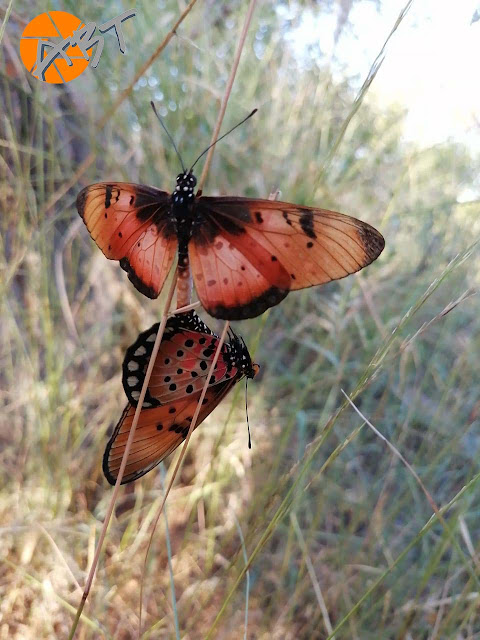
The Natal Acraea (Acraea natalica) is a butterfly of the Nymphalidae family.

Image
  Learn more at https://abt-edu.com ©Estian Kruger Butterflies have a Holo-metabolic lifecycle and belong to the Order Lepidoptera. They undergo complete physical changes, i.e. insects undergo four developmetal stages, the embryo, larva, pupa, and adult. This is a meduim sized butterfly with a wingspan of about 59mm. Males are pinkish red , females are brownish red. Their wings are spotted with black and with black bases. Adults are on wing year round, with a strong peak in late summer in southern Africa. v   What is the difference between a butterfly and a moth ?   Butterflies                                                                   ...

Argemone ochroleuca (Mexican Prickly Poppy) an invasive plant.

Image
  Learn more at www.abt-edu.com Invasive alien vegetation refers to plants brought to South Africa from other countries, both intentionally and unintentionally, that cause human, environmental or economic harm. Without natural enemies, these plants reproduce and spread rapidly, taking valuable water and space from our indigenous plants. This plant is native to Mexico and has also been introduced to many temperate and tropical regions of the world where is considered as an invasive weed. Commonly found as a weed of roadsides, mining dumps, rabbit warrens, recently cultivated paddocks, waste places, and over grazed pastures. It often occurs as dense stands in sandy stream beds and alluvial flats associated with intermittent inland streams. An extremely hardy pioneer plant, it is tolerant of drought and poor soil, often being the only cover on new road cuttings or verges. It has bright yellow latex. It is poisonous to grazing animals, and it is rarely eaten, but it has been used m...

ANTI-POACHING CAREER EXPERIENCE

Image
  Learn more at https://abt-edu.com 7 Days full-time Get a taste of what it takes to be at the front lines of wildlife conservation in Africa. During this action-packed 7 days students will be taken through the realities of wilderness protection and shown in true hands-on fashion what is being done to keep wildlife safe from poaching and illegal animal harvesting... STUDENT FEE: R 8 700:00 INCLUDED: Meals, Accommodation, Study Material, Shirt, Cap & Certificate COURSE CONTENTS: Anti-poaching Methods & Techniques, Patrols, Ambush, Survival & Bush Craft, Dealing with Dangerous Animals, and much more... Contact us at info@africanbushtraining.com

A Burchell's zebra ( Equus quagga burchellii), a subspecies of plains zebra.

Image
  Learn more at https://abt-edu.com AVERAGE LIFE SPAN IN THE WILD: 25 years No animal has a more distinctive coat than the zebra. Each animal's stripes are as unique as fingerprints—no two are exactly alike—although each of the three species has its own general pattern. Zebras are social animals that spend time in herds. They graze together, primarily on grass, and even groom one another. Plains zebras are the most common species. They live in small family groups consisting of a male (stallion), several females, and their young. These units may combine with others to form awe-inspiring herds thousands of head strong, but family members will remain close within the herd. Zebras must be constantly wary of lions and hyenas. A herd has many eyes alert to danger. If an animal is attacked, its family will come to its defense, circling the wounded zebra and attempting to drive off predators. Plains Zebra are much less numerous than they once were, because of human activities suc...

The lowland nyala or simply nyala (Tragelaphus angasii) #WildWednesday

Image
Learn more at https://abt-edu.com The nyala is mainly active in the early morning and the late afternoon. It generally browses during the day and during the night in the rainy season. As a herbivore, the nyala feeds upon foliage, fruits and grasses, with sufficient fresh water. As a shy animal, it prefers water holes rather than open spaces. The nyala does not show signs of territoriality, and individuals areas can overlap each others. They are very cautious creatures. Old males live alone, but single sex or mixed family groups of up to 10 individuals can be found. These inhabit thickets within dense and dry savanna woodlands. The main predators of the nyala are lion, leopard and, while baboons and raptorial birds hunt for the juveniles. Mating peaks during spring and autumn. Males and females are sexually mature at 18 and 11–12 months of age respectively, though they are socially immature until five years old. After a gestational period of seven months, a single calf is born. Cont...

Jumping spiders are a group of spiders that constitute the family Salticidae.#CritterThursday

Image
Learn more at https://abt-edu.com As of 2019, this family contained over 600 described genera and over 6000 described species,making it the largest family of spiders at 13% of all species. –Wikipedia Jumping spiders have some of the best vision among arthropods and use it in courtship, hunting, and navigation. Although they normally move unobtrusively and fairly slowly, most species are capable of very agile jumps, notably when hunting, but sometimes in response to sudden threats or crossing long gaps. Both their book lungs and tracheal system are well-developed, and they use both systems (bimodal breathing). Jumping spiders are generally recognized by their eye pattern. All jumping spiders have four pairs of eyes, with the anterior median pair being particularly large. Although jumping spiders are generally carnivorous, many species have been known to include nectar in their diets. Jumping spiders conduct complex, visual courtship displays using both movements and physical bodily ...

The giant jewel beetle is a favourite protein-rich insect delicacy in many rural communities of Limpopo Province.#ConservationTuesday

Image
Learn more at https://abt-edu.com Their lazy nature makes them an easy catch, as they spend most of their time clinging to thorny bush trees. Adults feed on foliage (especially of Vachellia, Senegalia trees and Dichrostachys species) as well as nectar. Larvae are free-living root-feeders. Sternocera orissa displays sexual reproduction. Adult females are generally bigger than their male counterparts. Females lay eggs (during mid-December to late January) in bark crevices, and larvae tunnel into wood and plant stems. At times, eggs are laid into the soils or dropped onto the ground. Females have a single reproductive cycle annually. Adults are relatively short-lived, whereas the immature stages can take as long as 35 years to complete their development. Giant jewel beetles tend to be social and often semi-gregarious, occurring in small communities. No direct predators are known for Sternocera orissa. However, resource competition (i.e. for nectar and pollen) is common; since Vachellia ...

The African clawed frog (Xenopus laevis, also known as the xenopus, African clawed toad, African claw-toed frog or the platanna)

Image
Learn more at https://abt-edu.com These “flat frogs” live in natural water-bodies, but you might see them in your garden pond. They also don’t mind living in the local sewerage works. At the end of the rainy season, they bury themselves under wet mud, where they hibernate until the next rains. Common platannas feed in the water on any living creatures they can overpower. Their prey includes frogs and tadpoles (including their own kind), insects and other invertebrates (mosquito larvae are consumed by young frogs), small fish, young birds and mice that fall into the water. They even feed on carrion in the water. In the 1930s, it was discovered that a female common platanna would spawn if injected with the urine of a pregnant woman (the hormone chorionic gonadotropin being the active ingredient). In the 1940s and ‘50s, this was the only available pregnancy test and many hospitals around the world kept and bred platannas so that they could perform such tests. Contact us at info@africa...

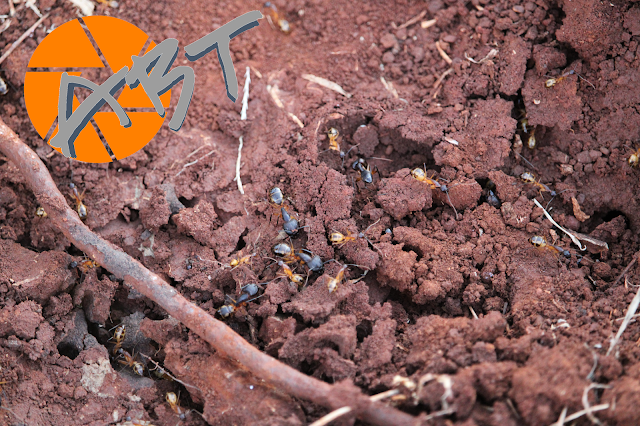
Investigating Sugar Ant's (Camponotus) #CritterThursday

Image
Learn more at https://abt-edu.com This species vary greatly in shape, size and colour. They range from 2.5 to 15 mm, and are some of the most often seen ants due to their size and often bright in colouring. They often nest in a variety of sites ranging from holes in wood to the roots of plants, twigs of trees and shrubs, between rocks or in the soil. They can also be seen during the day however, they are most active at night. They are unable to sting, but they do possess strong mandibles which can bite. In self-defense these ants are also able to spray acid from their abdomens to deter predators. They feed on dead and lives insects, household waste and are attracted by sweet food. They rarely enter houses and the ant’s life cycle passes through egg, larva, pupa and adult phases. Castes: Ant colonies consist of various castes which perform different functions in the colony. Reproductives - The reproductive males and females have the task of reproducing. Depending on the ...

ENVIRONMENTAL EDUCATION COURSE #CareerSaturday

Image
Learn more at https://abt-edu.com DURATION: 11 Days Full-time This course will teach you the principles of Environmental Education in practice and equip you with all the necessary tools, knowledge and skills you will need to confidently apply your Environmental Education initiatives in your own environment and make a ‘real’ difference in conservation and the preservation of our most valuable natural resources… On completion of the course you will be able to design, plan, implement, facilitate and evaluate on a variety of environmental learning programmes. COURSE CONTENTS: Introduction to Environmental Education, Teaching Methodologies and Techniques, Changing Attitudes and Behaviour, Planning - Designing - Facilitating - Evaluating EE Programs, Conducting Training Interventions, And much more... STUDENT FEE: R 14 700:00 INCLUDED: Meals, Accommodation, Study Material & Uniform Contribution Contact us at info@africanbushtraining.com

Humorous Elephant STEW FOR A CROWD #ABTRecipeFriday

Image
Learn at https://abt-edu.com INGREDIENTS 1 Elephant 2 Rabbits (optional) Salt and Pepper DIRECTIONS Cut elephant into bite size pieces. This should take about 2 months. Add enough brown gravy to cover. Cook over hot fire for 3 weeks. This will serve 3800 people. If more are expected, the two rabbits may be added, but do this only if necessary as most people do not like to find hare in their stew. HOWEVER AND EVEN BETTER, feast on the magnificance of these animals ALIVE and enjoy the wholesome feeling of being a healthy ambassador for wildlife conservation in Africa . Happy Friday  - and remember, keep your stomach's full good food and your minds busy with wildlife!

Fascinating Facts About Stick Insects #CritterThursday

Image
Learn more at https://abt-edu.com Stick Insects Can Regenerate Limbs. Stick Insects Can Reproduce Without Males. Stick Insects Even Act Like Sticks. Their Eggs Resemble Seeds. Nymphs Eat Their Molted Skin. Stick Insects Aren't Defenseless. Their Eggs May Attract Ants. Not All Stick Insects Stay Brown. Stick Insects Can Play Dead. Stick Insects Are the World's Longest Insect. AVERAGE LIFE SPAN IN THE WILD: Up to 3 years. Mainly nocturnal creatures, they spend much of their day motionless, hidden under plants. Contact us at info@africanbushtraining.com

Humans are the Sable antelope’s only real threat. The giant sable antelope subspecies is listed as endangered because of trophy hunting and habitat loss.#ConservationTuesday

Image
Learn more at https://abt-edu.com The Sable is a barrel-chested rotund antelope with a long face, short neck, and dark mane. They have impressive ringed horns rising vertically to curve backwards. When arching their necks and standing with their heads high and tails outstretched, these antelope look like horses. In this position they appear larger than they actually are. The males keep this position even when galloping, the arched neck being important to manifest dominance. Sables change color as they grow older. Calves are born with a reddish-brown color and virtually no markings. White markings appear as they grow older and their coat becomes darker, and the older the animal is, the more striking is the contrast. Sable antelopes are herbivorous. They are specialized browsing animals and feed upon foliage, leaves, medium length grass, and herbs, especially those growing on termite mounds. The leaves of trees provide 90% of their diet. Ask any lowveld old-timer and they will tell y...

The rainbow skink is one of many reptiles that can be found living in the Garden.#ReptileMonday

Image
Learn more at https://abt-edu.com The rainbow skink is a large, beautifully coloured skink with varied colouration, depending on sex and age. Juveniles and sub-adult males are dark olive-brown to black above, with three distinctive bluish-white stripes that are a brilliant electric-blue on the tail. Adult females retain their colouring, although the stripes may become subdivided and faint.   Adult males become buffy-olive to olive-brown above, each scale bearing a pearly white spot. The pale stripes become indistinct. The tail changes from yellowish to orange brown and the belly is creamy white.The rainbow skink is a rock dweller and can often be seen running around on exposed granite domes and other rock faces, feeding on insects.   During summer the female lays six to ten eggs which hatch after about 62 days. Northern populations of rainbow skink could lay two clutches of eggs per season. They are sometimes referred to as ‘margaritifera’ meaning ‘pearl containing’ be...

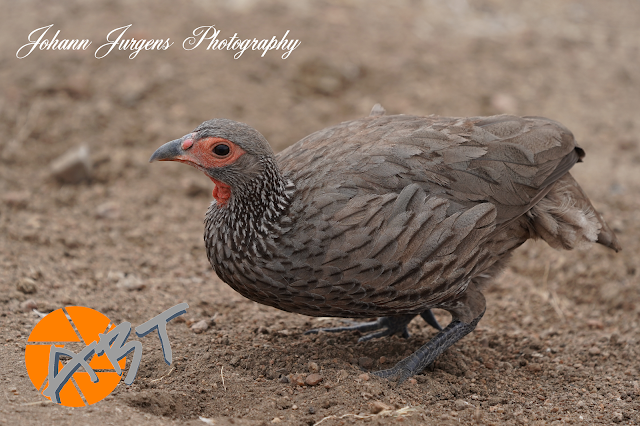
Swainson's Spurfowl #BirdingSunday

Image
Learn more at https://abt-edu.com Swainson's spurfowl or Swainson's francolin (Pternistis swainsonii) is a species of bird in the family Phasianidae.  It is found in Angola, Botswana, Lesotho, Malawi, Mozambique, Namibia, South Africa, Swaziland, Zambia, and Zimbabwe. In the Shona language in Zimbabwe, this bird is called the chikwari and is considered a delicacy by outdoor and hunting enthusiasts. Swainson's spurfowl was named after William Swainson, an English ornithologist. Diet: Seeds, berries, insects Reproduction: Francolins split into pairs during the breeding season. Most species, if not all, vigorously defend the area around their nest site against others of the same species. Nests are found on the ground, usually under cover and are shallow scrapes with a greater or lesser amount of plant material used as lining. The known clutch size ranges from 2-12 eggs, with the average believed to be between 4-6 eggs. Social Structure: Swainson's francolins are commonly f...

Recipe to become a better tracker #ABTRecipeFriday

Image
Learn more at https://abt-edu.com Learn to feel the heartbeat of your environment. Find somewhere to sit, then let your mind go blank. Get good at feeling, seeing, listening, tasting and smelling. We think vision is our strongest sense, but smell is our most primeval – it can deliver more information than any other. When you’ve honed your senses, they will combine into one super-sense: intuition. Getting to know where the food, water and barriers are will help you to find good tracks. Imagine flying above the landscape, gaining a bird’s eye view of the animal you’re tracking. Think as the animal is thinking. If I’m in dangerous-animal country I try to think ‘smarter’ than the animal. Find the shadows and you’ll find the leopard (they rely on them for camouflage). Find the prey and you’ll find the predator. Also, look for ‘track traps’ – soft or sandy patches, into which animals are funnelled; try trails – most animals opt for the path of least resistance. Keep your eyes peeled for colo...

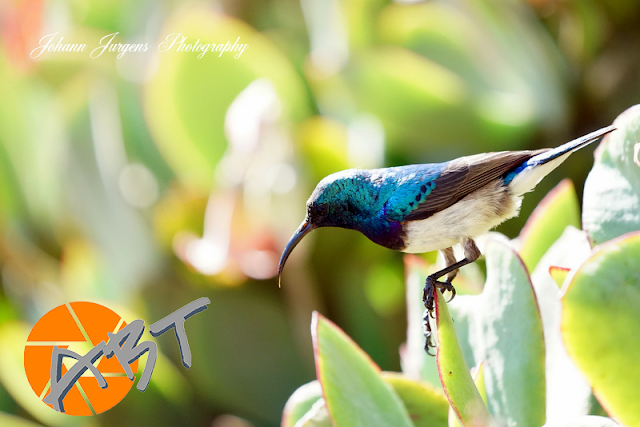
The white-bellied sunbird (Cinnyris talatala), also known as the white-breasted sunbird #BirdingSunday

Image
The  sunbirds  are placed into the taxonomic family, Nectariniidae, which was so  named  because most of these birds feed on (you guessed it), nectar. Their thin downward-curving bills and brush-tipped tubular tongues are adapted specially for nectivory. Distribution and habitat  Occurs from Angola to southern Tanzania south to southern Africa, where it is common to locally abundant across northern Namibia, northern and south-eastern Botswana, Zimbabwe, Mozambique, Swaziland and north-eastern South Africa. It generally prefers semi-arid savanna woodland. Brood parasites  It has been recorded as host of the Klaas's cuckoo. Food  It mainly eats nectar supplemented with arthropods, often joining mixed-species foraging flocks in the day, along with other sunbirds at large sources of nectar. In the late afternoon it regularly hawks insects aerially and gleans invertebrates from foliage. Breeding  The nest (see image) is built solely by the female in ab...