Posts

Showing posts with the label wilderness

2-YEAR EXCLUSIVE BUSH CAREER PROGRAM

Image
  Learn more at https://abt-edu.com 2 Years = 20 Certificates + 1 Year Work Placement   This is the ultimate BUSH CAREER kick-starter...With no prior knowledge or experience needed, this 2-YEAR EXCLUSIVE BUSH CAREER PROGRAM could help you take the biggest step in your life towards a successful career in the African bush... There are few global sectors as large, lucrative or resilient as the Field Guiding, Wildlife and Hospitality industry. An incredibly diverse sector that creates millions of job openings each year, offering career opportunities that are enjoyable, accessible and rewarding in the extreme. Lodges, reserves and operators throughout Southern Africa and Africa are constantly on the lookout for talented individuals and leadership figures to add to their ranks. More importantly, the wildlife and hospitality sector is known for its commitment to promoting from within, investing heavily in the career development of employees at all levels. Even from an entry-l...

Argemone ochroleuca (Mexican Prickly Poppy) an invasive plant.

Image
  Learn more at www.abt-edu.com Invasive alien vegetation refers to plants brought to South Africa from other countries, both intentionally and unintentionally, that cause human, environmental or economic harm. Without natural enemies, these plants reproduce and spread rapidly, taking valuable water and space from our indigenous plants. This plant is native to Mexico and has also been introduced to many temperate and tropical regions of the world where is considered as an invasive weed. Commonly found as a weed of roadsides, mining dumps, rabbit warrens, recently cultivated paddocks, waste places, and over grazed pastures. It often occurs as dense stands in sandy stream beds and alluvial flats associated with intermittent inland streams. An extremely hardy pioneer plant, it is tolerant of drought and poor soil, often being the only cover on new road cuttings or verges. It has bright yellow latex. It is poisonous to grazing animals, and it is rarely eaten, but it has been used m...

ANTI-POACHING CAREER EXPERIENCE

Image
  Learn more at https://abt-edu.com 7 Days full-time Get a taste of what it takes to be at the front lines of wildlife conservation in Africa. During this action-packed 7 days students will be taken through the realities of wilderness protection and shown in true hands-on fashion what is being done to keep wildlife safe from poaching and illegal animal harvesting... STUDENT FEE: R 8 700:00 INCLUDED: Meals, Accommodation, Study Material, Shirt, Cap & Certificate COURSE CONTENTS: Anti-poaching Methods & Techniques, Patrols, Ambush, Survival & Bush Craft, Dealing with Dangerous Animals, and much more... Contact us at info@africanbushtraining.com

The Puff adder is responsible for causing the most snakebite fatalities in Africa. - Wikipedia

Image
Learn more at https://abt-edu.com They are short stocky snakes that occur in a variety of colours, from sandy brown, grey, bright yellow & black in some parts of its range. As South Africa’s most widely-spread, venomous snake, the Puff Adder occurs in a large range of habitat, from coastal bush, grassland, fynbos habitat. The Puff Adder along withe the Mozambique Spitting Cobra account for the majority of serious snake bites South Africa. The Puff Adder is a snake with excellent camouflage, and it prefers to sit and wait for opportunity when it comes to feeding. These snakes may remain in an ambush position for several weeks, waiting for a potential meal to pass by. They have a powerful cytotoxic venom which can lead to extreme pain, severe swelling, and blistering of the skin. Anti-venom: Polyvalent anti-venom is used in the effective treatment of bites. The name ‘puff adder’ stems from the snake’s habit of inflating itself and hissing when threatened. The noise produced is a ...

The giant jewel beetle is a favourite protein-rich insect delicacy in many rural communities of Limpopo Province.#ConservationTuesday

Image
Learn more at https://abt-edu.com Their lazy nature makes them an easy catch, as they spend most of their time clinging to thorny bush trees. Adults feed on foliage (especially of Vachellia, Senegalia trees and Dichrostachys species) as well as nectar. Larvae are free-living root-feeders. Sternocera orissa displays sexual reproduction. Adult females are generally bigger than their male counterparts. Females lay eggs (during mid-December to late January) in bark crevices, and larvae tunnel into wood and plant stems. At times, eggs are laid into the soils or dropped onto the ground. Females have a single reproductive cycle annually. Adults are relatively short-lived, whereas the immature stages can take as long as 35 years to complete their development. Giant jewel beetles tend to be social and often semi-gregarious, occurring in small communities. No direct predators are known for Sternocera orissa. However, resource competition (i.e. for nectar and pollen) is common; since Vachellia ...

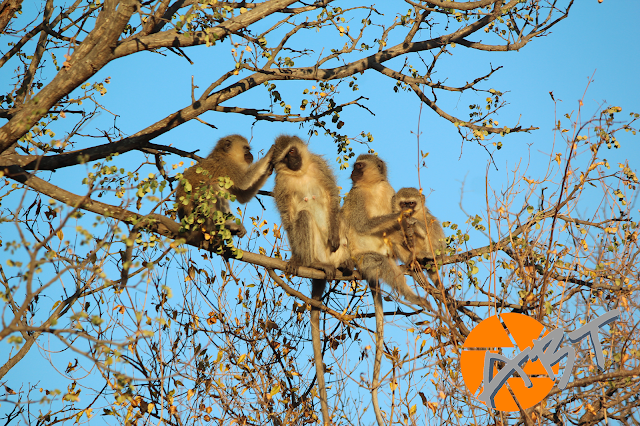
Vervet Monkeys (Cercopithecus aethiops)#ConservationTuesday

Image
Learn more at https://abt-edu.com ©Ludique Swart Vervets living near areas inhabited by people can become pests, stealing food and other items and raiding crops. This leads to a heavy annual slaughter by poison, traps, and guns. In recent years, vervet monkeys have been considered a valuable research animal, making live trapping prevalent as well. The have a life span up to 30 years. The males are slightly larger than the females and are easily recognized by their turquoise blue scrota. They form complex but stable social groups (also called troops) of 10 to 50 individuals mainly consist of adult females and their immature offspring. Males move freely in and out of these groups. Within the troop, each adult female is the center of a small family network. Females who have reached puberty generally stay in the troop. Females typically have few mates in their lifetime, whereas some males have numerous mates. Breeding is seasonal. After a gestation period of approximately 140 days, a s...

Fact: Geckos' eyes are 350 times more sensitive to light than human eyes. #ReptileMonday

Image
Here are a few Gecko facts you need to know: Most species of gecko don’t have eyelids, so they lick their eyes to clean them. Geckos range in life span depending on the species, but many will live around five years in the wild. Geckos use their tails to store fat and nutrients for lean times. Most geckos can detach their tails — and regrow them later if necessary. Geckos are able to produce various sounds for communication, including barks, chirps and clicks. Geckos' amazing toes help them stick to any surface except Teflon. Geckos typically eat fruits, insects and flower nectar. Geckos give birth by laying eggs. The female can be pregnant with her eggs for years before she lays them. For example, the harlequin geckos' pregnancy lasts three to four years. When the eggs are ready, a gecko lays her eggs in leaves and bark. These lizards have sticky feet that allows them to climb up slick surfaces. Their toes have microscopic hairs called setae that give them this sticky ability. ...

Let's go Camping in The Kruger National Park #WildWednesday

Image
Learn more at https://abt-edu.com Tired of the hustle and bustle of the city? Get away for a day or two and experience Africa's  wildlife like never before ... Camping Trips often include watching the sunset , sitting by the fire and unwinding visits with friends or family. Here are a few simple tips to follow next time your in the Kruger : Take a camera. Always keep your permit in the car with you . Be careful of monkeys and baboons . Get up early and stay out late. Drive the dirt roads for less traffic. Look out for upset birds and monkeys. Dress for heat, even in winter. NEVER STOP LOOKING . Get two-way radios if with friends ! Walk around the camp perimeter at night. Be respectful of the animals. Have a cracking day ! Share , Share , Share....