Posts

Showing posts with the label Safari

WILDERNESS TRACKS & SIGNS COURSE

Image
  Learn more at https://abt-edu.com Contact us at Info@africanbushtraining.com DURATION: 7 Days Full-time Ever wondered what it was like before technology? When you had to follow an animal on foot to understand its habits and behaviour, if your answer is yes then this course is for you!!! Learning to track is a sacred art. It gives you the ability to merge with the wilderness and become one with nature... The course has been developed in partnership with renowned tracking specialists and experts, to provide students with an overview of animal tracks and tracking in remote wilderness areas. The course will give you a comprehensive understanding of the traditional skills of tracking animals, in their natural environment. During the course, learners will develop a keen awareness for all tracks and signs as well as following and finding animals in the bushveld. INCLUDED: Meals, Accommodation, Study Material, Shirt, Cap & Certificate STUDENT FEE: R 8 700:00

The lowland nyala or simply nyala (Tragelaphus angasii) #WildWednesday

Image
Learn more at https://abt-edu.com The nyala is mainly active in the early morning and the late afternoon. It generally browses during the day and during the night in the rainy season. As a herbivore, the nyala feeds upon foliage, fruits and grasses, with sufficient fresh water. As a shy animal, it prefers water holes rather than open spaces. The nyala does not show signs of territoriality, and individuals areas can overlap each others. They are very cautious creatures. Old males live alone, but single sex or mixed family groups of up to 10 individuals can be found. These inhabit thickets within dense and dry savanna woodlands. The main predators of the nyala are lion, leopard and, while baboons and raptorial birds hunt for the juveniles. Mating peaks during spring and autumn. Males and females are sexually mature at 18 and 11–12 months of age respectively, though they are socially immature until five years old. After a gestational period of seven months, a single calf is born. Cont...

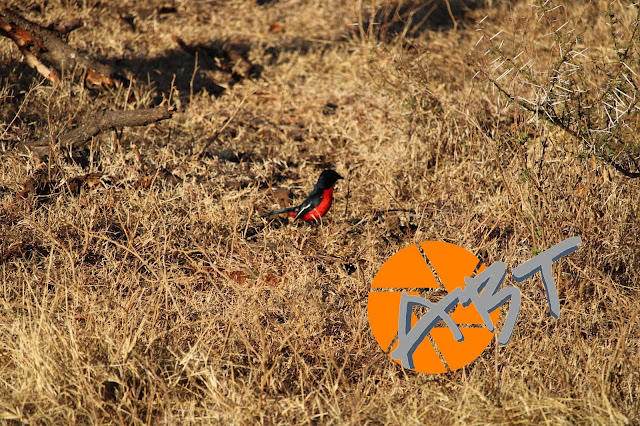
The crimson-breasted shrike is non-migratory. #BirdingSunday

Image
Learn more at https://abt-edu.com It mainly eats insects, gleaning prey from the leaves and trunks of trees, often flying to the ground to feed on ants or some fallen fruit. The following food items have been recorded in its diet: Invertebrates Formicidae (ants) Coleoptera (beetles) Lepidoptera (caterpillars) Fruit Both sexes construct the nest, which is a tidy cup made almost entirely of  Acacia  tree bark, collected from trunks and branches about 50-90 metres from the nesting site and lined with grass and rootlets. It is usually bound with spider web to a fork in the main stem of a plant, or occasionally onto a horizontal branch. Most of the construction work is done in the early morning, and it is usually complete after about 4-6 days. Egg-laying season is from August-january, peaking from October-November. It lays 2-3 eggs, which are incubated by both sexes for about 15-17 days.The chicks are fed and brooded by both parents, leaving the est at about 18-20 ...

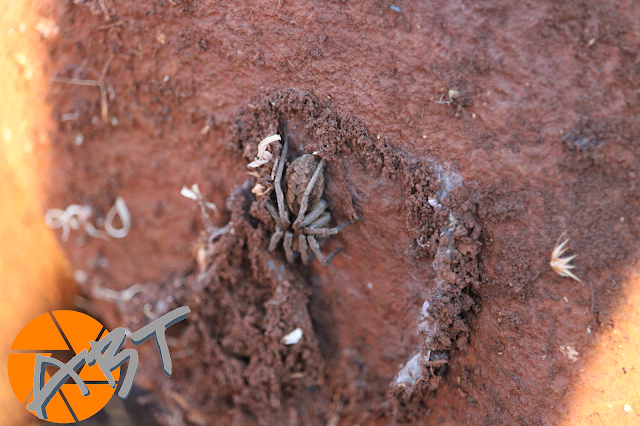
Jumping spiders are a group of spiders that constitute the family Salticidae.#CritterThursday

Image
Learn more at https://abt-edu.com As of 2019, this family contained over 600 described genera and over 6000 described species,making it the largest family of spiders at 13% of all species. –Wikipedia Jumping spiders have some of the best vision among arthropods and use it in courtship, hunting, and navigation. Although they normally move unobtrusively and fairly slowly, most species are capable of very agile jumps, notably when hunting, but sometimes in response to sudden threats or crossing long gaps. Both their book lungs and tracheal system are well-developed, and they use both systems (bimodal breathing). Jumping spiders are generally recognized by their eye pattern. All jumping spiders have four pairs of eyes, with the anterior median pair being particularly large. Although jumping spiders are generally carnivorous, many species have been known to include nectar in their diets. Jumping spiders conduct complex, visual courtship displays using both movements and physical bodily ...

The giant jewel beetle is a favourite protein-rich insect delicacy in many rural communities of Limpopo Province.#ConservationTuesday

Image
Learn more at https://abt-edu.com Their lazy nature makes them an easy catch, as they spend most of their time clinging to thorny bush trees. Adults feed on foliage (especially of Vachellia, Senegalia trees and Dichrostachys species) as well as nectar. Larvae are free-living root-feeders. Sternocera orissa displays sexual reproduction. Adult females are generally bigger than their male counterparts. Females lay eggs (during mid-December to late January) in bark crevices, and larvae tunnel into wood and plant stems. At times, eggs are laid into the soils or dropped onto the ground. Females have a single reproductive cycle annually. Adults are relatively short-lived, whereas the immature stages can take as long as 35 years to complete their development. Giant jewel beetles tend to be social and often semi-gregarious, occurring in small communities. No direct predators are known for Sternocera orissa. However, resource competition (i.e. for nectar and pollen) is common; since Vachellia ...

The African clawed frog (Xenopus laevis, also known as the xenopus, African clawed toad, African claw-toed frog or the platanna)

Image
Learn more at https://abt-edu.com These “flat frogs” live in natural water-bodies, but you might see them in your garden pond. They also don’t mind living in the local sewerage works. At the end of the rainy season, they bury themselves under wet mud, where they hibernate until the next rains. Common platannas feed in the water on any living creatures they can overpower. Their prey includes frogs and tadpoles (including their own kind), insects and other invertebrates (mosquito larvae are consumed by young frogs), small fish, young birds and mice that fall into the water. They even feed on carrion in the water. In the 1930s, it was discovered that a female common platanna would spawn if injected with the urine of a pregnant woman (the hormone chorionic gonadotropin being the active ingredient). In the 1940s and ‘50s, this was the only available pregnancy test and many hospitals around the world kept and bred platannas so that they could perform such tests. Contact us at info@africa...

The African dusky flycatcher, dusky-brown flycatcher or dusky alseonax (Muscicapa adusta)#BirdingSunday

Image
Learn more at https://abt-edu.com The African dusky flycatcher is 13 cm long and weighs around 11 g. Its upperparts are plain brown, with the only facial marking being an indistinct narrow eye-ring. The chin is plain pale grey, and the rest of the underparts are grey-brown with indistinct streaks. The short, straight, laterally flattened bill is black, the legs and feet are grey, and the eyes are brown. The sexes are similar, but the juvenile is spotted with buff above, and is whitish spotted with brown below. The African dusky flycatcher has soft, high-pitched "tzeeet" and tsirit calls. The African dusky flycatcher builds a cup-shaped nest in a tree cavity a few metres above the ground, and lays two or three green eggs. The hole in the tree is normally reused in the next breeding season. This species is monogamous, mating for life. The African dusky flycatcher is usually seen singly or in pairs. It forages from an open perch for insects typically taking its prey in a s...

Opuntia, commonly called prickly pear. #BotanyFriday

Image
Learn more at https://abt-edu.com They are a succulent shrub or small tree with paddle-shaped stems armed with spines. This plant is leafless. It is an invasive alien from Central America. The fruits are plum-shaped, spiny and edible. Habitat of the Sweet Prickly Pear  - It grows across South Africa, having spread over the centuries after been imported from Mexico. The Prickly Pear is one of the most used alien plants in South Africa, so much so that many now believe the plant is a South African species. The prickly pear is used to build stockades for domestic animals – and is used as feed for the animals. Many farmhouses in South Africa are enclosed in a Prickly Pear fence. The fruit is used today to make jams and various drinks. In many areas, such as wilderness areas the plant is seen as a pest and steps are taken to eradicate it. Contact us at info@africanbushtraining.com

Spiders are arachnids, not insects. Other members of the arachnid family include scorpions, mites, ticks and harvestmen.#CritterThursday

Image
Learn more at https://abt-edu.com The greatest threat to spiders is habitat loss, although some spider species are also threatened by the pet trade. Most species are carnivorous, either trapping flies and other insects in their webs, or hunting them down. They can’t swallow their food as is, though—spiders inject their prey with digestive fluids, then suck out the liquefied remains. Though not all spiders build webs, every species produces silk. They use the strong, flexible protein fiber for many different purposes: to climb (think Spider Man), to tether themselves for safety in case of a fall, to create egg sacs, to wrap up prey, to make nests, and more. Most spider species have eight eyes, though some have six. Despite all of those eyes, though, many don’t see very well. A notable exception is the jumping spider, which can see more colors than humans can. Using filters that sit in front of cells in their eyes, the day-hunting jumping spider can see in the red spectrum, green s...

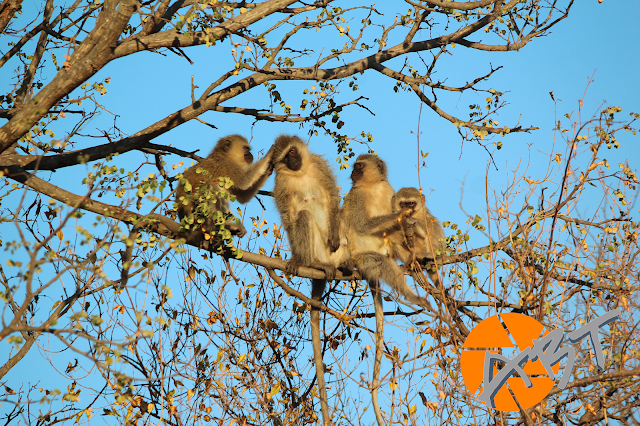
Vervet Monkeys (Cercopithecus aethiops)#ConservationTuesday

Image
Learn more at https://abt-edu.com ©Ludique Swart Vervets living near areas inhabited by people can become pests, stealing food and other items and raiding crops. This leads to a heavy annual slaughter by poison, traps, and guns. In recent years, vervet monkeys have been considered a valuable research animal, making live trapping prevalent as well. The have a life span up to 30 years. The males are slightly larger than the females and are easily recognized by their turquoise blue scrota. They form complex but stable social groups (also called troops) of 10 to 50 individuals mainly consist of adult females and their immature offspring. Males move freely in and out of these groups. Within the troop, each adult female is the center of a small family network. Females who have reached puberty generally stay in the troop. Females typically have few mates in their lifetime, whereas some males have numerous mates. Breeding is seasonal. After a gestation period of approximately 140 days, a s...

Peters’ Thread Snake (Leptotyphlops scutifrons) #ReptileMonday

Image
Learn more at https://abt-edu.com A very small snake that averages around 20 cm in length. The Thread Snakes resemble worms and it can be difficult to distinguish the head from the tail. They are burrowing snakes with a cylindrical body and the eye is minute. They feed on invertebrates, especially termites and their eggs. The Thread Snakes spend most of their lives underground but may come to the surface after heavy rains. They are sometimes found under rocks and logs and old termite mounds.  The Thread Snakes are tricky to tell apart and multiple species occur in Southern Africa. They can also be confused with the venomous Stiletto Snake. Thread Snakes are completely harmless. The Female lays three to six elongated eggs, joined like a string of sausages, in summer. They are eaten by other snakes, birds, small carnivorous mammals (e.g. mongooses) and scorpions. Contact us at info@africanbushtraining.com

The grey go-away-bird, also known as grey lourie, grey loerie, or kwêvoël. #BirdingSunday

Image
Learn more at https://abt-edu.com It is found in Southern Africa and is one of the least colorful turaco's, many of which are as colorful as parrots. The Grey Go-Away is named for its call and it is a very social bird, often living in groups of up to 30 birds. It has a preference for open thornbush country, often near water. The grey go-away bird subsists on leaves, fruit, flowers, buds and the occasional small invertebrates. It feeds on a wide variety of trees, but is particularly fond of acacia trees, Mopane trees, Jackalberry trees and cultivated fruit such as guavas. Grey Go-away-bird is gregarious and moves in groups of up to 20 birds very busy and hopping into trees. Nest is a loose platform made with sticks and twigs of about 20 to 24 cm in diameter, situated at 3 to 20 metres above the ground. Both sexes build the nest, often hidden among dense foliage but not necessarily. Female lays 1 to 4 eggs, usually 3, white or pale blue, and slightly glossy. Incubation lasts about ...

GAME RANGER EXPERIENCE #CareerSaturday

Image
Learn more at https://abt-edu.com 7 Days full-time Follow in the daily footsteps of 'real' game rangers as they look after and protect one of Southern Africa's prime wilderness areas... During this course students will become part of our professional wildlife management team sharing in the daily tasks and duties; learning what it takes to effectively manage a game reserve... STUDENT FEE: R 8 700:00 INCLUDED: Meals, Accommodation, Study Material, Shirt, Cap & Certificate COURSE CONTENTS: Management Practices, Wilderness Protection (Anti-poaching), Field Ranger Training, Game Ranching/Breeding, Wildlife Research/Monitoring, Conservation Action Planning, Road Maintenance, Reserve Fences, Alien Plant Control, Game Capture, And much more... Contact us at info@africanbushtraining

The Impala Lily #BotanyFriday

Image
Learn more at https://abt-edu.com The impala lily is known in Africa and southern Africa as a source of fish poison and arrow poison. The poison is prepared from latex in the bark and fleshy parts of the trunk, but it is always used in combination with other poisons. Leaves and flowers are poisonous to goats and cattle, but the plants are sometimes heavily browsed and are not considered to be of much toxicological significance. Despite the toxicity, it is used in medicinal applications and in magic potions. Their striking forms and beautiful flowers borne in masses over a long period make them excellent garden and container plants. Impala Lily flowers mainly in July, but will also bloom as late as mid-September in places where it is cultivated. Flower size is about ± 5 cm across. Contact us at info@africanbushtraining.com

The greater kudu (Tragelaphus strepsiceros) are sparsely populated in most areas due to declining habitat, deforestation, and poaching.#ConservationTuesday

Image
Learn more at https://abt-edu.com Greater kudus have both benefited and suffered from interaction with humans. Humans are turning much of the kudu's natural habitat into farmland, restricting their home ranges. Humans have also destroyed woodland cover, which they use for their habitat. However, wells and irrigation set up by humans has also allowed the greater kudu to occupy territory that would have been too devoid of water for them previously. The greater kudu are also a target for poachers for meat and horns. The horns of greater kudus are commonly used to make Shofars, a Jewish ritual horn blown at Rosh Hashanah. The traditional sport of Kudu dung-spitting (Bokdrol Spoeg in Afrikaans) is practiced in the South African Afrikaner community. The winner is the contestant who is able to spit one of the antelope’s small, hard dung pellets the furthest – with the distance measured to where it comes to rest.  An annual world championship was launched in 1994, with contests held ...

The black crake #BirdingSunday

Image
Learn more at https://abt-edu.com A small, pudgy, blackish waterbird with reddish eyes, a yellowish bill, and diagnostic pink-red legs. The immature is browner, with duller legs and bill. It scuttles along the edges of swamps and other water bodies, preferring reedbeds and emergent vegetation to forage on, sometimes quite boldly. Like most crakes, it walks tentatively with its head lowered, picking and probing for insects, plant matter, and other food. The distinctive call is an odd, wheezy bubbling and chattering “cheeew-t-t-t-t treeew, t-t-t-t-t-treew”. Diet: Invertebrates, insects, fish, frogs, seeds of aqautic plants, and bird eggs. Crakes can often be seen consuming parasites off of large animals such as hippos. Reproduction: The black crake is incredibly territorial of its nest. Often it will attack other crakes or even larger birds to defend its territory. The nest usually consists of reeds and other aquatic plants. Up to six eggs may be produced, with the average being three eg...

Humorous Elephant STEW FOR A CROWD #ABTRecipeFriday

Image
Learn at https://abt-edu.com INGREDIENTS 1 Elephant 2 Rabbits (optional) Salt and Pepper DIRECTIONS Cut elephant into bite size pieces. This should take about 2 months. Add enough brown gravy to cover. Cook over hot fire for 3 weeks. This will serve 3800 people. If more are expected, the two rabbits may be added, but do this only if necessary as most people do not like to find hare in their stew. HOWEVER AND EVEN BETTER, feast on the magnificance of these animals ALIVE and enjoy the wholesome feeling of being a healthy ambassador for wildlife conservation in Africa . Happy Friday  - and remember, keep your stomach's full good food and your minds busy with wildlife!

Fascinating Facts About Stick Insects #CritterThursday

Image
Learn more at https://abt-edu.com Stick Insects Can Regenerate Limbs. Stick Insects Can Reproduce Without Males. Stick Insects Even Act Like Sticks. Their Eggs Resemble Seeds. Nymphs Eat Their Molted Skin. Stick Insects Aren't Defenseless. Their Eggs May Attract Ants. Not All Stick Insects Stay Brown. Stick Insects Can Play Dead. Stick Insects Are the World's Longest Insect. AVERAGE LIFE SPAN IN THE WILD: Up to 3 years. Mainly nocturnal creatures, they spend much of their day motionless, hidden under plants. Contact us at info@africanbushtraining.com

Humans are the Sable antelope’s only real threat. The giant sable antelope subspecies is listed as endangered because of trophy hunting and habitat loss.#ConservationTuesday

Image
Learn more at https://abt-edu.com The Sable is a barrel-chested rotund antelope with a long face, short neck, and dark mane. They have impressive ringed horns rising vertically to curve backwards. When arching their necks and standing with their heads high and tails outstretched, these antelope look like horses. In this position they appear larger than they actually are. The males keep this position even when galloping, the arched neck being important to manifest dominance. Sables change color as they grow older. Calves are born with a reddish-brown color and virtually no markings. White markings appear as they grow older and their coat becomes darker, and the older the animal is, the more striking is the contrast. Sable antelopes are herbivorous. They are specialized browsing animals and feed upon foliage, leaves, medium length grass, and herbs, especially those growing on termite mounds. The leaves of trees provide 90% of their diet. Ask any lowveld old-timer and they will tell y...

The rainbow skink is one of many reptiles that can be found living in the Garden.#ReptileMonday

Image
Learn more at https://abt-edu.com The rainbow skink is a large, beautifully coloured skink with varied colouration, depending on sex and age. Juveniles and sub-adult males are dark olive-brown to black above, with three distinctive bluish-white stripes that are a brilliant electric-blue on the tail. Adult females retain their colouring, although the stripes may become subdivided and faint.   Adult males become buffy-olive to olive-brown above, each scale bearing a pearly white spot. The pale stripes become indistinct. The tail changes from yellowish to orange brown and the belly is creamy white.The rainbow skink is a rock dweller and can often be seen running around on exposed granite domes and other rock faces, feeding on insects.   During summer the female lays six to ten eggs which hatch after about 62 days. Northern populations of rainbow skink could lay two clutches of eggs per season. They are sometimes referred to as ‘margaritifera’ meaning ‘pearl containing’ be...