Posts

Showing posts with the label insects

Take a look at the Winged Predatory Katydid (Clonia wahlbergi)

Image
  Learn more at https://abt-edu.com Katydids are identified by their long antennae that can grow up to two to three times the length of their body and is covered with sensory receptors to help find their way in the dark. They are notorious for their plant like appearance and for their ability to blend in with vegetation. The katydid gets its name from the way the male and female songs sound.   They create sounds by rubbing a scraper on one forewing against another forewing.   It has hearing organs located inside a slit on its front legs.   Male song organs are located on their front wings and females chirp in response to the males song that sounds like “katy did, Katy didn’t.”   The song is usually used for courtship during the late summer. Katydids have adapted and come up with ways to hide from their predators.   They have excellent camouflage capabilities and are able to pose like leaves and mimic other insects.   Their predators are bats, birds...

Drakensberg Creeper (Opisthacanthus validus) #CritterThursday

Image
Learn more at https://abt-edu.com Scorpions stridulate by rubbing their chelicerae (mouthparts) together to produce a hissing sound. In some cases, they may drag the telson (sting) over the body segments (tergites) to produce a sudden scraping sound in an attempt to frighten off a predator. This is a medium sized scorpion of around 9 cm with the tail extended.   It is black in colour, but often with a muddy appearance. It sometimes has lighter coloured legs and a lighter tipped tail. It is common across its range, occurring under rocks often at high altitudes in areas like the Drakensberg.The sting of this species may cause pain but is not medically important. Contact us at info@africanbushtraining.com

The giant jewel beetle is a favourite protein-rich insect delicacy in many rural communities of Limpopo Province.#ConservationTuesday

Image
Learn more at https://abt-edu.com Their lazy nature makes them an easy catch, as they spend most of their time clinging to thorny bush trees. Adults feed on foliage (especially of Vachellia, Senegalia trees and Dichrostachys species) as well as nectar. Larvae are free-living root-feeders. Sternocera orissa displays sexual reproduction. Adult females are generally bigger than their male counterparts. Females lay eggs (during mid-December to late January) in bark crevices, and larvae tunnel into wood and plant stems. At times, eggs are laid into the soils or dropped onto the ground. Females have a single reproductive cycle annually. Adults are relatively short-lived, whereas the immature stages can take as long as 35 years to complete their development. Giant jewel beetles tend to be social and often semi-gregarious, occurring in small communities. No direct predators are known for Sternocera orissa. However, resource competition (i.e. for nectar and pollen) is common; since Vachellia ...

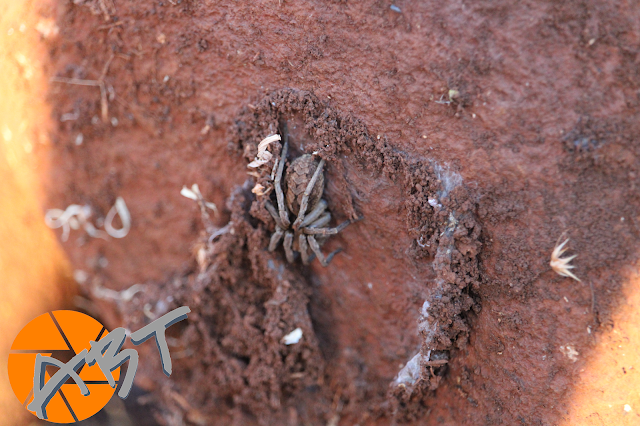
Spiders are arachnids, not insects. Other members of the arachnid family include scorpions, mites, ticks and harvestmen.#CritterThursday

Image
Learn more at https://abt-edu.com The greatest threat to spiders is habitat loss, although some spider species are also threatened by the pet trade. Most species are carnivorous, either trapping flies and other insects in their webs, or hunting them down. They can’t swallow their food as is, though—spiders inject their prey with digestive fluids, then suck out the liquefied remains. Though not all spiders build webs, every species produces silk. They use the strong, flexible protein fiber for many different purposes: to climb (think Spider Man), to tether themselves for safety in case of a fall, to create egg sacs, to wrap up prey, to make nests, and more. Most spider species have eight eyes, though some have six. Despite all of those eyes, though, many don’t see very well. A notable exception is the jumping spider, which can see more colors than humans can. Using filters that sit in front of cells in their eyes, the day-hunting jumping spider can see in the red spectrum, green s...

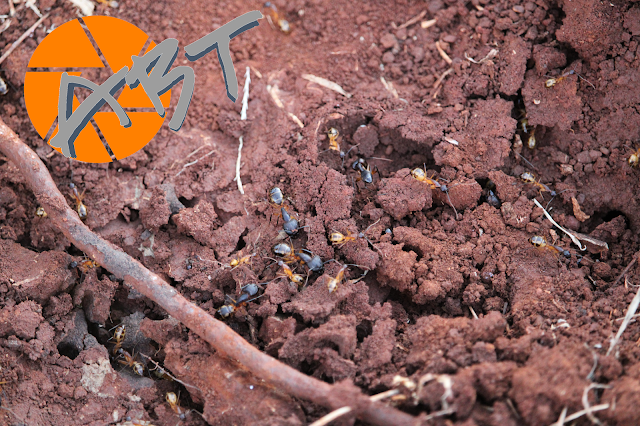
Investigating Sugar Ant's (Camponotus) #CritterThursday

Image
Learn more at https://abt-edu.com This species vary greatly in shape, size and colour. They range from 2.5 to 15 mm, and are some of the most often seen ants due to their size and often bright in colouring. They often nest in a variety of sites ranging from holes in wood to the roots of plants, twigs of trees and shrubs, between rocks or in the soil. They can also be seen during the day however, they are most active at night. They are unable to sting, but they do possess strong mandibles which can bite. In self-defense these ants are also able to spray acid from their abdomens to deter predators. They feed on dead and lives insects, household waste and are attracted by sweet food. They rarely enter houses and the ant’s life cycle passes through egg, larva, pupa and adult phases. Castes: Ant colonies consist of various castes which perform different functions in the colony. Reproductives - The reproductive males and females have the task of reproducing. Depending on the ...

Fascinating Facts About Stick Insects #CritterThursday

Image
Learn more at https://abt-edu.com Stick Insects Can Regenerate Limbs. Stick Insects Can Reproduce Without Males. Stick Insects Even Act Like Sticks. Their Eggs Resemble Seeds. Nymphs Eat Their Molted Skin. Stick Insects Aren't Defenseless. Their Eggs May Attract Ants. Not All Stick Insects Stay Brown. Stick Insects Can Play Dead. Stick Insects Are the World's Longest Insect. AVERAGE LIFE SPAN IN THE WILD: Up to 3 years. Mainly nocturnal creatures, they spend much of their day motionless, hidden under plants. Contact us at info@africanbushtraining.com

FACT : Butterflies Taste With Their Feet. #CritterThursday

Image
  Here are a few interesting facts : Butterflies and moths are part of the class of insects in the order Lepidoptera. Butterflies are flying insects with large scaly wings. Like all insects, they have six jointed legs and three body parts: the head, the thorax and the abdomen. The wings are attached to the thorax and they also have a pair of antennae, compound eyes and an exoskeleton. The butterfly starts its life as an egg, laid on a leaf. The caterpillar (larva) hatches from the egg and eats leaves or flowers. It loses its skin many times as it grows, increasing greatly in size. Eventually it turns into a pupa, or chrysalis and finally a beautiful adult butterfly emerges and the cycle continues. An adult butterfly has a very short life: just three to four weeks. However, the entire life cycle of a butterfly can range between 2 and 8 months, depending on the species. It might sound strange to us humans, but butterflies rely on their feet to taste food. Their feet have taste sensor...

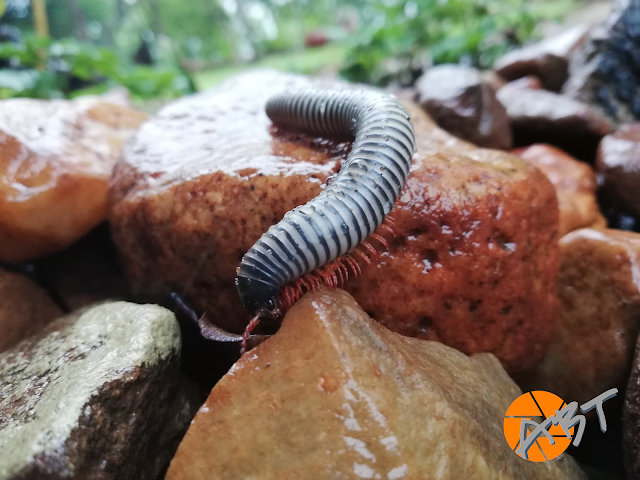
Millipedes have a lot of legs, but not as many as most people think...#CritterThursday

Image
Let's start with the basics: Millipedes are not worms, nor are they  insects . Insects have six legs, and obviously millipedes have many more. It turns out scientists did not choose the Latin prefix in their name, "milli-," meaning 1,000, as a way to convey the precise number of legs these organisms have. Their colloquial nickname "thousand leggers" is not accurate either. Millipedes fall within a phylum of organisms called  arthropods , a category that includes invertebrates as diverse as spiders, scorpions and butterflies. All arthropods have in common a hard exoskeleton, segmented bodies and jointed legs. What distinguishes millipedes is that for each segment of their body, they have two pairs of legs, instead of one pair as you would see with, say, centipedes. This gave way to the more accurate name used by scientists:  diplopoda , meaning "double foot." Having so many legs is part of what makes millipedes so adaptive.  Fossil evidence suggests  th...

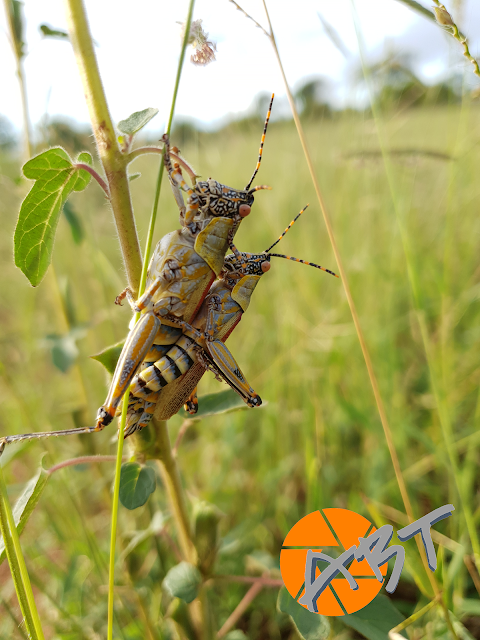
Exploring grasshoppers with ABT #CritterThursday

Image
When you think about it, there are about a million described species of insects in the world, "more than five times the number of all animals combined," according to emeritus professor Jerry Powell in his book,  California Insects. To many townsfolk, the only exposure they will have to grasshoppers or locusts are those TV images of some macho bushman eating them in an attempt at 'survival'. To rural folk, they are a traditional form of nutritious food. Grasshoppers have two antennae, 6 legs, two pairs of wings and small little pinchers to tear off food such as grasses, leaves and cereal crops.  Grasshoppers are controlled in nature by predators such as birds, frogs, and snakes. Humans use   insecticides  and poison baits to control them when they become crop pests. Elegant Grasshopper The Elegant Grasshopper is native to Africa, and they'll eat just about anything planted in the garden , although  they prefer herbs to grasses.  Its distribution is restricte...