Posts

Showing posts with the label ranger

Drakensberg Creeper (Opisthacanthus validus) #CritterThursday

Image
Learn more at https://abt-edu.com Scorpions stridulate by rubbing their chelicerae (mouthparts) together to produce a hissing sound. In some cases, they may drag the telson (sting) over the body segments (tergites) to produce a sudden scraping sound in an attempt to frighten off a predator. This is a medium sized scorpion of around 9 cm with the tail extended.   It is black in colour, but often with a muddy appearance. It sometimes has lighter coloured legs and a lighter tipped tail. It is common across its range, occurring under rocks often at high altitudes in areas like the Drakensberg.The sting of this species may cause pain but is not medically important. Contact us at info@africanbushtraining.com

The lowland nyala or simply nyala (Tragelaphus angasii) #WildWednesday

Image
Learn more at https://abt-edu.com The nyala is mainly active in the early morning and the late afternoon. It generally browses during the day and during the night in the rainy season. As a herbivore, the nyala feeds upon foliage, fruits and grasses, with sufficient fresh water. As a shy animal, it prefers water holes rather than open spaces. The nyala does not show signs of territoriality, and individuals areas can overlap each others. They are very cautious creatures. Old males live alone, but single sex or mixed family groups of up to 10 individuals can be found. These inhabit thickets within dense and dry savanna woodlands. The main predators of the nyala are lion, leopard and, while baboons and raptorial birds hunt for the juveniles. Mating peaks during spring and autumn. Males and females are sexually mature at 18 and 11–12 months of age respectively, though they are socially immature until five years old. After a gestational period of seven months, a single calf is born. Cont...

The Puff adder is responsible for causing the most snakebite fatalities in Africa. - Wikipedia

Image
Learn more at https://abt-edu.com They are short stocky snakes that occur in a variety of colours, from sandy brown, grey, bright yellow & black in some parts of its range. As South Africa’s most widely-spread, venomous snake, the Puff Adder occurs in a large range of habitat, from coastal bush, grassland, fynbos habitat. The Puff Adder along withe the Mozambique Spitting Cobra account for the majority of serious snake bites South Africa. The Puff Adder is a snake with excellent camouflage, and it prefers to sit and wait for opportunity when it comes to feeding. These snakes may remain in an ambush position for several weeks, waiting for a potential meal to pass by. They have a powerful cytotoxic venom which can lead to extreme pain, severe swelling, and blistering of the skin. Anti-venom: Polyvalent anti-venom is used in the effective treatment of bites. The name ‘puff adder’ stems from the snake’s habit of inflating itself and hissing when threatened. The noise produced is a ...

Opuntia, commonly called prickly pear. #BotanyFriday

Image
Learn more at https://abt-edu.com They are a succulent shrub or small tree with paddle-shaped stems armed with spines. This plant is leafless. It is an invasive alien from Central America. The fruits are plum-shaped, spiny and edible. Habitat of the Sweet Prickly Pear  - It grows across South Africa, having spread over the centuries after been imported from Mexico. The Prickly Pear is one of the most used alien plants in South Africa, so much so that many now believe the plant is a South African species. The prickly pear is used to build stockades for domestic animals – and is used as feed for the animals. Many farmhouses in South Africa are enclosed in a Prickly Pear fence. The fruit is used today to make jams and various drinks. In many areas, such as wilderness areas the plant is seen as a pest and steps are taken to eradicate it. Contact us at info@africanbushtraining.com

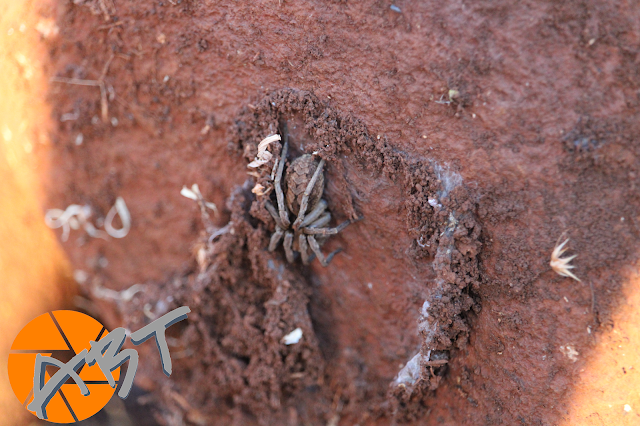
Spiders are arachnids, not insects. Other members of the arachnid family include scorpions, mites, ticks and harvestmen.#CritterThursday

Image
Learn more at https://abt-edu.com The greatest threat to spiders is habitat loss, although some spider species are also threatened by the pet trade. Most species are carnivorous, either trapping flies and other insects in their webs, or hunting them down. They can’t swallow their food as is, though—spiders inject their prey with digestive fluids, then suck out the liquefied remains. Though not all spiders build webs, every species produces silk. They use the strong, flexible protein fiber for many different purposes: to climb (think Spider Man), to tether themselves for safety in case of a fall, to create egg sacs, to wrap up prey, to make nests, and more. Most spider species have eight eyes, though some have six. Despite all of those eyes, though, many don’t see very well. A notable exception is the jumping spider, which can see more colors than humans can. Using filters that sit in front of cells in their eyes, the day-hunting jumping spider can see in the red spectrum, green s...

The grey go-away-bird, also known as grey lourie, grey loerie, or kwêvoël. #BirdingSunday

Image
Learn more at https://abt-edu.com It is found in Southern Africa and is one of the least colorful turaco's, many of which are as colorful as parrots. The Grey Go-Away is named for its call and it is a very social bird, often living in groups of up to 30 birds. It has a preference for open thornbush country, often near water. The grey go-away bird subsists on leaves, fruit, flowers, buds and the occasional small invertebrates. It feeds on a wide variety of trees, but is particularly fond of acacia trees, Mopane trees, Jackalberry trees and cultivated fruit such as guavas. Grey Go-away-bird is gregarious and moves in groups of up to 20 birds very busy and hopping into trees. Nest is a loose platform made with sticks and twigs of about 20 to 24 cm in diameter, situated at 3 to 20 metres above the ground. Both sexes build the nest, often hidden among dense foliage but not necessarily. Female lays 1 to 4 eggs, usually 3, white or pale blue, and slightly glossy. Incubation lasts about ...

ENVIRONMENTAL EDUCATION COURSE #CareerSaturday

Image
Learn more at https://abt-edu.com DURATION: 11 Days Full-time This course will teach you the principles of Environmental Education in practice and equip you with all the necessary tools, knowledge and skills you will need to confidently apply your Environmental Education initiatives in your own environment and make a ‘real’ difference in conservation and the preservation of our most valuable natural resources… On completion of the course you will be able to design, plan, implement, facilitate and evaluate on a variety of environmental learning programmes. COURSE CONTENTS: Introduction to Environmental Education, Teaching Methodologies and Techniques, Changing Attitudes and Behaviour, Planning - Designing - Facilitating - Evaluating EE Programs, Conducting Training Interventions, And much more... STUDENT FEE: R 14 700:00 INCLUDED: Meals, Accommodation, Study Material & Uniform Contribution Contact us at info@africanbushtraining.com
Humans are the Sable antelope’s only real threat. The giant sable antelope subspecies is listed as endangered because of trophy hunting and habitat loss.#ConservationTuesday

Image
Learn more at https://abt-edu.com The Sable is a barrel-chested rotund antelope with a long face, short neck, and dark mane. They have impressive ringed horns rising vertically to curve backwards. When arching their necks and standing with their heads high and tails outstretched, these antelope look like horses. In this position they appear larger than they actually are. The males keep this position even when galloping, the arched neck being important to manifest dominance. Sables change color as they grow older. Calves are born with a reddish-brown color and virtually no markings. White markings appear as they grow older and their coat becomes darker, and the older the animal is, the more striking is the contrast. Sable antelopes are herbivorous. They are specialized browsing animals and feed upon foliage, leaves, medium length grass, and herbs, especially those growing on termite mounds. The leaves of trees provide 90% of their diet. Ask any lowveld old-timer and they will tell y...

Fact: Geckos' eyes are 350 times more sensitive to light than human eyes. #ReptileMonday

Image
Here are a few Gecko facts you need to know: Most species of gecko don’t have eyelids, so they lick their eyes to clean them. Geckos range in life span depending on the species, but many will live around five years in the wild. Geckos use their tails to store fat and nutrients for lean times. Most geckos can detach their tails — and regrow them later if necessary. Geckos are able to produce various sounds for communication, including barks, chirps and clicks. Geckos' amazing toes help them stick to any surface except Teflon. Geckos typically eat fruits, insects and flower nectar. Geckos give birth by laying eggs. The female can be pregnant with her eggs for years before she lays them. For example, the harlequin geckos' pregnancy lasts three to four years. When the eggs are ready, a gecko lays her eggs in leaves and bark. These lizards have sticky feet that allows them to climb up slick surfaces. Their toes have microscopic hairs called setae that give them this sticky ability. ...

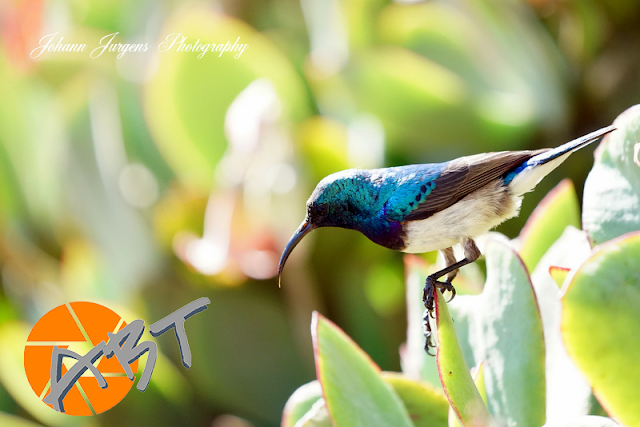
The white-bellied sunbird (Cinnyris talatala), also known as the white-breasted sunbird #BirdingSunday

Image
The  sunbirds  are placed into the taxonomic family, Nectariniidae, which was so  named  because most of these birds feed on (you guessed it), nectar. Their thin downward-curving bills and brush-tipped tubular tongues are adapted specially for nectivory. Distribution and habitat  Occurs from Angola to southern Tanzania south to southern Africa, where it is common to locally abundant across northern Namibia, northern and south-eastern Botswana, Zimbabwe, Mozambique, Swaziland and north-eastern South Africa. It generally prefers semi-arid savanna woodland. Brood parasites  It has been recorded as host of the Klaas's cuckoo. Food  It mainly eats nectar supplemented with arthropods, often joining mixed-species foraging flocks in the day, along with other sunbirds at large sources of nectar. In the late afternoon it regularly hawks insects aerially and gleans invertebrates from foliage. Breeding  The nest (see image) is built solely by the female in ab...

Flying with Vultures #ConservatonTuesday

Image
Learn more at https://abt-edu.com Vultures face multiple man-made threats, including but not limited to poisoning, power line collisions and electrocutions, direct harvesting for cultural beliefs, and ever decreasing foraging ranges.  Some vulture species are threatened with possible extinction within our lifetime unless we can curb the ongoing downward spiral now! Some populations have plummeted by over 90% in the past 30 years. Vultures are scavenging birds of prey. A typical characteristic of most vultures is a bald head, devoid of normal feathers. Vultures are found on all continents except Australia and Antarctica. There are 11 species of vultures in Africa, with the majority listed as endangered, such as the Cape Vulture (Gyps coprotheres), which has already been classified as extinct in Namibia, Swaziland and Zimbabwe. Vultures clear up to 70% of Africa’s carrion and are extremely beneficial to humans, considerably reducing the spread of diseases, some of which can be fata...

WILDLIFE & RESERVE MANAGEMENT COURSE #CareerSaturday

Image
Learn more at https://abt-edu.com DURATION: 21 Days Full-time   Start your career in conservation under the mentorship of renowned conservationists, ex-Kruger Park rangers and veterans in in the field; or just join the course for a life changing wilderness experience…the choice is yours, but one thing is certain - what you will learn and experience is priceless!!!   This “feet-wet & hands-dirty” course has been developed to teach students the fundamentals of sustainable and responsible wildlife management as they actively partake in the daily running of a wilderness concession located in the world famous Greater Kruger Park!!!   COURSE CONTENTS:   Conservation Action Planning, Laws & Legislation, Bio-diversity Conservation, Natural Resources Protection, Veld Management, Ecological Processes & Principles, Plant & Animal Care, Land Degradation, Invader Plants, Bush Encroachment, Road Maintenance, Fire Management, Animal Health Monitoring...

Becoming a good Birder #ABTRecipeFriday

Image
Learn more at https://abt-edu.com Have good eyes and ears, and a good brain. At its most fundamental level, birding involves seeing and hearing birds, and then processing the visual and aural input to the birder’s brain. Start young. It is more difficult if you begin as an adult or even a late teenager. Don’t get cocky. Teen birders, who, despite brilliant sensory and neural apparatus, are eerily capable of mistaking a common Savannah Sparrow for a mega-rarity Baird’s Sparrow. Stay with it. The longer you bird, the better you learn. Know status and distribution. This information makes a huge difference in the bird identification process. Learn vocalizations of as much birds as you possibly can. Understand behavior. Recognizing behavioral clues is a key component of bird identification. Go naked! You don’t necessarily notice stuff when you’re birding with binoculars or any other equipment. Have fun. Birding doesn’t promise a cure for cancer. Birding doesn’t provide a clear path to world...

FGASA APPRENTICE THEORY INDABA

Image
Learn more at https://abt-edu.com DURATION: 21 Days Full-time   The FGASA APPRENTICE THEORY INDABA is all about ensuring that the highest's standards are maintained in the introduction of new guides to the   industry?   The FGASA APPRENTICE THEORY INDABA brings ‘self-study” and part-time students together, once month, for three weeks in the bush at the AFRICAN BUSH TRAINING campus to attend lectures on all the modules prescribed by FGASA for the   Field Guide Level 1 (NQF2) qualification.   During the three weeks in the bush our qualified and registered FGASA trainers will ‘walk’ you through the syllabus preparing you the best they can for the national exam sittings.   Although the focus is primarily on theoretical training we also do practical work in the Kruger National Park to ensure that students are able to put the theoretical knowledge learned in the classroom into practice when operating out in the bush.   STUDENT FEE: R ...

FACT : Butterflies Taste With Their Feet. #CritterThursday

Image
  Here are a few interesting facts : Butterflies and moths are part of the class of insects in the order Lepidoptera. Butterflies are flying insects with large scaly wings. Like all insects, they have six jointed legs and three body parts: the head, the thorax and the abdomen. The wings are attached to the thorax and they also have a pair of antennae, compound eyes and an exoskeleton. The butterfly starts its life as an egg, laid on a leaf. The caterpillar (larva) hatches from the egg and eats leaves or flowers. It loses its skin many times as it grows, increasing greatly in size. Eventually it turns into a pupa, or chrysalis and finally a beautiful adult butterfly emerges and the cycle continues. An adult butterfly has a very short life: just three to four weeks. However, the entire life cycle of a butterfly can range between 2 and 8 months, depending on the species. It might sound strange to us humans, but butterflies rely on their feet to taste food. Their feet have taste sensor...

3-MONTH GUIDING COMBO PROGRAM

Image
Learn more at https://africanbushtraining.com 3 Months Full-time This Course prepares students for active participation in the African Eco-tourism and Game Lodge industry, by nurturing competent guides, with well formulated career paths in the various speciality fields of a professional guide.  This includes a good knowledge and understanding of the African wilderness and the development of vitally important additional skills such as bush craft, snake handling, first aid, tracking, birding, wildlife photography and environmental education. COURSE CONTENTS: FGASA Apprentice Field Guide (NQF2), Snake Handling, First Aid, Environmental Education, Bush Craft/Survival, Wildlife Photography, Wilderness Tracks/Signs, Advanced Birds Birding Contact us at info@africanbushtraining.com

Become a part of nature with a walking safari #WildWednesday

Image
What better way to experience the ultimate in safari experiences - picture walking through the untouched wild of South Africa, to your left a 1000-year-old Baobab tree, to your right a herd of giraffes getting ready for the day ahead. Step by step, you’re connecting with nature in its rawest form. It’s a magical experience you will never forget. Kruger National Park walking safaris are guided by experienced rangers with an extensive knowledge of the area, the wildlife, birdlife and indigenous vegetation.The camp-staff cook and clean while your guide leads you into close encounters with the African wild. Feel your excitement build as you track the South African Big 5 on your walking safari. On your walk, you’ll learn about the ecology, the birds, the game, the plants and insects, and also how to interpret the signs of the wild, including animal spoor (footprints). When you come face to face with that elephant, or watch that dung beetle labouring with his ball of dung, you'll realise...

NATURE ENTHUSIAST COURSE

Image
Learn more at https://africanbushtraining.com COURSE TYPE: Full-time Training DURATION: 25 Days STUDENT FEE: R 29 000:00 INCLUDED: Meals, Accommodation, Study Material, Meals, Accommodation, Study Material, ABT Shirt, Cap & Certification COURSE CREDITS:The course is fully endorsed by CATHSSETA, FGASA (Field Guide Association of Southern Africa) and accredited by the ISCI (International Students Conservation Initiative) COURSE MODULES: Geology: Rocks & Soil Ecology: Processes & Principles Astronomy: Stars & Planers Weather & Climate Botany: Grasses, Scrubs & Trees Mammals: Animal Studies Ethology: Animal behaviour Birds & Birding Freshwater Fish Reptiles: The scale ones… Arthropods: Insects, Scorpions, Spiders, etc. Conservation Management Amphibians: Frogs & Toads Early Human Habitation Wilderness Tracking & Bush Craft And much more... Contact us at info@africanbushtraining.com

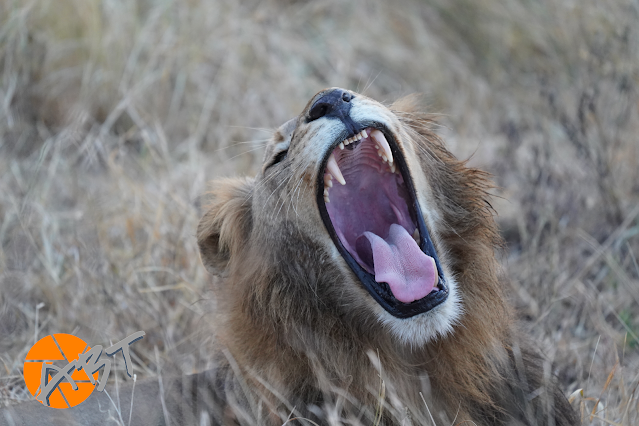
Humans are pushing big cats out of their habitats.#ConservationTuesday

Image
This African Lion's population is steadily decreasing in the wild. In just two decades, populations decreased by 43 percent, and it’s estimated that as few as 23,000 remain today. One of the main causes is the alarming rate at which they are losing their habitats due to expanding human populations and the resulting growth of agriculture, settlements, and roads. As lion habitats shrink, the big cats are being forced into closer quarters with humans. This, coupled with a decrease in their natural prey, causes them to attack livestock. In turn, farmers oftentimes retaliate and kill these big majestic cats.  These big cats are being killed in rituals of bravery, prized as hunting trophies, and, increasingly, for their body parts' perceived medicinal and magical powers. While most cat species are solitary, this big cat is an exception. It has developed a social system based on teamwork, division of labor, and an extended family unit. The average pride consists of about 15 indi...

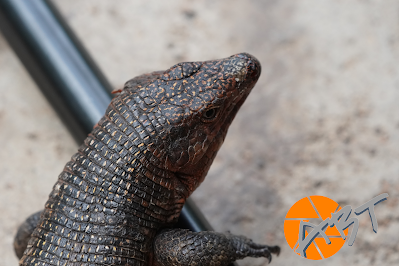
Giant Plated Lizard #ReptileMonday

Image
Giant plated lizard (English),  reusepantserakkedis   (Afrikaans),   uxamu   (isiZulu),   chamu   (siSwati) The giant plated lizard is the second largest lizard species found in South Africa, after the monitor lizard, and they are known to attain a body length of approximately 690 mm. Giant plated lizards are rupicolous, which means that they live among rocky outcrops, mostly on the upper slopes of granite hills. Giant plated lizards are shy and hard to approach – an individual will often retreat into rock crevices at the slightest disturbance and inflate its body, effectively wedging itself into the crevice and making it very difficult for anything to dislodge it.  They occur in most southern African countries including Angola, Botswana, Malawi, Mozambique, Namibia, South Africa, Swaziland, Zimbabwe and Zambia. They are widespread and generally common in their natural range and no conservation actions are recommended. Giant plated lizards have st...