Posts

Showing posts with the label black

Jumping spiders are a group of spiders that constitute the family Salticidae.#CritterThursday

Image
Learn more at https://abt-edu.com As of 2019, this family contained over 600 described genera and over 6000 described species,making it the largest family of spiders at 13% of all species. –Wikipedia Jumping spiders have some of the best vision among arthropods and use it in courtship, hunting, and navigation. Although they normally move unobtrusively and fairly slowly, most species are capable of very agile jumps, notably when hunting, but sometimes in response to sudden threats or crossing long gaps. Both their book lungs and tracheal system are well-developed, and they use both systems (bimodal breathing). Jumping spiders are generally recognized by their eye pattern. All jumping spiders have four pairs of eyes, with the anterior median pair being particularly large. Although jumping spiders are generally carnivorous, many species have been known to include nectar in their diets. Jumping spiders conduct complex, visual courtship displays using both movements and physical bodily ...
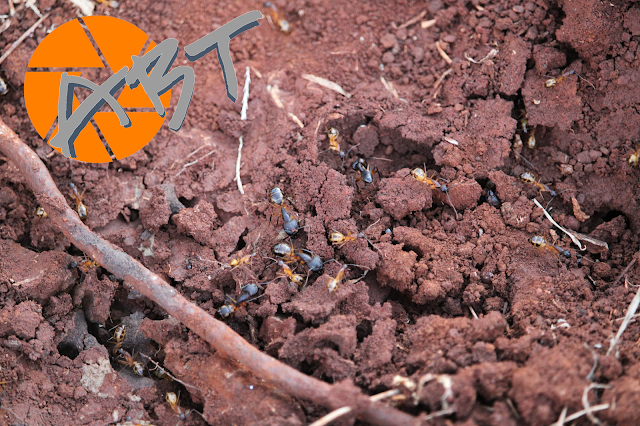
Investigating Sugar Ant's (Camponotus) #CritterThursday

Image
Learn more at https://abt-edu.com This species vary greatly in shape, size and colour. They range from 2.5 to 15 mm, and are some of the most often seen ants due to their size and often bright in colouring. They often nest in a variety of sites ranging from holes in wood to the roots of plants, twigs of trees and shrubs, between rocks or in the soil. They can also be seen during the day however, they are most active at night. They are unable to sting, but they do possess strong mandibles which can bite. In self-defense these ants are also able to spray acid from their abdomens to deter predators. They feed on dead and lives insects, household waste and are attracted by sweet food. They rarely enter houses and the ant’s life cycle passes through egg, larva, pupa and adult phases. Castes: Ant colonies consist of various castes which perform different functions in the colony. Reproductives - The reproductive males and females have the task of reproducing. Depending on the ...

Black Mambas use their incredible speed to escape threats, not to hunt prey. #ReptileMonday

Image
Learn more at https://abt-edu.com Black Mamba (Dendroaspis polylepis) - © Johan Marais Classification: VERY DANGEROUS This is by far the largest venomous snake in Africa with a maximum length of 4.5 m (specimens over 3.8 m are rare). Despite its reputation it is a shy, elusive snake that is quick to escape but will not hesitate to strike repeatedly if cornered. It is active during the day, often basking near a hole in an anthill or large rock crevice where it quickly disappears into if disturbed. When threatened it will gape exposing the black inner lining of the mouth and it may form a narrow hood. The venom of this snake is potently neurotoxic and may cause difficulty with breathing within half an hour. Symptoms include a numbness of the lips, slurred speech, ptosis and progressive weakness. Antivenom is effective but often required in large quantities (10 – 15 vials). They get their name not from their skin color, which tends to be olive to gray, but rather from the blue-bla...

The black crake #BirdingSunday

Image
Learn more at https://abt-edu.com A small, pudgy, blackish waterbird with reddish eyes, a yellowish bill, and diagnostic pink-red legs. The immature is browner, with duller legs and bill. It scuttles along the edges of swamps and other water bodies, preferring reedbeds and emergent vegetation to forage on, sometimes quite boldly. Like most crakes, it walks tentatively with its head lowered, picking and probing for insects, plant matter, and other food. The distinctive call is an odd, wheezy bubbling and chattering “cheeew-t-t-t-t treeew, t-t-t-t-t-treew”. Diet: Invertebrates, insects, fish, frogs, seeds of aqautic plants, and bird eggs. Crakes can often be seen consuming parasites off of large animals such as hippos. Reproduction: The black crake is incredibly territorial of its nest. Often it will attack other crakes or even larger birds to defend its territory. The nest usually consists of reeds and other aquatic plants. Up to six eggs may be produced, with the average being three eg...