Posts

Showing posts with the label birding

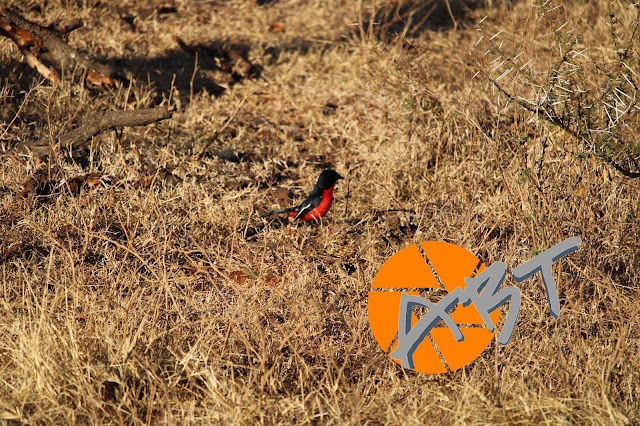
The crimson-breasted shrike is non-migratory. #BirdingSunday
Image
Learn more at https://abt-edu.com It mainly eats insects, gleaning prey from the leaves and trunks of trees, often flying to the ground to feed on ants or some fallen fruit. The following food items have been recorded in its diet: Invertebrates Formicidae (ants) Coleoptera (beetles) Lepidoptera (caterpillars) Fruit Both sexes construct the nest, which is a tidy cup made almost entirely of  Acacia  tree bark, collected from trunks and branches about 50-90 metres from the nesting site and lined with grass and rootlets. It is usually bound with spider web to a fork in the main stem of a plant, or occasionally onto a horizontal branch. Most of the construction work is done in the early morning, and it is usually complete after about 4-6 days. Egg-laying season is from August-january, peaking from October-November. It lays 2-3 eggs, which are incubated by both sexes for about 15-17 days.The chicks are fed and brooded by both parents, leaving the est at about 18-20 ...

The African dusky flycatcher, dusky-brown flycatcher or dusky alseonax (Muscicapa adusta)#BirdingSunday

Image
Learn more at https://abt-edu.com The African dusky flycatcher is 13 cm long and weighs around 11 g. Its upperparts are plain brown, with the only facial marking being an indistinct narrow eye-ring. The chin is plain pale grey, and the rest of the underparts are grey-brown with indistinct streaks. The short, straight, laterally flattened bill is black, the legs and feet are grey, and the eyes are brown. The sexes are similar, but the juvenile is spotted with buff above, and is whitish spotted with brown below. The African dusky flycatcher has soft, high-pitched "tzeeet" and tsirit calls. The African dusky flycatcher builds a cup-shaped nest in a tree cavity a few metres above the ground, and lays two or three green eggs. The hole in the tree is normally reused in the next breeding season. This species is monogamous, mating for life. The African dusky flycatcher is usually seen singly or in pairs. It forages from an open perch for insects typically taking its prey in a s...

The grey go-away-bird, also known as grey lourie, grey loerie, or kwêvoël. #BirdingSunday

Image
Learn more at https://abt-edu.com It is found in Southern Africa and is one of the least colorful turaco's, many of which are as colorful as parrots. The Grey Go-Away is named for its call and it is a very social bird, often living in groups of up to 30 birds. It has a preference for open thornbush country, often near water. The grey go-away bird subsists on leaves, fruit, flowers, buds and the occasional small invertebrates. It feeds on a wide variety of trees, but is particularly fond of acacia trees, Mopane trees, Jackalberry trees and cultivated fruit such as guavas. Grey Go-away-bird is gregarious and moves in groups of up to 20 birds very busy and hopping into trees. Nest is a loose platform made with sticks and twigs of about 20 to 24 cm in diameter, situated at 3 to 20 metres above the ground. Both sexes build the nest, often hidden among dense foliage but not necessarily. Female lays 1 to 4 eggs, usually 3, white or pale blue, and slightly glossy. Incubation lasts about ...

The black crake #BirdingSunday

Image
Learn more at https://abt-edu.com A small, pudgy, blackish waterbird with reddish eyes, a yellowish bill, and diagnostic pink-red legs. The immature is browner, with duller legs and bill. It scuttles along the edges of swamps and other water bodies, preferring reedbeds and emergent vegetation to forage on, sometimes quite boldly. Like most crakes, it walks tentatively with its head lowered, picking and probing for insects, plant matter, and other food. The distinctive call is an odd, wheezy bubbling and chattering “cheeew-t-t-t-t treeew, t-t-t-t-t-treew”. Diet: Invertebrates, insects, fish, frogs, seeds of aqautic plants, and bird eggs. Crakes can often be seen consuming parasites off of large animals such as hippos. Reproduction: The black crake is incredibly territorial of its nest. Often it will attack other crakes or even larger birds to defend its territory. The nest usually consists of reeds and other aquatic plants. Up to six eggs may be produced, with the average being three eg...

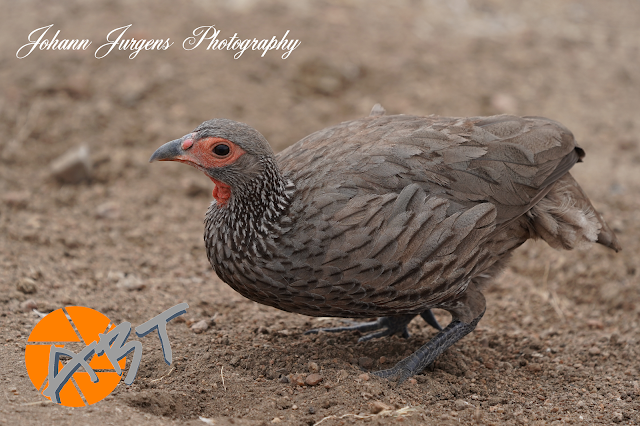
Swainson's Spurfowl #BirdingSunday

Image
Learn more at https://abt-edu.com Swainson's spurfowl or Swainson's francolin (Pternistis swainsonii) is a species of bird in the family Phasianidae.  It is found in Angola, Botswana, Lesotho, Malawi, Mozambique, Namibia, South Africa, Swaziland, Zambia, and Zimbabwe. In the Shona language in Zimbabwe, this bird is called the chikwari and is considered a delicacy by outdoor and hunting enthusiasts. Swainson's spurfowl was named after William Swainson, an English ornithologist. Diet: Seeds, berries, insects Reproduction: Francolins split into pairs during the breeding season. Most species, if not all, vigorously defend the area around their nest site against others of the same species. Nests are found on the ground, usually under cover and are shallow scrapes with a greater or lesser amount of plant material used as lining. The known clutch size ranges from 2-12 eggs, with the average believed to be between 4-6 eggs. Social Structure: Swainson's francolins are commonly f...

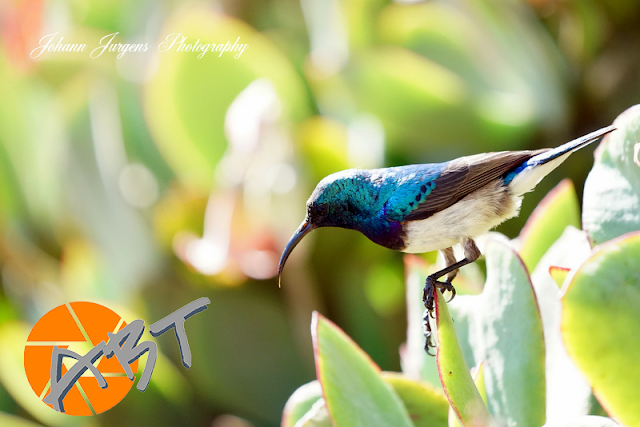
The white-bellied sunbird (Cinnyris talatala), also known as the white-breasted sunbird #BirdingSunday

Image
The  sunbirds  are placed into the taxonomic family, Nectariniidae, which was so  named  because most of these birds feed on (you guessed it), nectar. Their thin downward-curving bills and brush-tipped tubular tongues are adapted specially for nectivory. Distribution and habitat  Occurs from Angola to southern Tanzania south to southern Africa, where it is common to locally abundant across northern Namibia, northern and south-eastern Botswana, Zimbabwe, Mozambique, Swaziland and north-eastern South Africa. It generally prefers semi-arid savanna woodland. Brood parasites  It has been recorded as host of the Klaas's cuckoo. Food  It mainly eats nectar supplemented with arthropods, often joining mixed-species foraging flocks in the day, along with other sunbirds at large sources of nectar. In the late afternoon it regularly hawks insects aerially and gleans invertebrates from foliage. Breeding  The nest (see image) is built solely by the female in ab...

Flying with Vultures #ConservatonTuesday

Image
Learn more at https://abt-edu.com Vultures face multiple man-made threats, including but not limited to poisoning, power line collisions and electrocutions, direct harvesting for cultural beliefs, and ever decreasing foraging ranges.  Some vulture species are threatened with possible extinction within our lifetime unless we can curb the ongoing downward spiral now! Some populations have plummeted by over 90% in the past 30 years. Vultures are scavenging birds of prey. A typical characteristic of most vultures is a bald head, devoid of normal feathers. Vultures are found on all continents except Australia and Antarctica. There are 11 species of vultures in Africa, with the majority listed as endangered, such as the Cape Vulture (Gyps coprotheres), which has already been classified as extinct in Namibia, Swaziland and Zimbabwe. Vultures clear up to 70% of Africa’s carrion and are extremely beneficial to humans, considerably reducing the spread of diseases, some of which can be fata...

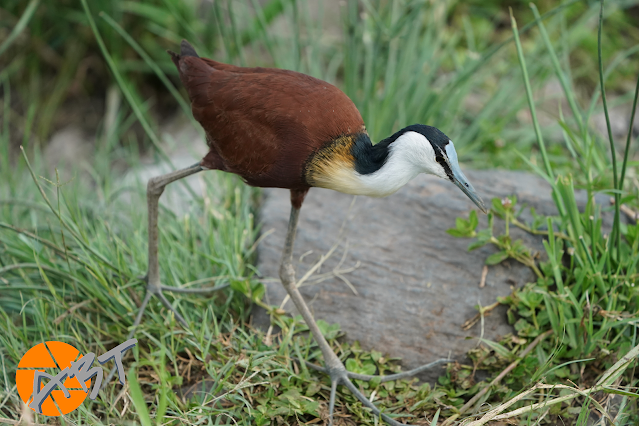
The African Jacana #BirdingSunday

Image
Learn more at https://abt-edu.com African jacanas are conspicuous and unmistakable  birds . They are about 30 cm long, but females are larger than males. They have chestnut upperparts with black wingtips, rear neck, and eyestripe. The underparts are also chestnut in the adults, only in juveniles they are white with a chestnut belly patch. The blue bill extends up as a  coot -like head shield, and the legs and long toes are grey. The jacana has evolved a highly unusually  polyandrous  mating system, meaning that one female mates with multiple males and the male alone cares for the chicks. Such a system has evolved due to a combination of two factors: firstly, the lakes that the jacana lives on are so resource-rich that the relative energy expended by the female in producing each egg is effectively negligible. Secondly the jacana, as a bird, lays eggs and eggs can be equally well incubated and cared for by a parent bird of either sex. This means that the rate-limi...

Becoming a good Birder #ABTRecipeFriday

Image
Learn more at https://abt-edu.com Have good eyes and ears, and a good brain. At its most fundamental level, birding involves seeing and hearing birds, and then processing the visual and aural input to the birder’s brain. Start young. It is more difficult if you begin as an adult or even a late teenager. Don’t get cocky. Teen birders, who, despite brilliant sensory and neural apparatus, are eerily capable of mistaking a common Savannah Sparrow for a mega-rarity Baird’s Sparrow. Stay with it. The longer you bird, the better you learn. Know status and distribution. This information makes a huge difference in the bird identification process. Learn vocalizations of as much birds as you possibly can. Understand behavior. Recognizing behavioral clues is a key component of bird identification. Go naked! You don’t necessarily notice stuff when you’re birding with binoculars or any other equipment. Have fun. Birding doesn’t promise a cure for cancer. Birding doesn’t provide a clear path to world...

3-MONTH GUIDING COMBO PROGRAM

Image
Learn more at https://africanbushtraining.com 3 Months Full-time This Course prepares students for active participation in the African Eco-tourism and Game Lodge industry, by nurturing competent guides, with well formulated career paths in the various speciality fields of a professional guide.  This includes a good knowledge and understanding of the African wilderness and the development of vitally important additional skills such as bush craft, snake handling, first aid, tracking, birding, wildlife photography and environmental education. COURSE CONTENTS: FGASA Apprentice Field Guide (NQF2), Snake Handling, First Aid, Environmental Education, Bush Craft/Survival, Wildlife Photography, Wilderness Tracks/Signs, Advanced Birds Birding Contact us at info@africanbushtraining.com

White-browed Sparrow - Weaver #BirdingSunday

Image
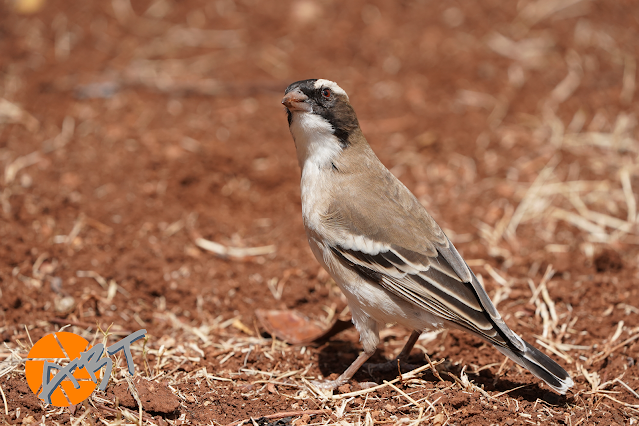
The White-browed Sparrow-weaver was collected and formally described by Andrew Smith a Scottish surgeon, explorer, ethnologist and zoologist. Smith organised an expedition to the interior and he travelled to near the Botswana border in 1834-35, collecting many new birds, reptiles, mammals and other along the way. It ranges from 17 to 19 cm (6.7 to 7.5 in) in length and is characterized by a broad, white eyebrow stripe and white rump visible in flight. While the male white-browed sparrow-weaver sports a black bill, the female's bill is horn-colored (light gray); that of the juvenile is pinkish-brown. In Zimbabwe, the white-browed sparrow-weaver shows faint brown spotting across its white breast. The white-browed sparrow-weaver is monogamous, co-operative and colonial. There are a single breeding male and female in each group. The breeding pair, assisted by the helpers, build an untidy straw like ball nest, with more than one entrance hole. The second entrance will be closed whe...

Have you ever seen a Brown - headed Parrot ?#BirdingSunday

Image
Appearance The Brown Headed Parrot is another green bird with a brownish grey head. It has yellow under the wings at the front which unfortunately can only be seen properly when in flight. The iris is a greyish yellow. Brown heads have a basically whitish beak, with black on the tip of the upper mandible. How much black is present depends on the individual. Some brown heads have yellow eyes but they are a dark, grayish yellow. Others have light gray eyes even as adults. All juvenile brown heads have dark gray, almost black eyes, which lighten to their adult color by the time the bird is a year old. Brown heads have a brown shade of gray which gradually fades into the green on the neck. The brown head's scientific name, cryptoxanthus, means literally 'hidden yellow' and refers to the yellow coloring on the underside of the wing. Brown heads are small parrots. They're about 9' long including the short tail. Diet They feed on a variety of seeds, nuts, berries, flowers,...

Southern Ground - Hornbill heading towards extinction #BirdingSunday

Image
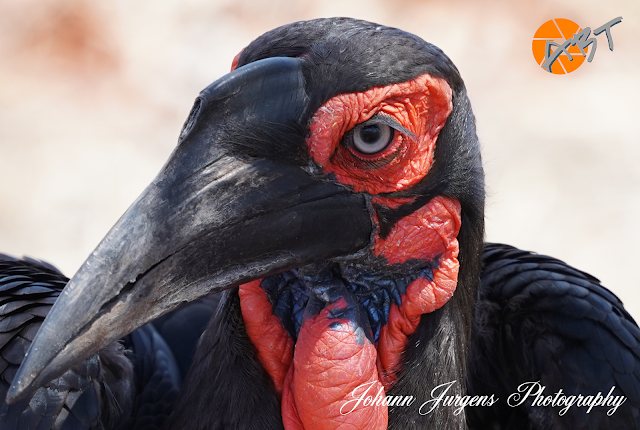
Learn more at https://africanbushtraining.com These hornbills have one of the slowest reproductive rates in the bird kingdom, producing only one chick approximately every 9 years. They are co-operative breeders, with just one dominant breeding pair in a social group, and the rest of the birds being helpers. The ground hornbills are the only birds in the hornbill family which do not seal the entrances of their nests when eggs are laid. The nests, which are returned to every year, are created in crevices such as large holes in tree trunks, and are generally situated a few metres off the ground.  Although 2 eggs are laid in early summer, the chicks hatch between 3-14 days apart. Only one chick generally survives, with the other starving to death. For the first month of incubating her eggs, the female is fed by both her mate and the helpers. After about 4 weeks she begins to leave the nest. Juveniles are dependent on their parents for up to one year and will stay with them for several ...

#BirdingSunday

Image
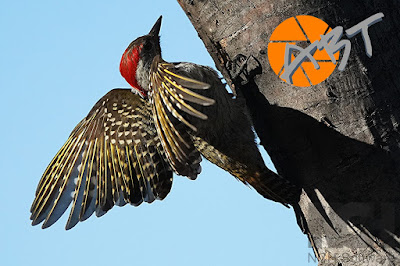
Visit our website at www.africanbushtraining.com ©Johann Jurgens Straight from the director's lense... Like other woodpeckers, the Cardinal has a straight pointed bill, a stiff tail to provide support against tree trunks, and zygodactyl feet, with two toes pointing forward, and two backwards. The long tongue can be darted forward to capture insects. Contact ABT at info@africanbushtraining.com

BIRDS AND BIRDING SHORT COURSE

Image
Go to our website at www.africanbushtraining.com Birding as a hobby has grown tremendously in popularity in the past decade, and these days, visitors that come to the African wilderness areas want to do more than simply spot large game. Owing to this development on the ecotourism front, we have developed our five-day Birding in the Bush course. From the theory of birds and bird identification, to going into the wild to experience it by physically identifying and learning about bird behavior on drives and walks guided by professional ABT instructors. We are confident that any person, with the appetite to learn, will leave us enriched, and with greater confidence in being able to pass on the wonders and beauty of South African bird life to family, friends or clients. SUBJECTS Evolution Anatomy and physiology Habitats and environments Bird identification Bird behavior Ethics And much more.. Contact ABT at info@africanbushtraining.com