Posts

Showing posts with the label fun

ANTI-POACHING CAREER EXPERIENCE

Image
  Learn more at https://abt-edu.com 7 Days full-time Get a taste of what it takes to be at the front lines of wildlife conservation in Africa. During this action-packed 7 days students will be taken through the realities of wilderness protection and shown in true hands-on fashion what is being done to keep wildlife safe from poaching and illegal animal harvesting... STUDENT FEE: R 8 700:00 INCLUDED: Meals, Accommodation, Study Material, Shirt, Cap & Certificate COURSE CONTENTS: Anti-poaching Methods & Techniques, Patrols, Ambush, Survival & Bush Craft, Dealing with Dangerous Animals, and much more... Contact us at info@africanbushtraining.com

The Mopane tree and its importance #BotanyFriday

Image
Learn more at https://abt-edu.com Colophospermum mopane, commonly called mopane,mopani,balsam tree,butterfly tree,or turpentine tree, is a tree in the legume family (Fabaceae), that grows in the far   very hot northern parts of southern Africa. The tree only occurs in Africa and is the only species in genus Colophospermum. Its distinctive butterfly-shaped (bifoliate) leaf and thin seed pod make it easy to identify. In terms of human use it is, together with camel thorn and leadwood, one of the three regionally important firewood trees. Mopane wood is one of southern Africa's heaviest and is difficult to work because of its hardness.However, this also makes it termite resistant. For this reason it has long been used for building houses and fences, as railway sleepers and as pit props. The termite-resistance and rich, reddish colouring also make it popular for flooring. Outside Africa, mopane is gaining popularity as a heavy, decorative wood, its uses including aquarium ornaments, ...

The African clawed frog (Xenopus laevis, also known as the xenopus, African clawed toad, African claw-toed frog or the platanna)

Image
Learn more at https://abt-edu.com These “flat frogs” live in natural water-bodies, but you might see them in your garden pond. They also don’t mind living in the local sewerage works. At the end of the rainy season, they bury themselves under wet mud, where they hibernate until the next rains. Common platannas feed in the water on any living creatures they can overpower. Their prey includes frogs and tadpoles (including their own kind), insects and other invertebrates (mosquito larvae are consumed by young frogs), small fish, young birds and mice that fall into the water. They even feed on carrion in the water. In the 1930s, it was discovered that a female common platanna would spawn if injected with the urine of a pregnant woman (the hormone chorionic gonadotropin being the active ingredient). In the 1940s and ‘50s, this was the only available pregnancy test and many hospitals around the world kept and bred platannas so that they could perform such tests. Contact us at info@africa...

The African dusky flycatcher, dusky-brown flycatcher or dusky alseonax (Muscicapa adusta)#BirdingSunday

Image
Learn more at https://abt-edu.com The African dusky flycatcher is 13 cm long and weighs around 11 g. Its upperparts are plain brown, with the only facial marking being an indistinct narrow eye-ring. The chin is plain pale grey, and the rest of the underparts are grey-brown with indistinct streaks. The short, straight, laterally flattened bill is black, the legs and feet are grey, and the eyes are brown. The sexes are similar, but the juvenile is spotted with buff above, and is whitish spotted with brown below. The African dusky flycatcher has soft, high-pitched "tzeeet" and tsirit calls. The African dusky flycatcher builds a cup-shaped nest in a tree cavity a few metres above the ground, and lays two or three green eggs. The hole in the tree is normally reused in the next breeding season. This species is monogamous, mating for life. The African dusky flycatcher is usually seen singly or in pairs. It forages from an open perch for insects typically taking its prey in a s...

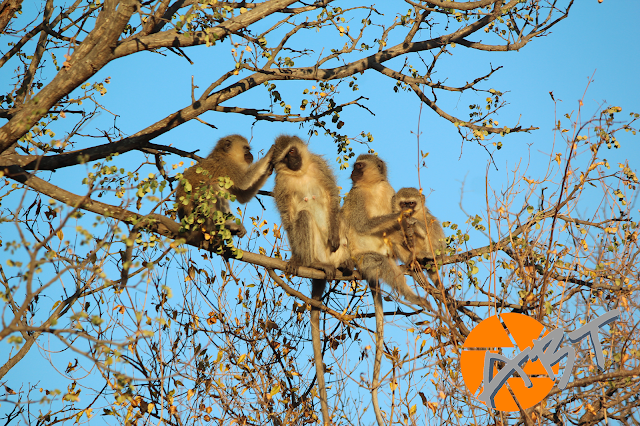
Vervet Monkeys (Cercopithecus aethiops)#ConservationTuesday

Image
Learn more at https://abt-edu.com ©Ludique Swart Vervets living near areas inhabited by people can become pests, stealing food and other items and raiding crops. This leads to a heavy annual slaughter by poison, traps, and guns. In recent years, vervet monkeys have been considered a valuable research animal, making live trapping prevalent as well. The have a life span up to 30 years. The males are slightly larger than the females and are easily recognized by their turquoise blue scrota. They form complex but stable social groups (also called troops) of 10 to 50 individuals mainly consist of adult females and their immature offspring. Males move freely in and out of these groups. Within the troop, each adult female is the center of a small family network. Females who have reached puberty generally stay in the troop. Females typically have few mates in their lifetime, whereas some males have numerous mates. Breeding is seasonal. After a gestation period of approximately 140 days, a s...

GAME RANGER EXPERIENCE #CareerSaturday

Image
Learn more at https://abt-edu.com 7 Days full-time Follow in the daily footsteps of 'real' game rangers as they look after and protect one of Southern Africa's prime wilderness areas... During this course students will become part of our professional wildlife management team sharing in the daily tasks and duties; learning what it takes to effectively manage a game reserve... STUDENT FEE: R 8 700:00 INCLUDED: Meals, Accommodation, Study Material, Shirt, Cap & Certificate COURSE CONTENTS: Management Practices, Wilderness Protection (Anti-poaching), Field Ranger Training, Game Ranching/Breeding, Wildlife Research/Monitoring, Conservation Action Planning, Road Maintenance, Reserve Fences, Alien Plant Control, Game Capture, And much more... Contact us at info@africanbushtraining

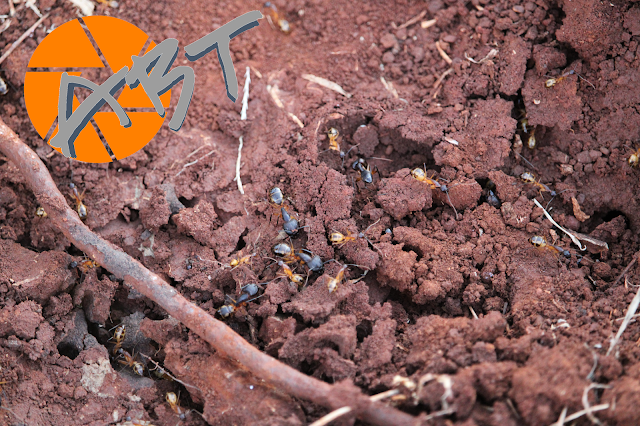
Investigating Sugar Ant's (Camponotus) #CritterThursday

Image
Learn more at https://abt-edu.com This species vary greatly in shape, size and colour. They range from 2.5 to 15 mm, and are some of the most often seen ants due to their size and often bright in colouring. They often nest in a variety of sites ranging from holes in wood to the roots of plants, twigs of trees and shrubs, between rocks or in the soil. They can also be seen during the day however, they are most active at night. They are unable to sting, but they do possess strong mandibles which can bite. In self-defense these ants are also able to spray acid from their abdomens to deter predators. They feed on dead and lives insects, household waste and are attracted by sweet food. They rarely enter houses and the ant’s life cycle passes through egg, larva, pupa and adult phases. Castes: Ant colonies consist of various castes which perform different functions in the colony. Reproductives - The reproductive males and females have the task of reproducing. Depending on the ...

The greater kudu (Tragelaphus strepsiceros) are sparsely populated in most areas due to declining habitat, deforestation, and poaching.#ConservationTuesday

Image
Learn more at https://abt-edu.com Greater kudus have both benefited and suffered from interaction with humans. Humans are turning much of the kudu's natural habitat into farmland, restricting their home ranges. Humans have also destroyed woodland cover, which they use for their habitat. However, wells and irrigation set up by humans has also allowed the greater kudu to occupy territory that would have been too devoid of water for them previously. The greater kudu are also a target for poachers for meat and horns. The horns of greater kudus are commonly used to make Shofars, a Jewish ritual horn blown at Rosh Hashanah. The traditional sport of Kudu dung-spitting (Bokdrol Spoeg in Afrikaans) is practiced in the South African Afrikaner community. The winner is the contestant who is able to spit one of the antelope’s small, hard dung pellets the furthest – with the distance measured to where it comes to rest.  An annual world championship was launched in 1994, with contests held ...

Black Mambas use their incredible speed to escape threats, not to hunt prey. #ReptileMonday

Image
Learn more at https://abt-edu.com Black Mamba (Dendroaspis polylepis) - © Johan Marais Classification: VERY DANGEROUS This is by far the largest venomous snake in Africa with a maximum length of 4.5 m (specimens over 3.8 m are rare). Despite its reputation it is a shy, elusive snake that is quick to escape but will not hesitate to strike repeatedly if cornered. It is active during the day, often basking near a hole in an anthill or large rock crevice where it quickly disappears into if disturbed. When threatened it will gape exposing the black inner lining of the mouth and it may form a narrow hood. The venom of this snake is potently neurotoxic and may cause difficulty with breathing within half an hour. Symptoms include a numbness of the lips, slurred speech, ptosis and progressive weakness. Antivenom is effective but often required in large quantities (10 – 15 vials). They get their name not from their skin color, which tends to be olive to gray, but rather from the blue-bla...

The black crake #BirdingSunday

Image
Learn more at https://abt-edu.com A small, pudgy, blackish waterbird with reddish eyes, a yellowish bill, and diagnostic pink-red legs. The immature is browner, with duller legs and bill. It scuttles along the edges of swamps and other water bodies, preferring reedbeds and emergent vegetation to forage on, sometimes quite boldly. Like most crakes, it walks tentatively with its head lowered, picking and probing for insects, plant matter, and other food. The distinctive call is an odd, wheezy bubbling and chattering “cheeew-t-t-t-t treeew, t-t-t-t-t-treew”. Diet: Invertebrates, insects, fish, frogs, seeds of aqautic plants, and bird eggs. Crakes can often be seen consuming parasites off of large animals such as hippos. Reproduction: The black crake is incredibly territorial of its nest. Often it will attack other crakes or even larger birds to defend its territory. The nest usually consists of reeds and other aquatic plants. Up to six eggs may be produced, with the average being three eg...

ENVIRONMENTAL EDUCATION COURSE #CareerSaturday

Image
Learn more at https://abt-edu.com DURATION: 11 Days Full-time This course will teach you the principles of Environmental Education in practice and equip you with all the necessary tools, knowledge and skills you will need to confidently apply your Environmental Education initiatives in your own environment and make a ‘real’ difference in conservation and the preservation of our most valuable natural resources… On completion of the course you will be able to design, plan, implement, facilitate and evaluate on a variety of environmental learning programmes. COURSE CONTENTS: Introduction to Environmental Education, Teaching Methodologies and Techniques, Changing Attitudes and Behaviour, Planning - Designing - Facilitating - Evaluating EE Programs, Conducting Training Interventions, And much more... STUDENT FEE: R 14 700:00 INCLUDED: Meals, Accommodation, Study Material & Uniform Contribution Contact us at info@africanbushtraining.com

Humorous Elephant STEW FOR A CROWD #ABTRecipeFriday

Image
Learn at https://abt-edu.com INGREDIENTS 1 Elephant 2 Rabbits (optional) Salt and Pepper DIRECTIONS Cut elephant into bite size pieces. This should take about 2 months. Add enough brown gravy to cover. Cook over hot fire for 3 weeks. This will serve 3800 people. If more are expected, the two rabbits may be added, but do this only if necessary as most people do not like to find hare in their stew. HOWEVER AND EVEN BETTER, feast on the magnificance of these animals ALIVE and enjoy the wholesome feeling of being a healthy ambassador for wildlife conservation in Africa . Happy Friday  - and remember, keep your stomach's full good food and your minds busy with wildlife!

Fascinating Facts About Stick Insects #CritterThursday

Image
Learn more at https://abt-edu.com Stick Insects Can Regenerate Limbs. Stick Insects Can Reproduce Without Males. Stick Insects Even Act Like Sticks. Their Eggs Resemble Seeds. Nymphs Eat Their Molted Skin. Stick Insects Aren't Defenseless. Their Eggs May Attract Ants. Not All Stick Insects Stay Brown. Stick Insects Can Play Dead. Stick Insects Are the World's Longest Insect. AVERAGE LIFE SPAN IN THE WILD: Up to 3 years. Mainly nocturnal creatures, they spend much of their day motionless, hidden under plants. Contact us at info@africanbushtraining.com
The rainbow skink is one of many reptiles that can be found living in the Garden.#ReptileMonday

Image
Learn more at https://abt-edu.com The rainbow skink is a large, beautifully coloured skink with varied colouration, depending on sex and age. Juveniles and sub-adult males are dark olive-brown to black above, with three distinctive bluish-white stripes that are a brilliant electric-blue on the tail. Adult females retain their colouring, although the stripes may become subdivided and faint.   Adult males become buffy-olive to olive-brown above, each scale bearing a pearly white spot. The pale stripes become indistinct. The tail changes from yellowish to orange brown and the belly is creamy white.The rainbow skink is a rock dweller and can often be seen running around on exposed granite domes and other rock faces, feeding on insects.   During summer the female lays six to ten eggs which hatch after about 62 days. Northern populations of rainbow skink could lay two clutches of eggs per season. They are sometimes referred to as ‘margaritifera’ meaning ‘pearl containing’ be...

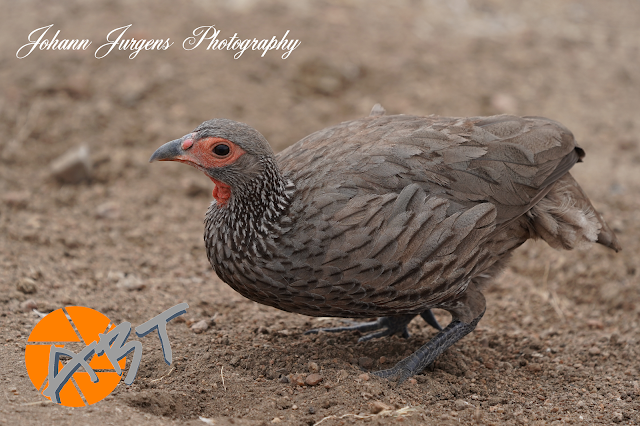
Swainson's Spurfowl #BirdingSunday

Image
Learn more at https://abt-edu.com Swainson's spurfowl or Swainson's francolin (Pternistis swainsonii) is a species of bird in the family Phasianidae.  It is found in Angola, Botswana, Lesotho, Malawi, Mozambique, Namibia, South Africa, Swaziland, Zambia, and Zimbabwe. In the Shona language in Zimbabwe, this bird is called the chikwari and is considered a delicacy by outdoor and hunting enthusiasts. Swainson's spurfowl was named after William Swainson, an English ornithologist. Diet: Seeds, berries, insects Reproduction: Francolins split into pairs during the breeding season. Most species, if not all, vigorously defend the area around their nest site against others of the same species. Nests are found on the ground, usually under cover and are shallow scrapes with a greater or lesser amount of plant material used as lining. The known clutch size ranges from 2-12 eggs, with the average believed to be between 4-6 eggs. Social Structure: Swainson's francolins are commonly f...

Let's go Camping in The Kruger National Park #WildWednesday

Image
Learn more at https://abt-edu.com Tired of the hustle and bustle of the city? Get away for a day or two and experience Africa's  wildlife like never before ... Camping Trips often include watching the sunset , sitting by the fire and unwinding visits with friends or family. Here are a few simple tips to follow next time your in the Kruger : Take a camera. Always keep your permit in the car with you . Be careful of monkeys and baboons . Get up early and stay out late. Drive the dirt roads for less traffic. Look out for upset birds and monkeys. Dress for heat, even in winter. NEVER STOP LOOKING . Get two-way radios if with friends ! Walk around the camp perimeter at night. Be respectful of the animals. Have a cracking day ! Share , Share , Share....