Posts

Showing posts with the label appreciate

The purple-crested turaco (Tauraco porphyreolophus) is a species of bird in the family Musophagidae.

Image
  Learn more at https:abt-edu.com The purple-crested turaco (Tauraco porphyreolophus) is a species of bird in the family Musophagidae. It clambers acrobatically through riverine woodland and savanna thickets. In flight it explodes from the canopy with distinctive deep red panels in the wings. It produces a distinctive croaking “khoh-khoh-khoh-khoh….” that gets progressively louder before suddenly stopping. The Purple-crested Turaco is a fruit-eater. Its glossy and colourful plumage makes this bird very attractive for humans. Turacos have been hunted in the past for their beautiful red flight feathers used as adornments by African people. Today, this species has adapted to suburban life, especially in Durban. The Purple-crested Turaco is frugivorous and feeds on fruits from numerous plant species. It forages in canopy, picking the fruits by perching at the end of the branches. This bird does not feed on the ground, except in captivity. The small fruits are swallowed whole, whe...

The lowland nyala or simply nyala (Tragelaphus angasii) #WildWednesday

Image
Learn more at https://abt-edu.com The nyala is mainly active in the early morning and the late afternoon. It generally browses during the day and during the night in the rainy season. As a herbivore, the nyala feeds upon foliage, fruits and grasses, with sufficient fresh water. As a shy animal, it prefers water holes rather than open spaces. The nyala does not show signs of territoriality, and individuals areas can overlap each others. They are very cautious creatures. Old males live alone, but single sex or mixed family groups of up to 10 individuals can be found. These inhabit thickets within dense and dry savanna woodlands. The main predators of the nyala are lion, leopard and, while baboons and raptorial birds hunt for the juveniles. Mating peaks during spring and autumn. Males and females are sexually mature at 18 and 11–12 months of age respectively, though they are socially immature until five years old. After a gestational period of seven months, a single calf is born. Cont...

The Puff adder is responsible for causing the most snakebite fatalities in Africa. - Wikipedia

Image
Learn more at https://abt-edu.com They are short stocky snakes that occur in a variety of colours, from sandy brown, grey, bright yellow & black in some parts of its range. As South Africa’s most widely-spread, venomous snake, the Puff Adder occurs in a large range of habitat, from coastal bush, grassland, fynbos habitat. The Puff Adder along withe the Mozambique Spitting Cobra account for the majority of serious snake bites South Africa. The Puff Adder is a snake with excellent camouflage, and it prefers to sit and wait for opportunity when it comes to feeding. These snakes may remain in an ambush position for several weeks, waiting for a potential meal to pass by. They have a powerful cytotoxic venom which can lead to extreme pain, severe swelling, and blistering of the skin. Anti-venom: Polyvalent anti-venom is used in the effective treatment of bites. The name ‘puff adder’ stems from the snake’s habit of inflating itself and hissing when threatened. The noise produced is a ...

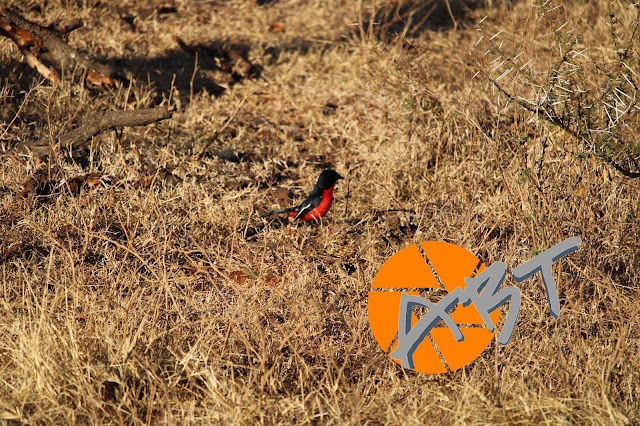
The crimson-breasted shrike is non-migratory. #BirdingSunday

Image
Learn more at https://abt-edu.com It mainly eats insects, gleaning prey from the leaves and trunks of trees, often flying to the ground to feed on ants or some fallen fruit. The following food items have been recorded in its diet: Invertebrates Formicidae (ants) Coleoptera (beetles) Lepidoptera (caterpillars) Fruit Both sexes construct the nest, which is a tidy cup made almost entirely of  Acacia  tree bark, collected from trunks and branches about 50-90 metres from the nesting site and lined with grass and rootlets. It is usually bound with spider web to a fork in the main stem of a plant, or occasionally onto a horizontal branch. Most of the construction work is done in the early morning, and it is usually complete after about 4-6 days. Egg-laying season is from August-january, peaking from October-November. It lays 2-3 eggs, which are incubated by both sexes for about 15-17 days.The chicks are fed and brooded by both parents, leaving the est at about 18-20 ...

The Mopane tree and its importance #BotanyFriday

Image
Learn more at https://abt-edu.com Colophospermum mopane, commonly called mopane,mopani,balsam tree,butterfly tree,or turpentine tree, is a tree in the legume family (Fabaceae), that grows in the far   very hot northern parts of southern Africa. The tree only occurs in Africa and is the only species in genus Colophospermum. Its distinctive butterfly-shaped (bifoliate) leaf and thin seed pod make it easy to identify. In terms of human use it is, together with camel thorn and leadwood, one of the three regionally important firewood trees. Mopane wood is one of southern Africa's heaviest and is difficult to work because of its hardness.However, this also makes it termite resistant. For this reason it has long been used for building houses and fences, as railway sleepers and as pit props. The termite-resistance and rich, reddish colouring also make it popular for flooring. Outside Africa, mopane is gaining popularity as a heavy, decorative wood, its uses including aquarium ornaments, ...

Jumping spiders are a group of spiders that constitute the family Salticidae.#CritterThursday

Image
Learn more at https://abt-edu.com As of 2019, this family contained over 600 described genera and over 6000 described species,making it the largest family of spiders at 13% of all species. –Wikipedia Jumping spiders have some of the best vision among arthropods and use it in courtship, hunting, and navigation. Although they normally move unobtrusively and fairly slowly, most species are capable of very agile jumps, notably when hunting, but sometimes in response to sudden threats or crossing long gaps. Both their book lungs and tracheal system are well-developed, and they use both systems (bimodal breathing). Jumping spiders are generally recognized by their eye pattern. All jumping spiders have four pairs of eyes, with the anterior median pair being particularly large. Although jumping spiders are generally carnivorous, many species have been known to include nectar in their diets. Jumping spiders conduct complex, visual courtship displays using both movements and physical bodily ...

The African dusky flycatcher, dusky-brown flycatcher or dusky alseonax (Muscicapa adusta)#BirdingSunday

Image
Learn more at https://abt-edu.com The African dusky flycatcher is 13 cm long and weighs around 11 g. Its upperparts are plain brown, with the only facial marking being an indistinct narrow eye-ring. The chin is plain pale grey, and the rest of the underparts are grey-brown with indistinct streaks. The short, straight, laterally flattened bill is black, the legs and feet are grey, and the eyes are brown. The sexes are similar, but the juvenile is spotted with buff above, and is whitish spotted with brown below. The African dusky flycatcher has soft, high-pitched "tzeeet" and tsirit calls. The African dusky flycatcher builds a cup-shaped nest in a tree cavity a few metres above the ground, and lays two or three green eggs. The hole in the tree is normally reused in the next breeding season. This species is monogamous, mating for life. The African dusky flycatcher is usually seen singly or in pairs. It forages from an open perch for insects typically taking its prey in a s...

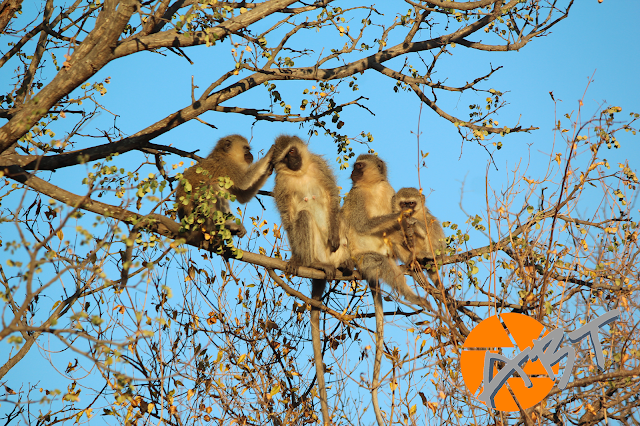
Vervet Monkeys (Cercopithecus aethiops)#ConservationTuesday

Image
Learn more at https://abt-edu.com ©Ludique Swart Vervets living near areas inhabited by people can become pests, stealing food and other items and raiding crops. This leads to a heavy annual slaughter by poison, traps, and guns. In recent years, vervet monkeys have been considered a valuable research animal, making live trapping prevalent as well. The have a life span up to 30 years. The males are slightly larger than the females and are easily recognized by their turquoise blue scrota. They form complex but stable social groups (also called troops) of 10 to 50 individuals mainly consist of adult females and their immature offspring. Males move freely in and out of these groups. Within the troop, each adult female is the center of a small family network. Females who have reached puberty generally stay in the troop. Females typically have few mates in their lifetime, whereas some males have numerous mates. Breeding is seasonal. After a gestation period of approximately 140 days, a s...

The grey go-away-bird, also known as grey lourie, grey loerie, or kwêvoël. #BirdingSunday

Image
Learn more at https://abt-edu.com It is found in Southern Africa and is one of the least colorful turaco's, many of which are as colorful as parrots. The Grey Go-Away is named for its call and it is a very social bird, often living in groups of up to 30 birds. It has a preference for open thornbush country, often near water. The grey go-away bird subsists on leaves, fruit, flowers, buds and the occasional small invertebrates. It feeds on a wide variety of trees, but is particularly fond of acacia trees, Mopane trees, Jackalberry trees and cultivated fruit such as guavas. Grey Go-away-bird is gregarious and moves in groups of up to 20 birds very busy and hopping into trees. Nest is a loose platform made with sticks and twigs of about 20 to 24 cm in diameter, situated at 3 to 20 metres above the ground. Both sexes build the nest, often hidden among dense foliage but not necessarily. Female lays 1 to 4 eggs, usually 3, white or pale blue, and slightly glossy. Incubation lasts about ...

GAME RANGER EXPERIENCE #CareerSaturday

Image
Learn more at https://abt-edu.com 7 Days full-time Follow in the daily footsteps of 'real' game rangers as they look after and protect one of Southern Africa's prime wilderness areas... During this course students will become part of our professional wildlife management team sharing in the daily tasks and duties; learning what it takes to effectively manage a game reserve... STUDENT FEE: R 8 700:00 INCLUDED: Meals, Accommodation, Study Material, Shirt, Cap & Certificate COURSE CONTENTS: Management Practices, Wilderness Protection (Anti-poaching), Field Ranger Training, Game Ranching/Breeding, Wildlife Research/Monitoring, Conservation Action Planning, Road Maintenance, Reserve Fences, Alien Plant Control, Game Capture, And much more... Contact us at info@africanbushtraining

The Impala Lily #BotanyFriday

Image
Learn more at https://abt-edu.com The impala lily is known in Africa and southern Africa as a source of fish poison and arrow poison. The poison is prepared from latex in the bark and fleshy parts of the trunk, but it is always used in combination with other poisons. Leaves and flowers are poisonous to goats and cattle, but the plants are sometimes heavily browsed and are not considered to be of much toxicological significance. Despite the toxicity, it is used in medicinal applications and in magic potions. Their striking forms and beautiful flowers borne in masses over a long period make them excellent garden and container plants. Impala Lily flowers mainly in July, but will also bloom as late as mid-September in places where it is cultivated. Flower size is about ± 5 cm across. Contact us at info@africanbushtraining.com

The black crake #BirdingSunday

Image
Learn more at https://abt-edu.com A small, pudgy, blackish waterbird with reddish eyes, a yellowish bill, and diagnostic pink-red legs. The immature is browner, with duller legs and bill. It scuttles along the edges of swamps and other water bodies, preferring reedbeds and emergent vegetation to forage on, sometimes quite boldly. Like most crakes, it walks tentatively with its head lowered, picking and probing for insects, plant matter, and other food. The distinctive call is an odd, wheezy bubbling and chattering “cheeew-t-t-t-t treeew, t-t-t-t-t-treew”. Diet: Invertebrates, insects, fish, frogs, seeds of aqautic plants, and bird eggs. Crakes can often be seen consuming parasites off of large animals such as hippos. Reproduction: The black crake is incredibly territorial of its nest. Often it will attack other crakes or even larger birds to defend its territory. The nest usually consists of reeds and other aquatic plants. Up to six eggs may be produced, with the average being three eg...

Humorous Elephant STEW FOR A CROWD #ABTRecipeFriday

Image
Learn at https://abt-edu.com INGREDIENTS 1 Elephant 2 Rabbits (optional) Salt and Pepper DIRECTIONS Cut elephant into bite size pieces. This should take about 2 months. Add enough brown gravy to cover. Cook over hot fire for 3 weeks. This will serve 3800 people. If more are expected, the two rabbits may be added, but do this only if necessary as most people do not like to find hare in their stew. HOWEVER AND EVEN BETTER, feast on the magnificance of these animals ALIVE and enjoy the wholesome feeling of being a healthy ambassador for wildlife conservation in Africa . Happy Friday  - and remember, keep your stomach's full good food and your minds busy with wildlife!

Fascinating Facts About Stick Insects #CritterThursday

Image
Learn more at https://abt-edu.com Stick Insects Can Regenerate Limbs. Stick Insects Can Reproduce Without Males. Stick Insects Even Act Like Sticks. Their Eggs Resemble Seeds. Nymphs Eat Their Molted Skin. Stick Insects Aren't Defenseless. Their Eggs May Attract Ants. Not All Stick Insects Stay Brown. Stick Insects Can Play Dead. Stick Insects Are the World's Longest Insect. AVERAGE LIFE SPAN IN THE WILD: Up to 3 years. Mainly nocturnal creatures, they spend much of their day motionless, hidden under plants. Contact us at info@africanbushtraining.com

The rainbow skink is one of many reptiles that can be found living in the Garden.#ReptileMonday

Image
Learn more at https://abt-edu.com The rainbow skink is a large, beautifully coloured skink with varied colouration, depending on sex and age. Juveniles and sub-adult males are dark olive-brown to black above, with three distinctive bluish-white stripes that are a brilliant electric-blue on the tail. Adult females retain their colouring, although the stripes may become subdivided and faint.   Adult males become buffy-olive to olive-brown above, each scale bearing a pearly white spot. The pale stripes become indistinct. The tail changes from yellowish to orange brown and the belly is creamy white.The rainbow skink is a rock dweller and can often be seen running around on exposed granite domes and other rock faces, feeding on insects.   During summer the female lays six to ten eggs which hatch after about 62 days. Northern populations of rainbow skink could lay two clutches of eggs per season. They are sometimes referred to as ‘margaritifera’ meaning ‘pearl containing’ be...

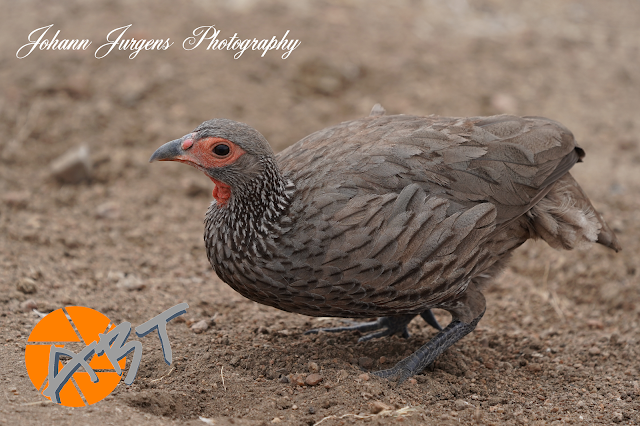
Swainson's Spurfowl #BirdingSunday

Image
Learn more at https://abt-edu.com Swainson's spurfowl or Swainson's francolin (Pternistis swainsonii) is a species of bird in the family Phasianidae.  It is found in Angola, Botswana, Lesotho, Malawi, Mozambique, Namibia, South Africa, Swaziland, Zambia, and Zimbabwe. In the Shona language in Zimbabwe, this bird is called the chikwari and is considered a delicacy by outdoor and hunting enthusiasts. Swainson's spurfowl was named after William Swainson, an English ornithologist. Diet: Seeds, berries, insects Reproduction: Francolins split into pairs during the breeding season. Most species, if not all, vigorously defend the area around their nest site against others of the same species. Nests are found on the ground, usually under cover and are shallow scrapes with a greater or lesser amount of plant material used as lining. The known clutch size ranges from 2-12 eggs, with the average believed to be between 4-6 eggs. Social Structure: Swainson's francolins are commonly f...

FIELD GUIDE/LODGE MANAGEMENT COMBO COURSE #CareerSaturday

Image
Learn more at https://abt-edu.com DURATION: 3 Months Full-time Students will get the once in a lifetime opportunity to gain knowledge and experience across ALL lodge departments and qualify themselves as all-rounder's when it comes to job-role suitability and adding value to possible future employment prospects. This course is for people serious about starting a career in the African Safari Lodge industry as it exposes you first-hand to the realities of   living and working on a game lodge…The experience and knowledge you will gain from this all-in-one course is priceless and the skills acquired will stand you in good stead for a lifetime career in the African Safari Lodge industry…   QUALIFICATIONS INCLUDED: FGASA Apprentice Field Guide (NQF2) & Game Lodge Management STUDENT FEE: R 87 000:00 INCLUDED: Meals, Accommodation, Study Material, Uniform Contribution, Membership-, Exam-, Assessment- & Moderation- Fees. Contact us at info@africanbushtraining.com

Flying with Vultures #ConservatonTuesday

Image
Learn more at https://abt-edu.com Vultures face multiple man-made threats, including but not limited to poisoning, power line collisions and electrocutions, direct harvesting for cultural beliefs, and ever decreasing foraging ranges.  Some vulture species are threatened with possible extinction within our lifetime unless we can curb the ongoing downward spiral now! Some populations have plummeted by over 90% in the past 30 years. Vultures are scavenging birds of prey. A typical characteristic of most vultures is a bald head, devoid of normal feathers. Vultures are found on all continents except Australia and Antarctica. There are 11 species of vultures in Africa, with the majority listed as endangered, such as the Cape Vulture (Gyps coprotheres), which has already been classified as extinct in Namibia, Swaziland and Zimbabwe. Vultures clear up to 70% of Africa’s carrion and are extremely beneficial to humans, considerably reducing the spread of diseases, some of which can be fata...

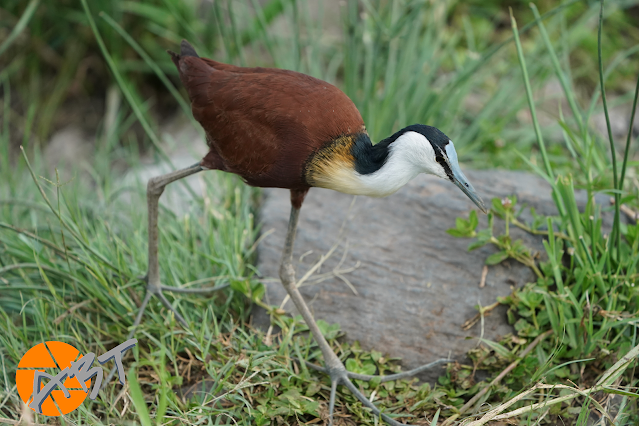
The African Jacana #BirdingSunday

Image
Learn more at https://abt-edu.com African jacanas are conspicuous and unmistakable  birds . They are about 30 cm long, but females are larger than males. They have chestnut upperparts with black wingtips, rear neck, and eyestripe. The underparts are also chestnut in the adults, only in juveniles they are white with a chestnut belly patch. The blue bill extends up as a  coot -like head shield, and the legs and long toes are grey. The jacana has evolved a highly unusually  polyandrous  mating system, meaning that one female mates with multiple males and the male alone cares for the chicks. Such a system has evolved due to a combination of two factors: firstly, the lakes that the jacana lives on are so resource-rich that the relative energy expended by the female in producing each egg is effectively negligible. Secondly the jacana, as a bird, lays eggs and eggs can be equally well incubated and cared for by a parent bird of either sex. This means that the rate-limi...

WILDLIFE & RESERVE MANAGEMENT COURSE #CareerSaturday

Image
Learn more at https://abt-edu.com DURATION: 21 Days Full-time   Start your career in conservation under the mentorship of renowned conservationists, ex-Kruger Park rangers and veterans in in the field; or just join the course for a life changing wilderness experience…the choice is yours, but one thing is certain - what you will learn and experience is priceless!!!   This “feet-wet & hands-dirty” course has been developed to teach students the fundamentals of sustainable and responsible wildlife management as they actively partake in the daily running of a wilderness concession located in the world famous Greater Kruger Park!!!   COURSE CONTENTS:   Conservation Action Planning, Laws & Legislation, Bio-diversity Conservation, Natural Resources Protection, Veld Management, Ecological Processes & Principles, Plant & Animal Care, Land Degradation, Invader Plants, Bush Encroachment, Road Maintenance, Fire Management, Animal Health Monitoring...