Posts

Showing posts with the label travel

Take a look at the Winged Predatory Katydid (Clonia wahlbergi)

Image
  Learn more at https://abt-edu.com Katydids are identified by their long antennae that can grow up to two to three times the length of their body and is covered with sensory receptors to help find their way in the dark. They are notorious for their plant like appearance and for their ability to blend in with vegetation. The katydid gets its name from the way the male and female songs sound.   They create sounds by rubbing a scraper on one forewing against another forewing.   It has hearing organs located inside a slit on its front legs.   Male song organs are located on their front wings and females chirp in response to the males song that sounds like “katy did, Katy didn’t.”   The song is usually used for courtship during the late summer. Katydids have adapted and come up with ways to hide from their predators.   They have excellent camouflage capabilities and are able to pose like leaves and mimic other insects.   Their predators are bats, birds...
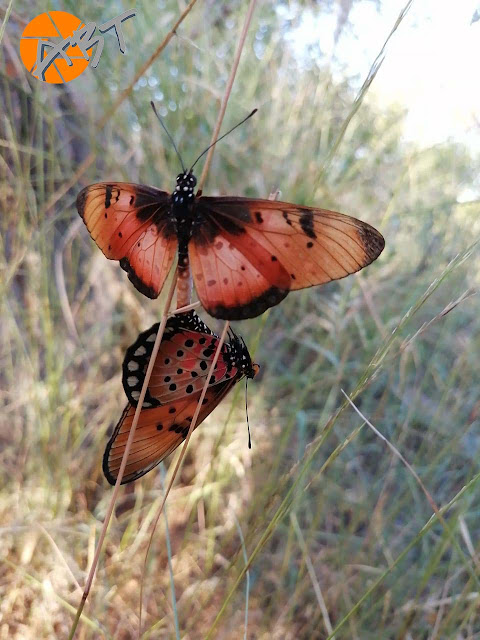
The Natal Acraea (Acraea natalica) is a butterfly of the Nymphalidae family.

Image
  Learn more at https://abt-edu.com ©Estian Kruger Butterflies have a Holo-metabolic lifecycle and belong to the Order Lepidoptera. They undergo complete physical changes, i.e. insects undergo four developmetal stages, the embryo, larva, pupa, and adult. This is a meduim sized butterfly with a wingspan of about 59mm. Males are pinkish red , females are brownish red. Their wings are spotted with black and with black bases. Adults are on wing year round, with a strong peak in late summer in southern Africa. v   What is the difference between a butterfly and a moth ?   Butterflies                                                                   ...

ANTI-POACHING CAREER EXPERIENCE

Image
  Learn more at https://abt-edu.com 7 Days full-time Get a taste of what it takes to be at the front lines of wildlife conservation in Africa. During this action-packed 7 days students will be taken through the realities of wilderness protection and shown in true hands-on fashion what is being done to keep wildlife safe from poaching and illegal animal harvesting... STUDENT FEE: R 8 700:00 INCLUDED: Meals, Accommodation, Study Material, Shirt, Cap & Certificate COURSE CONTENTS: Anti-poaching Methods & Techniques, Patrols, Ambush, Survival & Bush Craft, Dealing with Dangerous Animals, and much more... Contact us at info@africanbushtraining.com

A Burchell's zebra ( Equus quagga burchellii), a subspecies of plains zebra.

Image
  Learn more at https://abt-edu.com AVERAGE LIFE SPAN IN THE WILD: 25 years No animal has a more distinctive coat than the zebra. Each animal's stripes are as unique as fingerprints—no two are exactly alike—although each of the three species has its own general pattern. Zebras are social animals that spend time in herds. They graze together, primarily on grass, and even groom one another. Plains zebras are the most common species. They live in small family groups consisting of a male (stallion), several females, and their young. These units may combine with others to form awe-inspiring herds thousands of head strong, but family members will remain close within the herd. Zebras must be constantly wary of lions and hyenas. A herd has many eyes alert to danger. If an animal is attacked, its family will come to its defense, circling the wounded zebra and attempting to drive off predators. Plains Zebra are much less numerous than they once were, because of human activities suc...

Opuntia, commonly called prickly pear. #BotanyFriday

Image
Learn more at https://abt-edu.com They are a succulent shrub or small tree with paddle-shaped stems armed with spines. This plant is leafless. It is an invasive alien from Central America. The fruits are plum-shaped, spiny and edible. Habitat of the Sweet Prickly Pear  - It grows across South Africa, having spread over the centuries after been imported from Mexico. The Prickly Pear is one of the most used alien plants in South Africa, so much so that many now believe the plant is a South African species. The prickly pear is used to build stockades for domestic animals – and is used as feed for the animals. Many farmhouses in South Africa are enclosed in a Prickly Pear fence. The fruit is used today to make jams and various drinks. In many areas, such as wilderness areas the plant is seen as a pest and steps are taken to eradicate it. Contact us at info@africanbushtraining.com

Humorous Elephant STEW FOR A CROWD #ABTRecipeFriday

Image
Learn at https://abt-edu.com INGREDIENTS 1 Elephant 2 Rabbits (optional) Salt and Pepper DIRECTIONS Cut elephant into bite size pieces. This should take about 2 months. Add enough brown gravy to cover. Cook over hot fire for 3 weeks. This will serve 3800 people. If more are expected, the two rabbits may be added, but do this only if necessary as most people do not like to find hare in their stew. HOWEVER AND EVEN BETTER, feast on the magnificance of these animals ALIVE and enjoy the wholesome feeling of being a healthy ambassador for wildlife conservation in Africa . Happy Friday  - and remember, keep your stomach's full good food and your minds busy with wildlife!

Recipe to become a better tracker #ABTRecipeFriday

Image
Learn more at https://abt-edu.com Learn to feel the heartbeat of your environment. Find somewhere to sit, then let your mind go blank. Get good at feeling, seeing, listening, tasting and smelling. We think vision is our strongest sense, but smell is our most primeval – it can deliver more information than any other. When you’ve honed your senses, they will combine into one super-sense: intuition. Getting to know where the food, water and barriers are will help you to find good tracks. Imagine flying above the landscape, gaining a bird’s eye view of the animal you’re tracking. Think as the animal is thinking. If I’m in dangerous-animal country I try to think ‘smarter’ than the animal. Find the shadows and you’ll find the leopard (they rely on them for camouflage). Find the prey and you’ll find the predator. Also, look for ‘track traps’ – soft or sandy patches, into which animals are funnelled; try trails – most animals opt for the path of least resistance. Keep your eyes peeled for colo...

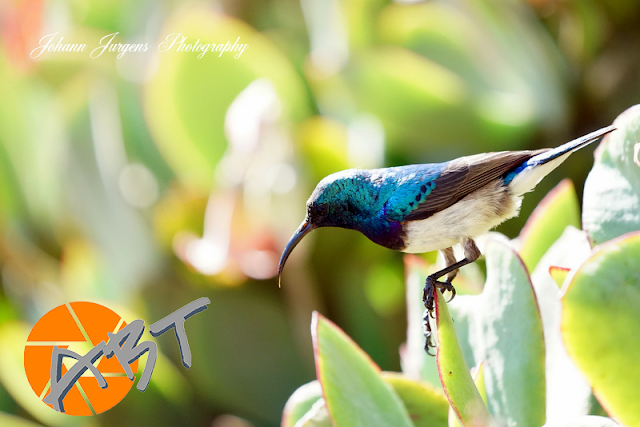
The white-bellied sunbird (Cinnyris talatala), also known as the white-breasted sunbird #BirdingSunday

Image
The  sunbirds  are placed into the taxonomic family, Nectariniidae, which was so  named  because most of these birds feed on (you guessed it), nectar. Their thin downward-curving bills and brush-tipped tubular tongues are adapted specially for nectivory. Distribution and habitat  Occurs from Angola to southern Tanzania south to southern Africa, where it is common to locally abundant across northern Namibia, northern and south-eastern Botswana, Zimbabwe, Mozambique, Swaziland and north-eastern South Africa. It generally prefers semi-arid savanna woodland. Brood parasites  It has been recorded as host of the Klaas's cuckoo. Food  It mainly eats nectar supplemented with arthropods, often joining mixed-species foraging flocks in the day, along with other sunbirds at large sources of nectar. In the late afternoon it regularly hawks insects aerially and gleans invertebrates from foliage. Breeding  The nest (see image) is built solely by the female in ab...

HOSPITALITY MANAGEMENT PROGRAM

Image
Learn more at https://abt-edu.com DURATION: 3 Months Full-time   The course centres around three primary topics of importance, which include an introduction to hospitality management, an overview of all the key operations in hospitality and the responsibilities to uphold industry standards.    This HOSPITALITY MANAGEMENT PROGRAM, offers a comprehensive introduction to this dynamic and diverse business sector.  The course is designed for those with a strong interest in hospitality management, though no specific experience. A series of eight detailed modules gradually introduces students to every important skill, trait and insight required to begin or advance an exciting career, followed by practical work experience in a typical bush camp and high profile guest lodge. QUALIFICATIONS INCLUDED: Lodge Leadership, Game Lodge Management, Accommodation Services, Professional Cookery & Kitchen Operations, Hospitality Reception, Food & Beverage Services, Ev...

Let's go Camping in The Kruger National Park #WildWednesday

Image
Learn more at https://abt-edu.com Tired of the hustle and bustle of the city? Get away for a day or two and experience Africa's  wildlife like never before ... Camping Trips often include watching the sunset , sitting by the fire and unwinding visits with friends or family. Here are a few simple tips to follow next time your in the Kruger : Take a camera. Always keep your permit in the car with you . Be careful of monkeys and baboons . Get up early and stay out late. Drive the dirt roads for less traffic. Look out for upset birds and monkeys. Dress for heat, even in winter. NEVER STOP LOOKING . Get two-way radios if with friends ! Walk around the camp perimeter at night. Be respectful of the animals. Have a cracking day ! Share , Share , Share....

WILDLIFE & RESERVE MANAGEMENT COURSE #CareerSaturday

Image
Learn more at https://abt-edu.com DURATION: 21 Days Full-time   Start your career in conservation under the mentorship of renowned conservationists, ex-Kruger Park rangers and veterans in in the field; or just join the course for a life changing wilderness experience…the choice is yours, but one thing is certain - what you will learn and experience is priceless!!!   This “feet-wet & hands-dirty” course has been developed to teach students the fundamentals of sustainable and responsible wildlife management as they actively partake in the daily running of a wilderness concession located in the world famous Greater Kruger Park!!!   COURSE CONTENTS:   Conservation Action Planning, Laws & Legislation, Bio-diversity Conservation, Natural Resources Protection, Veld Management, Ecological Processes & Principles, Plant & Animal Care, Land Degradation, Invader Plants, Bush Encroachment, Road Maintenance, Fire Management, Animal Health Monitoring...

Becoming a good Birder #ABTRecipeFriday

Image
Learn more at https://abt-edu.com Have good eyes and ears, and a good brain. At its most fundamental level, birding involves seeing and hearing birds, and then processing the visual and aural input to the birder’s brain. Start young. It is more difficult if you begin as an adult or even a late teenager. Don’t get cocky. Teen birders, who, despite brilliant sensory and neural apparatus, are eerily capable of mistaking a common Savannah Sparrow for a mega-rarity Baird’s Sparrow. Stay with it. The longer you bird, the better you learn. Know status and distribution. This information makes a huge difference in the bird identification process. Learn vocalizations of as much birds as you possibly can. Understand behavior. Recognizing behavioral clues is a key component of bird identification. Go naked! You don’t necessarily notice stuff when you’re birding with binoculars or any other equipment. Have fun. Birding doesn’t promise a cure for cancer. Birding doesn’t provide a clear path to world...

CONSERVATION MANAGEMENT PROGRAM

Image
Learn more at https://abt-edu.com Duration: 3 Months Full-time   Join the ‘Conservation Services’ community today and contribute to wildlife conservation in Africa... The aim of this course is to provide students with the skills to succeed in a rapidly-changing nature conservation environment where innovation is key. Graduates are equipped with a comprehensive range of technical, managerial, research, communication and life skills for employment in the field of nature conservation. The purpose of this qualification is to supply the nature conservation industry with people who can competently contribute to the conservation of biodiversity and provide knowledgeable assistance to natural resource and reserve managers.   QUALIFICATIONS INCLUDED: Wildlife/Reserve Management, Wilderness Protection (Anti-poaching), Field Ranger Training, Game Ranching/Game Breeding, Wildlife Rehabilitation, Wildlife Research, Conservation Action Planning, And much more... Contact us at in...

FACT : Butterflies Taste With Their Feet. #CritterThursday

Image
  Here are a few interesting facts : Butterflies and moths are part of the class of insects in the order Lepidoptera. Butterflies are flying insects with large scaly wings. Like all insects, they have six jointed legs and three body parts: the head, the thorax and the abdomen. The wings are attached to the thorax and they also have a pair of antennae, compound eyes and an exoskeleton. The butterfly starts its life as an egg, laid on a leaf. The caterpillar (larva) hatches from the egg and eats leaves or flowers. It loses its skin many times as it grows, increasing greatly in size. Eventually it turns into a pupa, or chrysalis and finally a beautiful adult butterfly emerges and the cycle continues. An adult butterfly has a very short life: just three to four weeks. However, the entire life cycle of a butterfly can range between 2 and 8 months, depending on the species. It might sound strange to us humans, but butterflies rely on their feet to taste food. Their feet have taste sensor...

Become a part of nature with a walking safari #WildWednesday

Image
What better way to experience the ultimate in safari experiences - picture walking through the untouched wild of South Africa, to your left a 1000-year-old Baobab tree, to your right a herd of giraffes getting ready for the day ahead. Step by step, you’re connecting with nature in its rawest form. It’s a magical experience you will never forget. Kruger National Park walking safaris are guided by experienced rangers with an extensive knowledge of the area, the wildlife, birdlife and indigenous vegetation.The camp-staff cook and clean while your guide leads you into close encounters with the African wild. Feel your excitement build as you track the South African Big 5 on your walking safari. On your walk, you’ll learn about the ecology, the birds, the game, the plants and insects, and also how to interpret the signs of the wild, including animal spoor (footprints). When you come face to face with that elephant, or watch that dung beetle labouring with his ball of dung, you'll realise...

NATURE ENTHUSIAST COURSE

Image
Learn more at https://africanbushtraining.com COURSE TYPE: Full-time Training DURATION: 25 Days STUDENT FEE: R 29 000:00 INCLUDED: Meals, Accommodation, Study Material, Meals, Accommodation, Study Material, ABT Shirt, Cap & Certification COURSE CREDITS:The course is fully endorsed by CATHSSETA, FGASA (Field Guide Association of Southern Africa) and accredited by the ISCI (International Students Conservation Initiative) COURSE MODULES: Geology: Rocks & Soil Ecology: Processes & Principles Astronomy: Stars & Planers Weather & Climate Botany: Grasses, Scrubs & Trees Mammals: Animal Studies Ethology: Animal behaviour Birds & Birding Freshwater Fish Reptiles: The scale ones… Arthropods: Insects, Scorpions, Spiders, etc. Conservation Management Amphibians: Frogs & Toads Early Human Habitation Wilderness Tracking & Bush Craft And much more... Contact us at info@africanbushtraining.com

GAME RANCHING / BREEDING COURSE

Image
Learn more at https://africanbushtraining.com COURSE TYPE : Full-time Training DURATION: 11-Days STUDENT FEE : R 14 700:00   INCLUDED: Meals, Accommodation, Study Material, Uniform Contribution, Membership-, Exam-, Assessment- & Moderation- Fees COURSE CREDITS: This course is accredited and fully endorsed by the ISCI (International Students Conservation Initiative). COURSE MODULES: Introduction to Game Ranching Ecosystems Planning & Management Nutrition in game animals Genomics as a tool for the wildlife industry Predator Management Game Capturing Methods Diseases & Parasites Animal Health Monitoring Species Accounts And much more… Contact us at info@africanbushtraining.com

Game Drives in Southern Africa #WildWednesday

Image
Learn more at https://africanbushtraining.com Searching for wild animals with a  safari vehicle, that’s what  ‘Game Drives’ are about... Morning game drive Wild animals are mostly active in the early mornings and late afternoons. That’s why the Game Drives always start early, about 5 o’clock in the morning. Game drives last 3 to 4 hours and include an extensive breakfast. Coffee and snacks are also included in the Game Drive. Afternoon game drive At around 16:00 o’clock the ‘afternoon game drive’ sets off, and also takes about 3 to 4 hours. Stops for snacks and drinks are often included, drinks appropriately called ‘sundowner drinks’, considering you’ll enjoy them simultaneously with the sunset. Afterwards, you’ll continue the ride in the dark, after the sun has set.  This enables you to admire the animals in both day and night. The Game Drive safari can be wrapped with up by a South African dinner, where you can relive and share your experience b...

Join ABT in learning more about the Emperor Moth #ConservationTuesday

Image
©Lafras Taljaard The moths are easily identifiable by their markings, which feature a large orange eyespot on each hind wing and two black and white bands isolating two smaller eyespots. Males have long, feathery antennae that they use to find a mate during their brief three-to-four-day lifespan. Gonimbrasia belina  is a species of  emperor moth  which is native to the warmer parts of  southern Africa . Its large  edible   caterpillar , known as the  mopane worm , feeds primarily but not exclusively on  mopane tree  leaves. Mopane worms are an important source of  protein  for millions in the region. The species was first described by  John O. Westwood  in 1849. Like most caterpillars, the mopane worm's life cycle starts when it hatches in the summer, after which it proceeds to eat the foliage in its immediate vicinity. As the  larva  grows, it moults four times in its five larval stages, after which the mopane w...

Have you ever seen a Brown - headed Parrot ?#BirdingSunday

Image
Appearance The Brown Headed Parrot is another green bird with a brownish grey head. It has yellow under the wings at the front which unfortunately can only be seen properly when in flight. The iris is a greyish yellow. Brown heads have a basically whitish beak, with black on the tip of the upper mandible. How much black is present depends on the individual. Some brown heads have yellow eyes but they are a dark, grayish yellow. Others have light gray eyes even as adults. All juvenile brown heads have dark gray, almost black eyes, which lighten to their adult color by the time the bird is a year old. Brown heads have a brown shade of gray which gradually fades into the green on the neck. The brown head's scientific name, cryptoxanthus, means literally 'hidden yellow' and refers to the yellow coloring on the underside of the wing. Brown heads are small parrots. They're about 9' long including the short tail. Diet They feed on a variety of seeds, nuts, berries, flowers,...