Posts

Showing posts with the label drive

Drakensberg Creeper (Opisthacanthus validus) #CritterThursday

Image
Learn more at https://abt-edu.com Scorpions stridulate by rubbing their chelicerae (mouthparts) together to produce a hissing sound. In some cases, they may drag the telson (sting) over the body segments (tergites) to produce a sudden scraping sound in an attempt to frighten off a predator. This is a medium sized scorpion of around 9 cm with the tail extended.   It is black in colour, but often with a muddy appearance. It sometimes has lighter coloured legs and a lighter tipped tail. It is common across its range, occurring under rocks often at high altitudes in areas like the Drakensberg.The sting of this species may cause pain but is not medically important. Contact us at info@africanbushtraining.com

The lowland nyala or simply nyala (Tragelaphus angasii) #WildWednesday

Image
Learn more at https://abt-edu.com The nyala is mainly active in the early morning and the late afternoon. It generally browses during the day and during the night in the rainy season. As a herbivore, the nyala feeds upon foliage, fruits and grasses, with sufficient fresh water. As a shy animal, it prefers water holes rather than open spaces. The nyala does not show signs of territoriality, and individuals areas can overlap each others. They are very cautious creatures. Old males live alone, but single sex or mixed family groups of up to 10 individuals can be found. These inhabit thickets within dense and dry savanna woodlands. The main predators of the nyala are lion, leopard and, while baboons and raptorial birds hunt for the juveniles. Mating peaks during spring and autumn. Males and females are sexually mature at 18 and 11–12 months of age respectively, though they are socially immature until five years old. After a gestational period of seven months, a single calf is born. Cont...

The African dusky flycatcher, dusky-brown flycatcher or dusky alseonax (Muscicapa adusta)#BirdingSunday

Image
Learn more at https://abt-edu.com The African dusky flycatcher is 13 cm long and weighs around 11 g. Its upperparts are plain brown, with the only facial marking being an indistinct narrow eye-ring. The chin is plain pale grey, and the rest of the underparts are grey-brown with indistinct streaks. The short, straight, laterally flattened bill is black, the legs and feet are grey, and the eyes are brown. The sexes are similar, but the juvenile is spotted with buff above, and is whitish spotted with brown below. The African dusky flycatcher has soft, high-pitched "tzeeet" and tsirit calls. The African dusky flycatcher builds a cup-shaped nest in a tree cavity a few metres above the ground, and lays two or three green eggs. The hole in the tree is normally reused in the next breeding season. This species is monogamous, mating for life. The African dusky flycatcher is usually seen singly or in pairs. It forages from an open perch for insects typically taking its prey in a s...

The Impala Lily #BotanyFriday

Image
Learn more at https://abt-edu.com The impala lily is known in Africa and southern Africa as a source of fish poison and arrow poison. The poison is prepared from latex in the bark and fleshy parts of the trunk, but it is always used in combination with other poisons. Leaves and flowers are poisonous to goats and cattle, but the plants are sometimes heavily browsed and are not considered to be of much toxicological significance. Despite the toxicity, it is used in medicinal applications and in magic potions. Their striking forms and beautiful flowers borne in masses over a long period make them excellent garden and container plants. Impala Lily flowers mainly in July, but will also bloom as late as mid-September in places where it is cultivated. Flower size is about ± 5 cm across. Contact us at info@africanbushtraining.com

The greater kudu (Tragelaphus strepsiceros) are sparsely populated in most areas due to declining habitat, deforestation, and poaching.#ConservationTuesday

Image
Learn more at https://abt-edu.com Greater kudus have both benefited and suffered from interaction with humans. Humans are turning much of the kudu's natural habitat into farmland, restricting their home ranges. Humans have also destroyed woodland cover, which they use for their habitat. However, wells and irrigation set up by humans has also allowed the greater kudu to occupy territory that would have been too devoid of water for them previously. The greater kudu are also a target for poachers for meat and horns. The horns of greater kudus are commonly used to make Shofars, a Jewish ritual horn blown at Rosh Hashanah. The traditional sport of Kudu dung-spitting (Bokdrol Spoeg in Afrikaans) is practiced in the South African Afrikaner community. The winner is the contestant who is able to spit one of the antelope’s small, hard dung pellets the furthest – with the distance measured to where it comes to rest.  An annual world championship was launched in 1994, with contests held ...

Black Mambas use their incredible speed to escape threats, not to hunt prey. #ReptileMonday

Image
Learn more at https://abt-edu.com Black Mamba (Dendroaspis polylepis) - © Johan Marais Classification: VERY DANGEROUS This is by far the largest venomous snake in Africa with a maximum length of 4.5 m (specimens over 3.8 m are rare). Despite its reputation it is a shy, elusive snake that is quick to escape but will not hesitate to strike repeatedly if cornered. It is active during the day, often basking near a hole in an anthill or large rock crevice where it quickly disappears into if disturbed. When threatened it will gape exposing the black inner lining of the mouth and it may form a narrow hood. The venom of this snake is potently neurotoxic and may cause difficulty with breathing within half an hour. Symptoms include a numbness of the lips, slurred speech, ptosis and progressive weakness. Antivenom is effective but often required in large quantities (10 – 15 vials). They get their name not from their skin color, which tends to be olive to gray, but rather from the blue-bla...

The black crake #BirdingSunday

Image
Learn more at https://abt-edu.com A small, pudgy, blackish waterbird with reddish eyes, a yellowish bill, and diagnostic pink-red legs. The immature is browner, with duller legs and bill. It scuttles along the edges of swamps and other water bodies, preferring reedbeds and emergent vegetation to forage on, sometimes quite boldly. Like most crakes, it walks tentatively with its head lowered, picking and probing for insects, plant matter, and other food. The distinctive call is an odd, wheezy bubbling and chattering “cheeew-t-t-t-t treeew, t-t-t-t-t-treew”. Diet: Invertebrates, insects, fish, frogs, seeds of aqautic plants, and bird eggs. Crakes can often be seen consuming parasites off of large animals such as hippos. Reproduction: The black crake is incredibly territorial of its nest. Often it will attack other crakes or even larger birds to defend its territory. The nest usually consists of reeds and other aquatic plants. Up to six eggs may be produced, with the average being three eg...

Swainson's Spurfowl #BirdingSunday

Image
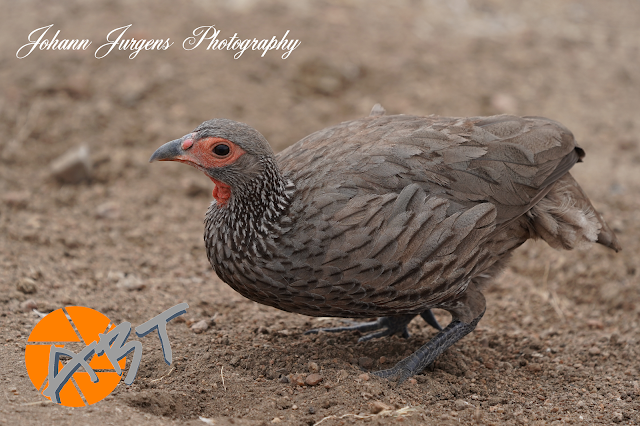
Learn more at https://abt-edu.com Swainson's spurfowl or Swainson's francolin (Pternistis swainsonii) is a species of bird in the family Phasianidae.  It is found in Angola, Botswana, Lesotho, Malawi, Mozambique, Namibia, South Africa, Swaziland, Zambia, and Zimbabwe. In the Shona language in Zimbabwe, this bird is called the chikwari and is considered a delicacy by outdoor and hunting enthusiasts. Swainson's spurfowl was named after William Swainson, an English ornithologist. Diet: Seeds, berries, insects Reproduction: Francolins split into pairs during the breeding season. Most species, if not all, vigorously defend the area around their nest site against others of the same species. Nests are found on the ground, usually under cover and are shallow scrapes with a greater or lesser amount of plant material used as lining. The known clutch size ranges from 2-12 eggs, with the average believed to be between 4-6 eggs. Social Structure: Swainson's francolins are commonly f...

FIELD GUIDE/LODGE MANAGEMENT COMBO COURSE #CareerSaturday

Image
Learn more at https://abt-edu.com DURATION: 3 Months Full-time Students will get the once in a lifetime opportunity to gain knowledge and experience across ALL lodge departments and qualify themselves as all-rounder's when it comes to job-role suitability and adding value to possible future employment prospects. This course is for people serious about starting a career in the African Safari Lodge industry as it exposes you first-hand to the realities of   living and working on a game lodge…The experience and knowledge you will gain from this all-in-one course is priceless and the skills acquired will stand you in good stead for a lifetime career in the African Safari Lodge industry…   QUALIFICATIONS INCLUDED: FGASA Apprentice Field Guide (NQF2) & Game Lodge Management STUDENT FEE: R 87 000:00 INCLUDED: Meals, Accommodation, Study Material, Uniform Contribution, Membership-, Exam-, Assessment- & Moderation- Fees. Contact us at info@africanbushtraining.com

Let's go Camping in The Kruger National Park #WildWednesday

Image
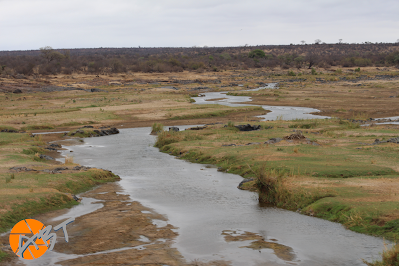
Learn more at https://abt-edu.com Tired of the hustle and bustle of the city? Get away for a day or two and experience Africa's  wildlife like never before ... Camping Trips often include watching the sunset , sitting by the fire and unwinding visits with friends or family. Here are a few simple tips to follow next time your in the Kruger : Take a camera. Always keep your permit in the car with you . Be careful of monkeys and baboons . Get up early and stay out late. Drive the dirt roads for less traffic. Look out for upset birds and monkeys. Dress for heat, even in winter. NEVER STOP LOOKING . Get two-way radios if with friends ! Walk around the camp perimeter at night. Be respectful of the animals. Have a cracking day ! Share , Share , Share....

Humans are pushing big cats out of their habitats.#ConservationTuesday

Image
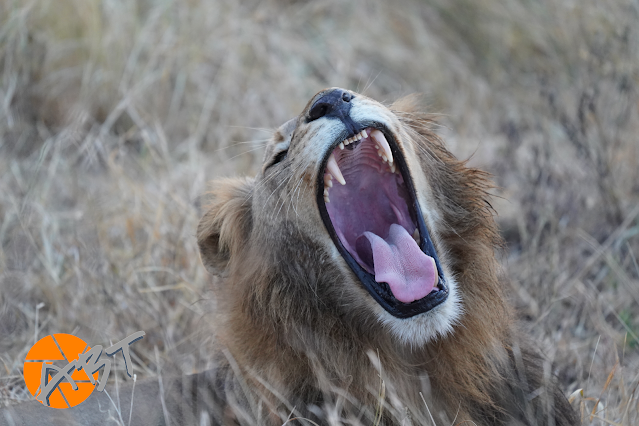
This African Lion's population is steadily decreasing in the wild. In just two decades, populations decreased by 43 percent, and it’s estimated that as few as 23,000 remain today. One of the main causes is the alarming rate at which they are losing their habitats due to expanding human populations and the resulting growth of agriculture, settlements, and roads. As lion habitats shrink, the big cats are being forced into closer quarters with humans. This, coupled with a decrease in their natural prey, causes them to attack livestock. In turn, farmers oftentimes retaliate and kill these big majestic cats.  These big cats are being killed in rituals of bravery, prized as hunting trophies, and, increasingly, for their body parts' perceived medicinal and magical powers. While most cat species are solitary, this big cat is an exception. It has developed a social system based on teamwork, division of labor, and an extended family unit. The average pride consists of about 15 indi...