Posts

Showing posts with the label mating

The African clawed frog (Xenopus laevis, also known as the xenopus, African clawed toad, African claw-toed frog or the platanna)

Image
Learn more at https://abt-edu.com These “flat frogs” live in natural water-bodies, but you might see them in your garden pond. They also don’t mind living in the local sewerage works. At the end of the rainy season, they bury themselves under wet mud, where they hibernate until the next rains. Common platannas feed in the water on any living creatures they can overpower. Their prey includes frogs and tadpoles (including their own kind), insects and other invertebrates (mosquito larvae are consumed by young frogs), small fish, young birds and mice that fall into the water. They even feed on carrion in the water. In the 1930s, it was discovered that a female common platanna would spawn if injected with the urine of a pregnant woman (the hormone chorionic gonadotropin being the active ingredient). In the 1940s and ‘50s, this was the only available pregnancy test and many hospitals around the world kept and bred platannas so that they could perform such tests. Contact us at info@africa...

Fact: Geckos' eyes are 350 times more sensitive to light than human eyes. #ReptileMonday

Image
Here are a few Gecko facts you need to know: Most species of gecko don’t have eyelids, so they lick their eyes to clean them. Geckos range in life span depending on the species, but many will live around five years in the wild. Geckos use their tails to store fat and nutrients for lean times. Most geckos can detach their tails — and regrow them later if necessary. Geckos are able to produce various sounds for communication, including barks, chirps and clicks. Geckos' amazing toes help them stick to any surface except Teflon. Geckos typically eat fruits, insects and flower nectar. Geckos give birth by laying eggs. The female can be pregnant with her eggs for years before she lays them. For example, the harlequin geckos' pregnancy lasts three to four years. When the eggs are ready, a gecko lays her eggs in leaves and bark. These lizards have sticky feet that allows them to climb up slick surfaces. Their toes have microscopic hairs called setae that give them this sticky ability. ...

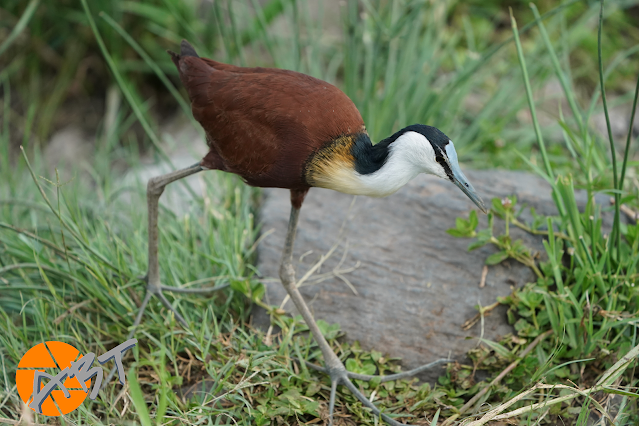
The African Jacana #BirdingSunday

Image
Learn more at https://abt-edu.com African jacanas are conspicuous and unmistakable  birds . They are about 30 cm long, but females are larger than males. They have chestnut upperparts with black wingtips, rear neck, and eyestripe. The underparts are also chestnut in the adults, only in juveniles they are white with a chestnut belly patch. The blue bill extends up as a  coot -like head shield, and the legs and long toes are grey. The jacana has evolved a highly unusually  polyandrous  mating system, meaning that one female mates with multiple males and the male alone cares for the chicks. Such a system has evolved due to a combination of two factors: firstly, the lakes that the jacana lives on are so resource-rich that the relative energy expended by the female in producing each egg is effectively negligible. Secondly the jacana, as a bird, lays eggs and eggs can be equally well incubated and cared for by a parent bird of either sex. This means that the rate-limi...

Join ABT in learning more about the Emperor Moth #ConservationTuesday

Image
©Lafras Taljaard The moths are easily identifiable by their markings, which feature a large orange eyespot on each hind wing and two black and white bands isolating two smaller eyespots. Males have long, feathery antennae that they use to find a mate during their brief three-to-four-day lifespan. Gonimbrasia belina  is a species of  emperor moth  which is native to the warmer parts of  southern Africa . Its large  edible   caterpillar , known as the  mopane worm , feeds primarily but not exclusively on  mopane tree  leaves. Mopane worms are an important source of  protein  for millions in the region. The species was first described by  John O. Westwood  in 1849. Like most caterpillars, the mopane worm's life cycle starts when it hatches in the summer, after which it proceeds to eat the foliage in its immediate vicinity. As the  larva  grows, it moults four times in its five larval stages, after which the mopane w...

The flightless ostrich is the world's largest bird.#WildWednesday

Image
Learn more at https://africanbushtraining.com They roam African savanna and desert lands and get most of their water from the plants they eat. Though they cannot fly, ostriches are fleet, strong runners. They can sprint up to 69 kilometers an hour. They may use their wings as "rudders" to help them change direction while running. An ostrich's powerful, long legs can cover 3 to 4 metre in a single stride. These legs can also be formidable weapons. Ostrich kicks can kill a human or a potential predator like a lion. Each two-toed foot has a long, sharp claw. Ostriches live in small herds that typically contain less than a dozen birds. Contrary to popular belief, ostriches do not bury their heads in the sand. The old saw probably originates with one of the bird's defensive behaviors. At the approach of trouble, ostriches will lie low and press their long necks to the ground in an attempt to become less visible. Their plumage blends well with sandy soil and, from a distanc...

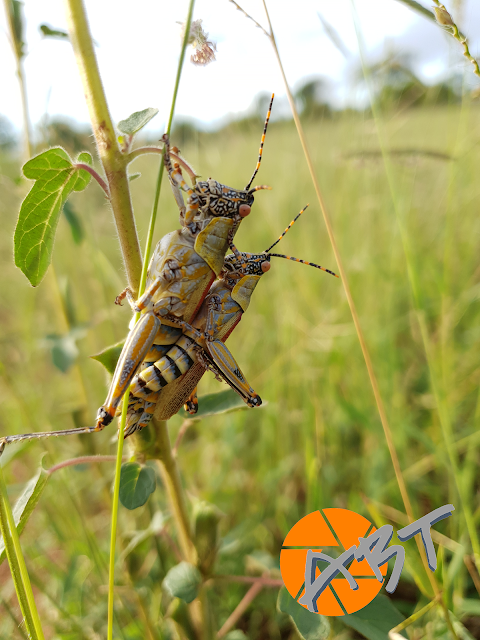
Exploring grasshoppers with ABT #CritterThursday

Image
When you think about it, there are about a million described species of insects in the world, "more than five times the number of all animals combined," according to emeritus professor Jerry Powell in his book,  California Insects. To many townsfolk, the only exposure they will have to grasshoppers or locusts are those TV images of some macho bushman eating them in an attempt at 'survival'. To rural folk, they are a traditional form of nutritious food. Grasshoppers have two antennae, 6 legs, two pairs of wings and small little pinchers to tear off food such as grasses, leaves and cereal crops.  Grasshoppers are controlled in nature by predators such as birds, frogs, and snakes. Humans use   insecticides  and poison baits to control them when they become crop pests. Elegant Grasshopper The Elegant Grasshopper is native to Africa, and they'll eat just about anything planted in the garden , although  they prefer herbs to grasses.  Its distribution is restricte...