Posts

Showing posts with the label happy

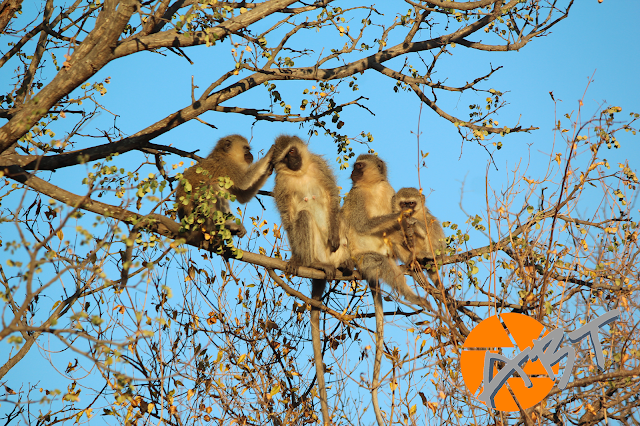
Vervet Monkeys (Cercopithecus aethiops)#ConservationTuesday
Image
Learn more at https://abt-edu.com ©Ludique Swart Vervets living near areas inhabited by people can become pests, stealing food and other items and raiding crops. This leads to a heavy annual slaughter by poison, traps, and guns. In recent years, vervet monkeys have been considered a valuable research animal, making live trapping prevalent as well. The have a life span up to 30 years. The males are slightly larger than the females and are easily recognized by their turquoise blue scrota. They form complex but stable social groups (also called troops) of 10 to 50 individuals mainly consist of adult females and their immature offspring. Males move freely in and out of these groups. Within the troop, each adult female is the center of a small family network. Females who have reached puberty generally stay in the troop. Females typically have few mates in their lifetime, whereas some males have numerous mates. Breeding is seasonal. After a gestation period of approximately 140 days, a s...

GAME RANGER EXPERIENCE #CareerSaturday

Image
Learn more at https://abt-edu.com 7 Days full-time Follow in the daily footsteps of 'real' game rangers as they look after and protect one of Southern Africa's prime wilderness areas... During this course students will become part of our professional wildlife management team sharing in the daily tasks and duties; learning what it takes to effectively manage a game reserve... STUDENT FEE: R 8 700:00 INCLUDED: Meals, Accommodation, Study Material, Shirt, Cap & Certificate COURSE CONTENTS: Management Practices, Wilderness Protection (Anti-poaching), Field Ranger Training, Game Ranching/Breeding, Wildlife Research/Monitoring, Conservation Action Planning, Road Maintenance, Reserve Fences, Alien Plant Control, Game Capture, And much more... Contact us at info@africanbushtraining

Investigating Sugar Ant's (Camponotus) #CritterThursday

Image
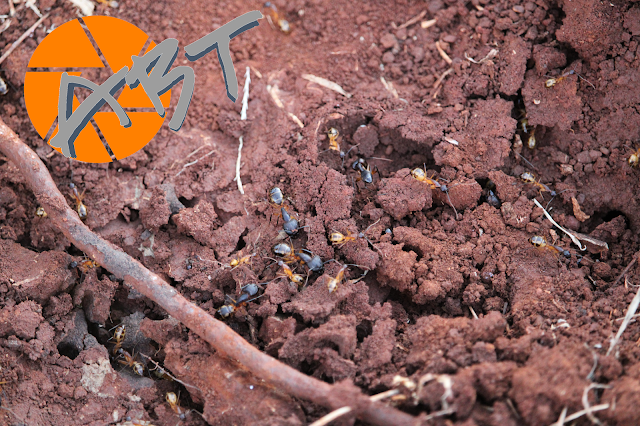
Learn more at https://abt-edu.com This species vary greatly in shape, size and colour. They range from 2.5 to 15 mm, and are some of the most often seen ants due to their size and often bright in colouring. They often nest in a variety of sites ranging from holes in wood to the roots of plants, twigs of trees and shrubs, between rocks or in the soil. They can also be seen during the day however, they are most active at night. They are unable to sting, but they do possess strong mandibles which can bite. In self-defense these ants are also able to spray acid from their abdomens to deter predators. They feed on dead and lives insects, household waste and are attracted by sweet food. They rarely enter houses and the ant’s life cycle passes through egg, larva, pupa and adult phases. Castes: Ant colonies consist of various castes which perform different functions in the colony. Reproductives - The reproductive males and females have the task of reproducing. Depending on the ...

The greater kudu (Tragelaphus strepsiceros) are sparsely populated in most areas due to declining habitat, deforestation, and poaching.#ConservationTuesday

Image
Learn more at https://abt-edu.com Greater kudus have both benefited and suffered from interaction with humans. Humans are turning much of the kudu's natural habitat into farmland, restricting their home ranges. Humans have also destroyed woodland cover, which they use for their habitat. However, wells and irrigation set up by humans has also allowed the greater kudu to occupy territory that would have been too devoid of water for them previously. The greater kudu are also a target for poachers for meat and horns. The horns of greater kudus are commonly used to make Shofars, a Jewish ritual horn blown at Rosh Hashanah. The traditional sport of Kudu dung-spitting (Bokdrol Spoeg in Afrikaans) is practiced in the South African Afrikaner community. The winner is the contestant who is able to spit one of the antelope’s small, hard dung pellets the furthest – with the distance measured to where it comes to rest.  An annual world championship was launched in 1994, with contests held ...

ENVIRONMENTAL EDUCATION COURSE #CareerSaturday

Image
Learn more at https://abt-edu.com DURATION: 11 Days Full-time This course will teach you the principles of Environmental Education in practice and equip you with all the necessary tools, knowledge and skills you will need to confidently apply your Environmental Education initiatives in your own environment and make a ‘real’ difference in conservation and the preservation of our most valuable natural resources… On completion of the course you will be able to design, plan, implement, facilitate and evaluate on a variety of environmental learning programmes. COURSE CONTENTS: Introduction to Environmental Education, Teaching Methodologies and Techniques, Changing Attitudes and Behaviour, Planning - Designing - Facilitating - Evaluating EE Programs, Conducting Training Interventions, And much more... STUDENT FEE: R 14 700:00 INCLUDED: Meals, Accommodation, Study Material & Uniform Contribution Contact us at info@africanbushtraining.com

Humorous Elephant STEW FOR A CROWD #ABTRecipeFriday

Image
Learn at https://abt-edu.com INGREDIENTS 1 Elephant 2 Rabbits (optional) Salt and Pepper DIRECTIONS Cut elephant into bite size pieces. This should take about 2 months. Add enough brown gravy to cover. Cook over hot fire for 3 weeks. This will serve 3800 people. If more are expected, the two rabbits may be added, but do this only if necessary as most people do not like to find hare in their stew. HOWEVER AND EVEN BETTER, feast on the magnificance of these animals ALIVE and enjoy the wholesome feeling of being a healthy ambassador for wildlife conservation in Africa . Happy Friday  - and remember, keep your stomach's full good food and your minds busy with wildlife!

Fascinating Facts About Stick Insects #CritterThursday

Image
Learn more at https://abt-edu.com Stick Insects Can Regenerate Limbs. Stick Insects Can Reproduce Without Males. Stick Insects Even Act Like Sticks. Their Eggs Resemble Seeds. Nymphs Eat Their Molted Skin. Stick Insects Aren't Defenseless. Their Eggs May Attract Ants. Not All Stick Insects Stay Brown. Stick Insects Can Play Dead. Stick Insects Are the World's Longest Insect. AVERAGE LIFE SPAN IN THE WILD: Up to 3 years. Mainly nocturnal creatures, they spend much of their day motionless, hidden under plants. Contact us at info@africanbushtraining.com

The rainbow skink is one of many reptiles that can be found living in the Garden.#ReptileMonday

Image
Learn more at https://abt-edu.com The rainbow skink is a large, beautifully coloured skink with varied colouration, depending on sex and age. Juveniles and sub-adult males are dark olive-brown to black above, with three distinctive bluish-white stripes that are a brilliant electric-blue on the tail. Adult females retain their colouring, although the stripes may become subdivided and faint.   Adult males become buffy-olive to olive-brown above, each scale bearing a pearly white spot. The pale stripes become indistinct. The tail changes from yellowish to orange brown and the belly is creamy white.The rainbow skink is a rock dweller and can often be seen running around on exposed granite domes and other rock faces, feeding on insects.   During summer the female lays six to ten eggs which hatch after about 62 days. Northern populations of rainbow skink could lay two clutches of eggs per season. They are sometimes referred to as ‘margaritifera’ meaning ‘pearl containing’ be...

Swainson's Spurfowl #BirdingSunday

Image
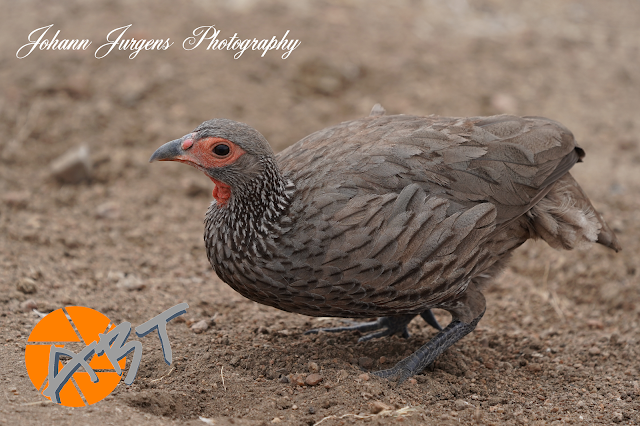
Learn more at https://abt-edu.com Swainson's spurfowl or Swainson's francolin (Pternistis swainsonii) is a species of bird in the family Phasianidae.  It is found in Angola, Botswana, Lesotho, Malawi, Mozambique, Namibia, South Africa, Swaziland, Zambia, and Zimbabwe. In the Shona language in Zimbabwe, this bird is called the chikwari and is considered a delicacy by outdoor and hunting enthusiasts. Swainson's spurfowl was named after William Swainson, an English ornithologist. Diet: Seeds, berries, insects Reproduction: Francolins split into pairs during the breeding season. Most species, if not all, vigorously defend the area around their nest site against others of the same species. Nests are found on the ground, usually under cover and are shallow scrapes with a greater or lesser amount of plant material used as lining. The known clutch size ranges from 2-12 eggs, with the average believed to be between 4-6 eggs. Social Structure: Swainson's francolins are commonly f...

FIELD GUIDE/LODGE MANAGEMENT COMBO COURSE #CareerSaturday

Image
Learn more at https://abt-edu.com DURATION: 3 Months Full-time Students will get the once in a lifetime opportunity to gain knowledge and experience across ALL lodge departments and qualify themselves as all-rounder's when it comes to job-role suitability and adding value to possible future employment prospects. This course is for people serious about starting a career in the African Safari Lodge industry as it exposes you first-hand to the realities of   living and working on a game lodge…The experience and knowledge you will gain from this all-in-one course is priceless and the skills acquired will stand you in good stead for a lifetime career in the African Safari Lodge industry…   QUALIFICATIONS INCLUDED: FGASA Apprentice Field Guide (NQF2) & Game Lodge Management STUDENT FEE: R 87 000:00 INCLUDED: Meals, Accommodation, Study Material, Uniform Contribution, Membership-, Exam-, Assessment- & Moderation- Fees. Contact us at info@africanbushtraining.com

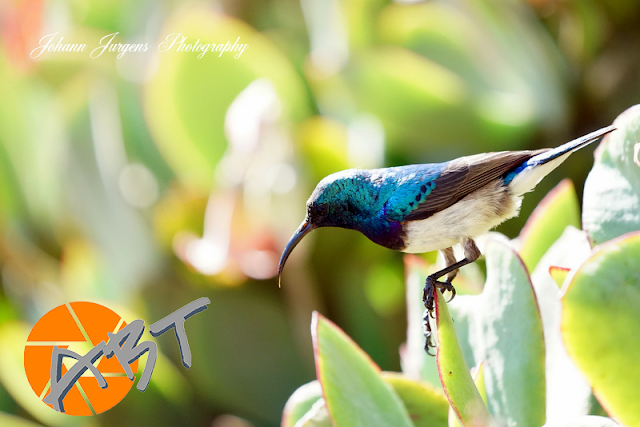
The white-bellied sunbird (Cinnyris talatala), also known as the white-breasted sunbird #BirdingSunday

Image
The  sunbirds  are placed into the taxonomic family, Nectariniidae, which was so  named  because most of these birds feed on (you guessed it), nectar. Their thin downward-curving bills and brush-tipped tubular tongues are adapted specially for nectivory. Distribution and habitat  Occurs from Angola to southern Tanzania south to southern Africa, where it is common to locally abundant across northern Namibia, northern and south-eastern Botswana, Zimbabwe, Mozambique, Swaziland and north-eastern South Africa. It generally prefers semi-arid savanna woodland. Brood parasites  It has been recorded as host of the Klaas's cuckoo. Food  It mainly eats nectar supplemented with arthropods, often joining mixed-species foraging flocks in the day, along with other sunbirds at large sources of nectar. In the late afternoon it regularly hawks insects aerially and gleans invertebrates from foliage. Breeding  The nest (see image) is built solely by the female in ab...