Posts

Showing posts with the label outdoors

The purple-crested turaco (Tauraco porphyreolophus) is a species of bird in the family Musophagidae.

Image
  Learn more at https:abt-edu.com The purple-crested turaco (Tauraco porphyreolophus) is a species of bird in the family Musophagidae. It clambers acrobatically through riverine woodland and savanna thickets. In flight it explodes from the canopy with distinctive deep red panels in the wings. It produces a distinctive croaking “khoh-khoh-khoh-khoh….” that gets progressively louder before suddenly stopping. The Purple-crested Turaco is a fruit-eater. Its glossy and colourful plumage makes this bird very attractive for humans. Turacos have been hunted in the past for their beautiful red flight feathers used as adornments by African people. Today, this species has adapted to suburban life, especially in Durban. The Purple-crested Turaco is frugivorous and feeds on fruits from numerous plant species. It forages in canopy, picking the fruits by perching at the end of the branches. This bird does not feed on the ground, except in captivity. The small fruits are swallowed whole, whe...

ANTI-POACHING CAREER EXPERIENCE

Image
  Learn more at https://abt-edu.com 7 Days full-time Get a taste of what it takes to be at the front lines of wildlife conservation in Africa. During this action-packed 7 days students will be taken through the realities of wilderness protection and shown in true hands-on fashion what is being done to keep wildlife safe from poaching and illegal animal harvesting... STUDENT FEE: R 8 700:00 INCLUDED: Meals, Accommodation, Study Material, Shirt, Cap & Certificate COURSE CONTENTS: Anti-poaching Methods & Techniques, Patrols, Ambush, Survival & Bush Craft, Dealing with Dangerous Animals, and much more... Contact us at info@africanbushtraining.com

A Burchell's zebra ( Equus quagga burchellii), a subspecies of plains zebra.

Image
  Learn more at https://abt-edu.com AVERAGE LIFE SPAN IN THE WILD: 25 years No animal has a more distinctive coat than the zebra. Each animal's stripes are as unique as fingerprints—no two are exactly alike—although each of the three species has its own general pattern. Zebras are social animals that spend time in herds. They graze together, primarily on grass, and even groom one another. Plains zebras are the most common species. They live in small family groups consisting of a male (stallion), several females, and their young. These units may combine with others to form awe-inspiring herds thousands of head strong, but family members will remain close within the herd. Zebras must be constantly wary of lions and hyenas. A herd has many eyes alert to danger. If an animal is attacked, its family will come to its defense, circling the wounded zebra and attempting to drive off predators. Plains Zebra are much less numerous than they once were, because of human activities suc...

Drakensberg Creeper (Opisthacanthus validus) #CritterThursday

Image
Learn more at https://abt-edu.com Scorpions stridulate by rubbing their chelicerae (mouthparts) together to produce a hissing sound. In some cases, they may drag the telson (sting) over the body segments (tergites) to produce a sudden scraping sound in an attempt to frighten off a predator. This is a medium sized scorpion of around 9 cm with the tail extended.   It is black in colour, but often with a muddy appearance. It sometimes has lighter coloured legs and a lighter tipped tail. It is common across its range, occurring under rocks often at high altitudes in areas like the Drakensberg.The sting of this species may cause pain but is not medically important. Contact us at info@africanbushtraining.com

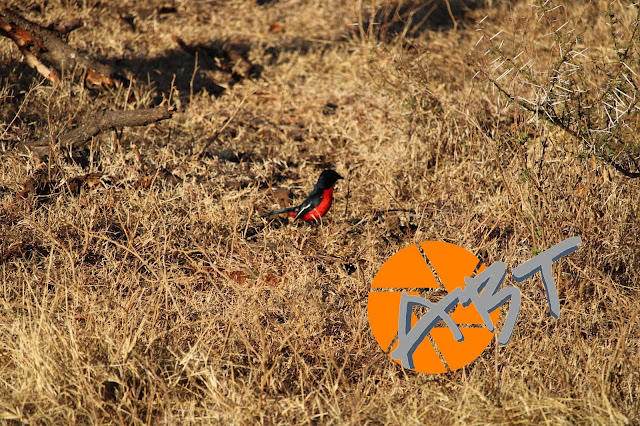
The crimson-breasted shrike is non-migratory. #BirdingSunday

Image
Learn more at https://abt-edu.com It mainly eats insects, gleaning prey from the leaves and trunks of trees, often flying to the ground to feed on ants or some fallen fruit. The following food items have been recorded in its diet: Invertebrates Formicidae (ants) Coleoptera (beetles) Lepidoptera (caterpillars) Fruit Both sexes construct the nest, which is a tidy cup made almost entirely of  Acacia  tree bark, collected from trunks and branches about 50-90 metres from the nesting site and lined with grass and rootlets. It is usually bound with spider web to a fork in the main stem of a plant, or occasionally onto a horizontal branch. Most of the construction work is done in the early morning, and it is usually complete after about 4-6 days. Egg-laying season is from August-january, peaking from October-November. It lays 2-3 eggs, which are incubated by both sexes for about 15-17 days.The chicks are fed and brooded by both parents, leaving the est at about 18-20 ...

The African clawed frog (Xenopus laevis, also known as the xenopus, African clawed toad, African claw-toed frog or the platanna)

Image
Learn more at https://abt-edu.com These “flat frogs” live in natural water-bodies, but you might see them in your garden pond. They also don’t mind living in the local sewerage works. At the end of the rainy season, they bury themselves under wet mud, where they hibernate until the next rains. Common platannas feed in the water on any living creatures they can overpower. Their prey includes frogs and tadpoles (including their own kind), insects and other invertebrates (mosquito larvae are consumed by young frogs), small fish, young birds and mice that fall into the water. They even feed on carrion in the water. In the 1930s, it was discovered that a female common platanna would spawn if injected with the urine of a pregnant woman (the hormone chorionic gonadotropin being the active ingredient). In the 1940s and ‘50s, this was the only available pregnancy test and many hospitals around the world kept and bred platannas so that they could perform such tests. Contact us at info@africa...

Opuntia, commonly called prickly pear. #BotanyFriday

Image
Learn more at https://abt-edu.com They are a succulent shrub or small tree with paddle-shaped stems armed with spines. This plant is leafless. It is an invasive alien from Central America. The fruits are plum-shaped, spiny and edible. Habitat of the Sweet Prickly Pear  - It grows across South Africa, having spread over the centuries after been imported from Mexico. The Prickly Pear is one of the most used alien plants in South Africa, so much so that many now believe the plant is a South African species. The prickly pear is used to build stockades for domestic animals – and is used as feed for the animals. Many farmhouses in South Africa are enclosed in a Prickly Pear fence. The fruit is used today to make jams and various drinks. In many areas, such as wilderness areas the plant is seen as a pest and steps are taken to eradicate it. Contact us at info@africanbushtraining.com

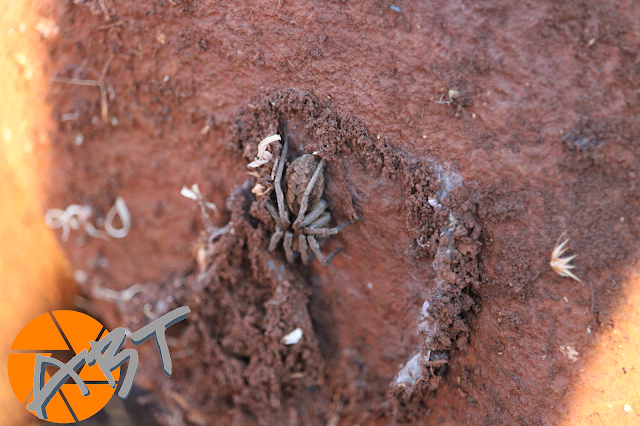
Spiders are arachnids, not insects. Other members of the arachnid family include scorpions, mites, ticks and harvestmen.#CritterThursday

Image
Learn more at https://abt-edu.com The greatest threat to spiders is habitat loss, although some spider species are also threatened by the pet trade. Most species are carnivorous, either trapping flies and other insects in their webs, or hunting them down. They can’t swallow their food as is, though—spiders inject their prey with digestive fluids, then suck out the liquefied remains. Though not all spiders build webs, every species produces silk. They use the strong, flexible protein fiber for many different purposes: to climb (think Spider Man), to tether themselves for safety in case of a fall, to create egg sacs, to wrap up prey, to make nests, and more. Most spider species have eight eyes, though some have six. Despite all of those eyes, though, many don’t see very well. A notable exception is the jumping spider, which can see more colors than humans can. Using filters that sit in front of cells in their eyes, the day-hunting jumping spider can see in the red spectrum, green s...

Peters’ Thread Snake (Leptotyphlops scutifrons) #ReptileMonday

Image
Learn more at https://abt-edu.com A very small snake that averages around 20 cm in length. The Thread Snakes resemble worms and it can be difficult to distinguish the head from the tail. They are burrowing snakes with a cylindrical body and the eye is minute. They feed on invertebrates, especially termites and their eggs. The Thread Snakes spend most of their lives underground but may come to the surface after heavy rains. They are sometimes found under rocks and logs and old termite mounds.  The Thread Snakes are tricky to tell apart and multiple species occur in Southern Africa. They can also be confused with the venomous Stiletto Snake. Thread Snakes are completely harmless. The Female lays three to six elongated eggs, joined like a string of sausages, in summer. They are eaten by other snakes, birds, small carnivorous mammals (e.g. mongooses) and scorpions. Contact us at info@africanbushtraining.com

The grey go-away-bird, also known as grey lourie, grey loerie, or kwêvoël. #BirdingSunday

Image
Learn more at https://abt-edu.com It is found in Southern Africa and is one of the least colorful turaco's, many of which are as colorful as parrots. The Grey Go-Away is named for its call and it is a very social bird, often living in groups of up to 30 birds. It has a preference for open thornbush country, often near water. The grey go-away bird subsists on leaves, fruit, flowers, buds and the occasional small invertebrates. It feeds on a wide variety of trees, but is particularly fond of acacia trees, Mopane trees, Jackalberry trees and cultivated fruit such as guavas. Grey Go-away-bird is gregarious and moves in groups of up to 20 birds very busy and hopping into trees. Nest is a loose platform made with sticks and twigs of about 20 to 24 cm in diameter, situated at 3 to 20 metres above the ground. Both sexes build the nest, often hidden among dense foliage but not necessarily. Female lays 1 to 4 eggs, usually 3, white or pale blue, and slightly glossy. Incubation lasts about ...

The greater kudu (Tragelaphus strepsiceros) are sparsely populated in most areas due to declining habitat, deforestation, and poaching.#ConservationTuesday

Image
Learn more at https://abt-edu.com Greater kudus have both benefited and suffered from interaction with humans. Humans are turning much of the kudu's natural habitat into farmland, restricting their home ranges. Humans have also destroyed woodland cover, which they use for their habitat. However, wells and irrigation set up by humans has also allowed the greater kudu to occupy territory that would have been too devoid of water for them previously. The greater kudu are also a target for poachers for meat and horns. The horns of greater kudus are commonly used to make Shofars, a Jewish ritual horn blown at Rosh Hashanah. The traditional sport of Kudu dung-spitting (Bokdrol Spoeg in Afrikaans) is practiced in the South African Afrikaner community. The winner is the contestant who is able to spit one of the antelope’s small, hard dung pellets the furthest – with the distance measured to where it comes to rest.  An annual world championship was launched in 1994, with contests held ...

Black Mambas use their incredible speed to escape threats, not to hunt prey. #ReptileMonday

Image
Learn more at https://abt-edu.com Black Mamba (Dendroaspis polylepis) - © Johan Marais Classification: VERY DANGEROUS This is by far the largest venomous snake in Africa with a maximum length of 4.5 m (specimens over 3.8 m are rare). Despite its reputation it is a shy, elusive snake that is quick to escape but will not hesitate to strike repeatedly if cornered. It is active during the day, often basking near a hole in an anthill or large rock crevice where it quickly disappears into if disturbed. When threatened it will gape exposing the black inner lining of the mouth and it may form a narrow hood. The venom of this snake is potently neurotoxic and may cause difficulty with breathing within half an hour. Symptoms include a numbness of the lips, slurred speech, ptosis and progressive weakness. Antivenom is effective but often required in large quantities (10 – 15 vials). They get their name not from their skin color, which tends to be olive to gray, but rather from the blue-bla...

ENVIRONMENTAL EDUCATION COURSE #CareerSaturday

Image
Learn more at https://abt-edu.com DURATION: 11 Days Full-time This course will teach you the principles of Environmental Education in practice and equip you with all the necessary tools, knowledge and skills you will need to confidently apply your Environmental Education initiatives in your own environment and make a ‘real’ difference in conservation and the preservation of our most valuable natural resources… On completion of the course you will be able to design, plan, implement, facilitate and evaluate on a variety of environmental learning programmes. COURSE CONTENTS: Introduction to Environmental Education, Teaching Methodologies and Techniques, Changing Attitudes and Behaviour, Planning - Designing - Facilitating - Evaluating EE Programs, Conducting Training Interventions, And much more... STUDENT FEE: R 14 700:00 INCLUDED: Meals, Accommodation, Study Material & Uniform Contribution Contact us at info@africanbushtraining.com

Humorous Elephant STEW FOR A CROWD #ABTRecipeFriday

Image
Learn at https://abt-edu.com INGREDIENTS 1 Elephant 2 Rabbits (optional) Salt and Pepper DIRECTIONS Cut elephant into bite size pieces. This should take about 2 months. Add enough brown gravy to cover. Cook over hot fire for 3 weeks. This will serve 3800 people. If more are expected, the two rabbits may be added, but do this only if necessary as most people do not like to find hare in their stew. HOWEVER AND EVEN BETTER, feast on the magnificance of these animals ALIVE and enjoy the wholesome feeling of being a healthy ambassador for wildlife conservation in Africa . Happy Friday  - and remember, keep your stomach's full good food and your minds busy with wildlife!

Humans are the Sable antelope’s only real threat. The giant sable antelope subspecies is listed as endangered because of trophy hunting and habitat loss.#ConservationTuesday

Image
Learn more at https://abt-edu.com The Sable is a barrel-chested rotund antelope with a long face, short neck, and dark mane. They have impressive ringed horns rising vertically to curve backwards. When arching their necks and standing with their heads high and tails outstretched, these antelope look like horses. In this position they appear larger than they actually are. The males keep this position even when galloping, the arched neck being important to manifest dominance. Sables change color as they grow older. Calves are born with a reddish-brown color and virtually no markings. White markings appear as they grow older and their coat becomes darker, and the older the animal is, the more striking is the contrast. Sable antelopes are herbivorous. They are specialized browsing animals and feed upon foliage, leaves, medium length grass, and herbs, especially those growing on termite mounds. The leaves of trees provide 90% of their diet. Ask any lowveld old-timer and they will tell y...

The rainbow skink is one of many reptiles that can be found living in the Garden.#ReptileMonday

Image
Learn more at https://abt-edu.com The rainbow skink is a large, beautifully coloured skink with varied colouration, depending on sex and age. Juveniles and sub-adult males are dark olive-brown to black above, with three distinctive bluish-white stripes that are a brilliant electric-blue on the tail. Adult females retain their colouring, although the stripes may become subdivided and faint.   Adult males become buffy-olive to olive-brown above, each scale bearing a pearly white spot. The pale stripes become indistinct. The tail changes from yellowish to orange brown and the belly is creamy white.The rainbow skink is a rock dweller and can often be seen running around on exposed granite domes and other rock faces, feeding on insects.   During summer the female lays six to ten eggs which hatch after about 62 days. Northern populations of rainbow skink could lay two clutches of eggs per season. They are sometimes referred to as ‘margaritifera’ meaning ‘pearl containing’ be...

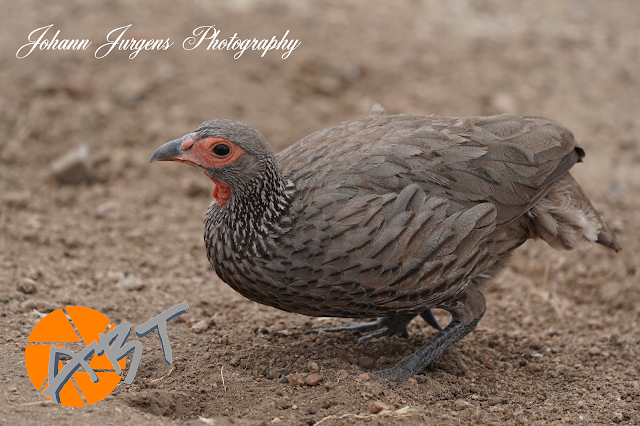
Swainson's Spurfowl #BirdingSunday

Image
Learn more at https://abt-edu.com Swainson's spurfowl or Swainson's francolin (Pternistis swainsonii) is a species of bird in the family Phasianidae.  It is found in Angola, Botswana, Lesotho, Malawi, Mozambique, Namibia, South Africa, Swaziland, Zambia, and Zimbabwe. In the Shona language in Zimbabwe, this bird is called the chikwari and is considered a delicacy by outdoor and hunting enthusiasts. Swainson's spurfowl was named after William Swainson, an English ornithologist. Diet: Seeds, berries, insects Reproduction: Francolins split into pairs during the breeding season. Most species, if not all, vigorously defend the area around their nest site against others of the same species. Nests are found on the ground, usually under cover and are shallow scrapes with a greater or lesser amount of plant material used as lining. The known clutch size ranges from 2-12 eggs, with the average believed to be between 4-6 eggs. Social Structure: Swainson's francolins are commonly f...

Recipe to become a better tracker #ABTRecipeFriday

Image
Learn more at https://abt-edu.com Learn to feel the heartbeat of your environment. Find somewhere to sit, then let your mind go blank. Get good at feeling, seeing, listening, tasting and smelling. We think vision is our strongest sense, but smell is our most primeval – it can deliver more information than any other. When you’ve honed your senses, they will combine into one super-sense: intuition. Getting to know where the food, water and barriers are will help you to find good tracks. Imagine flying above the landscape, gaining a bird’s eye view of the animal you’re tracking. Think as the animal is thinking. If I’m in dangerous-animal country I try to think ‘smarter’ than the animal. Find the shadows and you’ll find the leopard (they rely on them for camouflage). Find the prey and you’ll find the predator. Also, look for ‘track traps’ – soft or sandy patches, into which animals are funnelled; try trails – most animals opt for the path of least resistance. Keep your eyes peeled for colo...

Fact: Geckos' eyes are 350 times more sensitive to light than human eyes. #ReptileMonday

Image
Here are a few Gecko facts you need to know: Most species of gecko don’t have eyelids, so they lick their eyes to clean them. Geckos range in life span depending on the species, but many will live around five years in the wild. Geckos use their tails to store fat and nutrients for lean times. Most geckos can detach their tails — and regrow them later if necessary. Geckos are able to produce various sounds for communication, including barks, chirps and clicks. Geckos' amazing toes help them stick to any surface except Teflon. Geckos typically eat fruits, insects and flower nectar. Geckos give birth by laying eggs. The female can be pregnant with her eggs for years before she lays them. For example, the harlequin geckos' pregnancy lasts three to four years. When the eggs are ready, a gecko lays her eggs in leaves and bark. These lizards have sticky feet that allows them to climb up slick surfaces. Their toes have microscopic hairs called setae that give them this sticky ability. ...

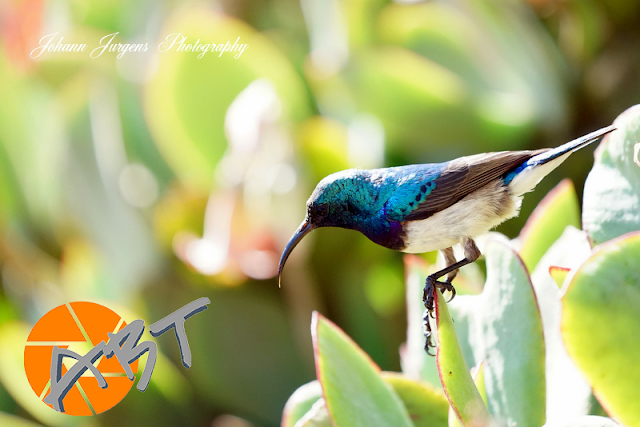
The white-bellied sunbird (Cinnyris talatala), also known as the white-breasted sunbird #BirdingSunday

Image
The  sunbirds  are placed into the taxonomic family, Nectariniidae, which was so  named  because most of these birds feed on (you guessed it), nectar. Their thin downward-curving bills and brush-tipped tubular tongues are adapted specially for nectivory. Distribution and habitat  Occurs from Angola to southern Tanzania south to southern Africa, where it is common to locally abundant across northern Namibia, northern and south-eastern Botswana, Zimbabwe, Mozambique, Swaziland and north-eastern South Africa. It generally prefers semi-arid savanna woodland. Brood parasites  It has been recorded as host of the Klaas's cuckoo. Food  It mainly eats nectar supplemented with arthropods, often joining mixed-species foraging flocks in the day, along with other sunbirds at large sources of nectar. In the late afternoon it regularly hawks insects aerially and gleans invertebrates from foliage. Breeding  The nest (see image) is built solely by the female in ab...