Posts

Showing posts with the label wildlife

2-YEAR EXCLUSIVE BUSH CAREER PROGRAM

Image
  Learn more at https://abt-edu.com 2 Years = 20 Certificates + 1 Year Work Placement   This is the ultimate BUSH CAREER kick-starter...With no prior knowledge or experience needed, this 2-YEAR EXCLUSIVE BUSH CAREER PROGRAM could help you take the biggest step in your life towards a successful career in the African bush... There are few global sectors as large, lucrative or resilient as the Field Guiding, Wildlife and Hospitality industry. An incredibly diverse sector that creates millions of job openings each year, offering career opportunities that are enjoyable, accessible and rewarding in the extreme. Lodges, reserves and operators throughout Southern Africa and Africa are constantly on the lookout for talented individuals and leadership figures to add to their ranks. More importantly, the wildlife and hospitality sector is known for its commitment to promoting from within, investing heavily in the career development of employees at all levels. Even from an entry-l...
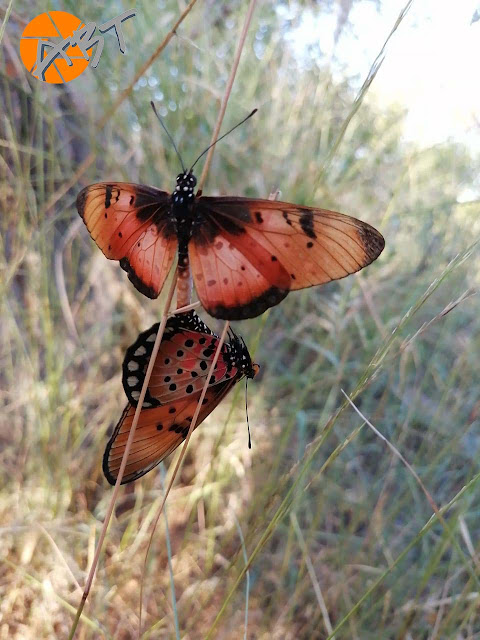
The Natal Acraea (Acraea natalica) is a butterfly of the Nymphalidae family.

Image
  Learn more at https://abt-edu.com ©Estian Kruger Butterflies have a Holo-metabolic lifecycle and belong to the Order Lepidoptera. They undergo complete physical changes, i.e. insects undergo four developmetal stages, the embryo, larva, pupa, and adult. This is a meduim sized butterfly with a wingspan of about 59mm. Males are pinkish red , females are brownish red. Their wings are spotted with black and with black bases. Adults are on wing year round, with a strong peak in late summer in southern Africa. v   What is the difference between a butterfly and a moth ?   Butterflies                                                                   ...

Argemone ochroleuca (Mexican Prickly Poppy) an invasive plant.

Image
  Learn more at www.abt-edu.com Invasive alien vegetation refers to plants brought to South Africa from other countries, both intentionally and unintentionally, that cause human, environmental or economic harm. Without natural enemies, these plants reproduce and spread rapidly, taking valuable water and space from our indigenous plants. This plant is native to Mexico and has also been introduced to many temperate and tropical regions of the world where is considered as an invasive weed. Commonly found as a weed of roadsides, mining dumps, rabbit warrens, recently cultivated paddocks, waste places, and over grazed pastures. It often occurs as dense stands in sandy stream beds and alluvial flats associated with intermittent inland streams. An extremely hardy pioneer plant, it is tolerant of drought and poor soil, often being the only cover on new road cuttings or verges. It has bright yellow latex. It is poisonous to grazing animals, and it is rarely eaten, but it has been used m...

A Burchell's zebra ( Equus quagga burchellii), a subspecies of plains zebra.

Image
  Learn more at https://abt-edu.com AVERAGE LIFE SPAN IN THE WILD: 25 years No animal has a more distinctive coat than the zebra. Each animal's stripes are as unique as fingerprints—no two are exactly alike—although each of the three species has its own general pattern. Zebras are social animals that spend time in herds. They graze together, primarily on grass, and even groom one another. Plains zebras are the most common species. They live in small family groups consisting of a male (stallion), several females, and their young. These units may combine with others to form awe-inspiring herds thousands of head strong, but family members will remain close within the herd. Zebras must be constantly wary of lions and hyenas. A herd has many eyes alert to danger. If an animal is attacked, its family will come to its defense, circling the wounded zebra and attempting to drive off predators. Plains Zebra are much less numerous than they once were, because of human activities suc...

The giant jewel beetle is a favourite protein-rich insect delicacy in many rural communities of Limpopo Province.#ConservationTuesday

Image
Learn more at https://abt-edu.com Their lazy nature makes them an easy catch, as they spend most of their time clinging to thorny bush trees. Adults feed on foliage (especially of Vachellia, Senegalia trees and Dichrostachys species) as well as nectar. Larvae are free-living root-feeders. Sternocera orissa displays sexual reproduction. Adult females are generally bigger than their male counterparts. Females lay eggs (during mid-December to late January) in bark crevices, and larvae tunnel into wood and plant stems. At times, eggs are laid into the soils or dropped onto the ground. Females have a single reproductive cycle annually. Adults are relatively short-lived, whereas the immature stages can take as long as 35 years to complete their development. Giant jewel beetles tend to be social and often semi-gregarious, occurring in small communities. No direct predators are known for Sternocera orissa. However, resource competition (i.e. for nectar and pollen) is common; since Vachellia ...

Peters’ Thread Snake (Leptotyphlops scutifrons) #ReptileMonday

Image
Learn more at https://abt-edu.com A very small snake that averages around 20 cm in length. The Thread Snakes resemble worms and it can be difficult to distinguish the head from the tail. They are burrowing snakes with a cylindrical body and the eye is minute. They feed on invertebrates, especially termites and their eggs. The Thread Snakes spend most of their lives underground but may come to the surface after heavy rains. They are sometimes found under rocks and logs and old termite mounds.  The Thread Snakes are tricky to tell apart and multiple species occur in Southern Africa. They can also be confused with the venomous Stiletto Snake. Thread Snakes are completely harmless. The Female lays three to six elongated eggs, joined like a string of sausages, in summer. They are eaten by other snakes, birds, small carnivorous mammals (e.g. mongooses) and scorpions. Contact us at info@africanbushtraining.com

Fact: Geckos' eyes are 350 times more sensitive to light than human eyes. #ReptileMonday

Image
Here are a few Gecko facts you need to know: Most species of gecko don’t have eyelids, so they lick their eyes to clean them. Geckos range in life span depending on the species, but many will live around five years in the wild. Geckos use their tails to store fat and nutrients for lean times. Most geckos can detach their tails — and regrow them later if necessary. Geckos are able to produce various sounds for communication, including barks, chirps and clicks. Geckos' amazing toes help them stick to any surface except Teflon. Geckos typically eat fruits, insects and flower nectar. Geckos give birth by laying eggs. The female can be pregnant with her eggs for years before she lays them. For example, the harlequin geckos' pregnancy lasts three to four years. When the eggs are ready, a gecko lays her eggs in leaves and bark. These lizards have sticky feet that allows them to climb up slick surfaces. Their toes have microscopic hairs called setae that give them this sticky ability. ...

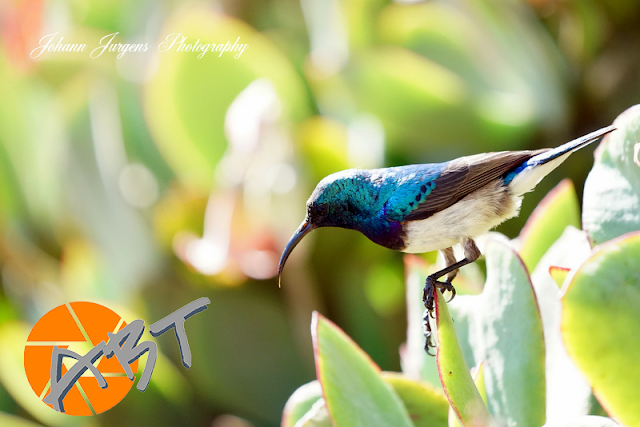
The white-bellied sunbird (Cinnyris talatala), also known as the white-breasted sunbird #BirdingSunday

Image
The  sunbirds  are placed into the taxonomic family, Nectariniidae, which was so  named  because most of these birds feed on (you guessed it), nectar. Their thin downward-curving bills and brush-tipped tubular tongues are adapted specially for nectivory. Distribution and habitat  Occurs from Angola to southern Tanzania south to southern Africa, where it is common to locally abundant across northern Namibia, northern and south-eastern Botswana, Zimbabwe, Mozambique, Swaziland and north-eastern South Africa. It generally prefers semi-arid savanna woodland. Brood parasites  It has been recorded as host of the Klaas's cuckoo. Food  It mainly eats nectar supplemented with arthropods, often joining mixed-species foraging flocks in the day, along with other sunbirds at large sources of nectar. In the late afternoon it regularly hawks insects aerially and gleans invertebrates from foliage. Breeding  The nest (see image) is built solely by the female in ab...

Let's go Camping in The Kruger National Park #WildWednesday

Image
Learn more at https://abt-edu.com Tired of the hustle and bustle of the city? Get away for a day or two and experience Africa's  wildlife like never before ... Camping Trips often include watching the sunset , sitting by the fire and unwinding visits with friends or family. Here are a few simple tips to follow next time your in the Kruger : Take a camera. Always keep your permit in the car with you . Be careful of monkeys and baboons . Get up early and stay out late. Drive the dirt roads for less traffic. Look out for upset birds and monkeys. Dress for heat, even in winter. NEVER STOP LOOKING . Get two-way radios if with friends ! Walk around the camp perimeter at night. Be respectful of the animals. Have a cracking day ! Share , Share , Share....

Flying with Vultures #ConservatonTuesday

Image
Learn more at https://abt-edu.com Vultures face multiple man-made threats, including but not limited to poisoning, power line collisions and electrocutions, direct harvesting for cultural beliefs, and ever decreasing foraging ranges.  Some vulture species are threatened with possible extinction within our lifetime unless we can curb the ongoing downward spiral now! Some populations have plummeted by over 90% in the past 30 years. Vultures are scavenging birds of prey. A typical characteristic of most vultures is a bald head, devoid of normal feathers. Vultures are found on all continents except Australia and Antarctica. There are 11 species of vultures in Africa, with the majority listed as endangered, such as the Cape Vulture (Gyps coprotheres), which has already been classified as extinct in Namibia, Swaziland and Zimbabwe. Vultures clear up to 70% of Africa’s carrion and are extremely beneficial to humans, considerably reducing the spread of diseases, some of which can be fata...

Becoming a good Birder #ABTRecipeFriday

Image
Learn more at https://abt-edu.com Have good eyes and ears, and a good brain. At its most fundamental level, birding involves seeing and hearing birds, and then processing the visual and aural input to the birder’s brain. Start young. It is more difficult if you begin as an adult or even a late teenager. Don’t get cocky. Teen birders, who, despite brilliant sensory and neural apparatus, are eerily capable of mistaking a common Savannah Sparrow for a mega-rarity Baird’s Sparrow. Stay with it. The longer you bird, the better you learn. Know status and distribution. This information makes a huge difference in the bird identification process. Learn vocalizations of as much birds as you possibly can. Understand behavior. Recognizing behavioral clues is a key component of bird identification. Go naked! You don’t necessarily notice stuff when you’re birding with binoculars or any other equipment. Have fun. Birding doesn’t promise a cure for cancer. Birding doesn’t provide a clear path to world...

FACT : Butterflies Taste With Their Feet. #CritterThursday

Image
  Here are a few interesting facts : Butterflies and moths are part of the class of insects in the order Lepidoptera. Butterflies are flying insects with large scaly wings. Like all insects, they have six jointed legs and three body parts: the head, the thorax and the abdomen. The wings are attached to the thorax and they also have a pair of antennae, compound eyes and an exoskeleton. The butterfly starts its life as an egg, laid on a leaf. The caterpillar (larva) hatches from the egg and eats leaves or flowers. It loses its skin many times as it grows, increasing greatly in size. Eventually it turns into a pupa, or chrysalis and finally a beautiful adult butterfly emerges and the cycle continues. An adult butterfly has a very short life: just three to four weeks. However, the entire life cycle of a butterfly can range between 2 and 8 months, depending on the species. It might sound strange to us humans, but butterflies rely on their feet to taste food. Their feet have taste sensor...

Become a part of nature with a walking safari #WildWednesday

Image
What better way to experience the ultimate in safari experiences - picture walking through the untouched wild of South Africa, to your left a 1000-year-old Baobab tree, to your right a herd of giraffes getting ready for the day ahead. Step by step, you’re connecting with nature in its rawest form. It’s a magical experience you will never forget. Kruger National Park walking safaris are guided by experienced rangers with an extensive knowledge of the area, the wildlife, birdlife and indigenous vegetation.The camp-staff cook and clean while your guide leads you into close encounters with the African wild. Feel your excitement build as you track the South African Big 5 on your walking safari. On your walk, you’ll learn about the ecology, the birds, the game, the plants and insects, and also how to interpret the signs of the wild, including animal spoor (footprints). When you come face to face with that elephant, or watch that dung beetle labouring with his ball of dung, you'll realise...

NATURE ENTHUSIAST COURSE

Image
Learn more at https://africanbushtraining.com COURSE TYPE: Full-time Training DURATION: 25 Days STUDENT FEE: R 29 000:00 INCLUDED: Meals, Accommodation, Study Material, Meals, Accommodation, Study Material, ABT Shirt, Cap & Certification COURSE CREDITS:The course is fully endorsed by CATHSSETA, FGASA (Field Guide Association of Southern Africa) and accredited by the ISCI (International Students Conservation Initiative) COURSE MODULES: Geology: Rocks & Soil Ecology: Processes & Principles Astronomy: Stars & Planers Weather & Climate Botany: Grasses, Scrubs & Trees Mammals: Animal Studies Ethology: Animal behaviour Birds & Birding Freshwater Fish Reptiles: The scale ones… Arthropods: Insects, Scorpions, Spiders, etc. Conservation Management Amphibians: Frogs & Toads Early Human Habitation Wilderness Tracking & Bush Craft And much more... Contact us at info@africanbushtraining.com

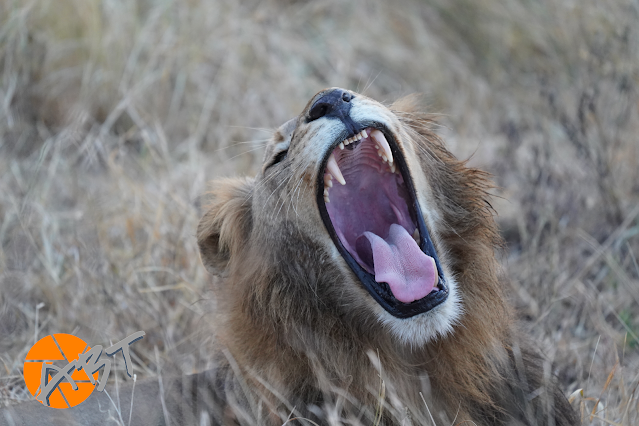
Humans are pushing big cats out of their habitats.#ConservationTuesday

Image
This African Lion's population is steadily decreasing in the wild. In just two decades, populations decreased by 43 percent, and it’s estimated that as few as 23,000 remain today. One of the main causes is the alarming rate at which they are losing their habitats due to expanding human populations and the resulting growth of agriculture, settlements, and roads. As lion habitats shrink, the big cats are being forced into closer quarters with humans. This, coupled with a decrease in their natural prey, causes them to attack livestock. In turn, farmers oftentimes retaliate and kill these big majestic cats.  These big cats are being killed in rituals of bravery, prized as hunting trophies, and, increasingly, for their body parts' perceived medicinal and magical powers. While most cat species are solitary, this big cat is an exception. It has developed a social system based on teamwork, division of labor, and an extended family unit. The average pride consists of about 15 indi...

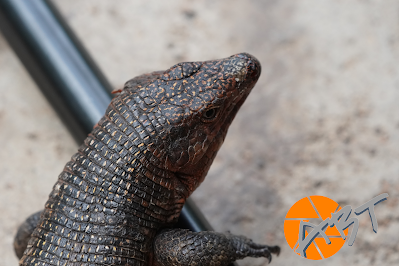
Giant Plated Lizard #ReptileMonday

Image
Giant plated lizard (English),  reusepantserakkedis   (Afrikaans),   uxamu   (isiZulu),   chamu   (siSwati) The giant plated lizard is the second largest lizard species found in South Africa, after the monitor lizard, and they are known to attain a body length of approximately 690 mm. Giant plated lizards are rupicolous, which means that they live among rocky outcrops, mostly on the upper slopes of granite hills. Giant plated lizards are shy and hard to approach – an individual will often retreat into rock crevices at the slightest disturbance and inflate its body, effectively wedging itself into the crevice and making it very difficult for anything to dislodge it.  They occur in most southern African countries including Angola, Botswana, Malawi, Mozambique, Namibia, South Africa, Swaziland, Zimbabwe and Zambia. They are widespread and generally common in their natural range and no conservation actions are recommended. Giant plated lizards have st...

WILDLIFE MANAGEMENT COURSE ( FULL OR PART TIME )

Image
Learn more at https://africanbushtraining.com COURSE TYPE: Full-time Training DURATION: 21-Days STUDENT FEE: R 26 700:00 INCLUDED: Meals, Accommodation, Study Material, Uniform Contribution Membership-, Exam-, Assessment- & Moderation- Fees   COURSE CREDITS: This course is accredited and fully endorsed by the ISCI (International Students Conservation Initiative).   COURSE MODULES: Introduction to Wildlife Management Conservation Action Planning Laws & Legislation Bio-diversity Conservation Natural Resources Veld Management Ecological Processes & Principles Plant & Animal Care Land Degradation Invader Plants Bush Encroachment Road Maintenance Fire Management Elephant Management Animal Health Monitoring Game Fencing And much more… OR CHOOSE  COURSE TYPE:   I-LEARN Distance Learning & Full-time Contact Training DURATION & STUDENT FEE: PHASE 1: R 8 000:00 (I-LEARN Online Classes) PHASE 2: R 1...

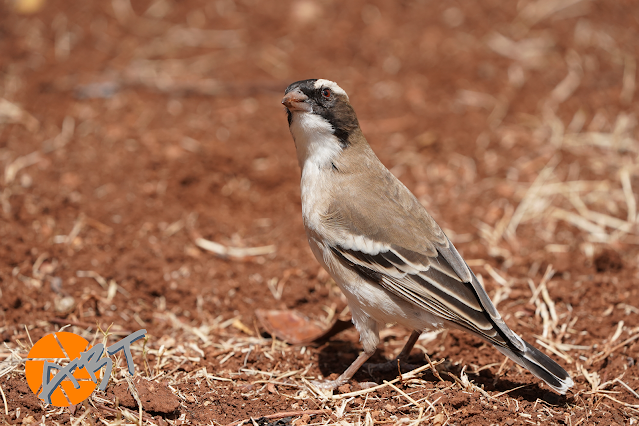
White-browed Sparrow - Weaver #BirdingSunday

Image
The White-browed Sparrow-weaver was collected and formally described by Andrew Smith a Scottish surgeon, explorer, ethnologist and zoologist. Smith organised an expedition to the interior and he travelled to near the Botswana border in 1834-35, collecting many new birds, reptiles, mammals and other along the way. It ranges from 17 to 19 cm (6.7 to 7.5 in) in length and is characterized by a broad, white eyebrow stripe and white rump visible in flight. While the male white-browed sparrow-weaver sports a black bill, the female's bill is horn-colored (light gray); that of the juvenile is pinkish-brown. In Zimbabwe, the white-browed sparrow-weaver shows faint brown spotting across its white breast. The white-browed sparrow-weaver is monogamous, co-operative and colonial. There are a single breeding male and female in each group. The breeding pair, assisted by the helpers, build an untidy straw like ball nest, with more than one entrance hole. The second entrance will be closed whe...

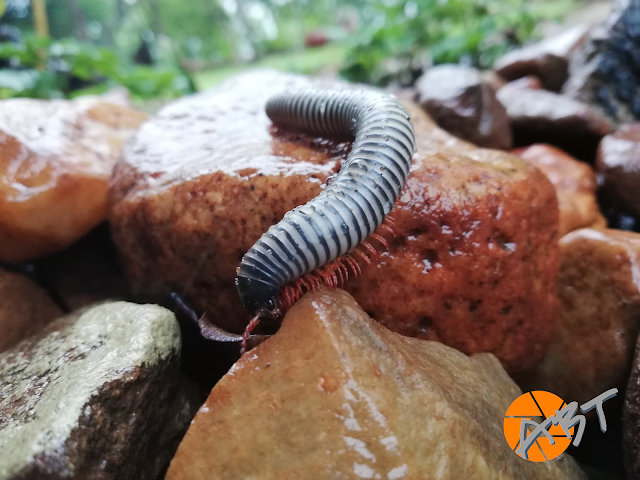
Millipedes have a lot of legs, but not as many as most people think...#CritterThursday

Image
Let's start with the basics: Millipedes are not worms, nor are they  insects . Insects have six legs, and obviously millipedes have many more. It turns out scientists did not choose the Latin prefix in their name, "milli-," meaning 1,000, as a way to convey the precise number of legs these organisms have. Their colloquial nickname "thousand leggers" is not accurate either. Millipedes fall within a phylum of organisms called  arthropods , a category that includes invertebrates as diverse as spiders, scorpions and butterflies. All arthropods have in common a hard exoskeleton, segmented bodies and jointed legs. What distinguishes millipedes is that for each segment of their body, they have two pairs of legs, instead of one pair as you would see with, say, centipedes. This gave way to the more accurate name used by scientists:  diplopoda , meaning "double foot." Having so many legs is part of what makes millipedes so adaptive.  Fossil evidence suggests  th...

Game Drives in Southern Africa #WildWednesday

Image
Learn more at https://africanbushtraining.com Searching for wild animals with a  safari vehicle, that’s what  ‘Game Drives’ are about... Morning game drive Wild animals are mostly active in the early mornings and late afternoons. That’s why the Game Drives always start early, about 5 o’clock in the morning. Game drives last 3 to 4 hours and include an extensive breakfast. Coffee and snacks are also included in the Game Drive. Afternoon game drive At around 16:00 o’clock the ‘afternoon game drive’ sets off, and also takes about 3 to 4 hours. Stops for snacks and drinks are often included, drinks appropriately called ‘sundowner drinks’, considering you’ll enjoy them simultaneously with the sunset. Afterwards, you’ll continue the ride in the dark, after the sun has set.  This enables you to admire the animals in both day and night. The Game Drive safari can be wrapped with up by a South African dinner, where you can relive and share your experience b...