Posts

Showing posts with the label south africa

The purple-crested turaco (Tauraco porphyreolophus) is a species of bird in the family Musophagidae.

Image
  Learn more at https:abt-edu.com The purple-crested turaco (Tauraco porphyreolophus) is a species of bird in the family Musophagidae. It clambers acrobatically through riverine woodland and savanna thickets. In flight it explodes from the canopy with distinctive deep red panels in the wings. It produces a distinctive croaking “khoh-khoh-khoh-khoh….” that gets progressively louder before suddenly stopping. The Purple-crested Turaco is a fruit-eater. Its glossy and colourful plumage makes this bird very attractive for humans. Turacos have been hunted in the past for their beautiful red flight feathers used as adornments by African people. Today, this species has adapted to suburban life, especially in Durban. The Purple-crested Turaco is frugivorous and feeds on fruits from numerous plant species. It forages in canopy, picking the fruits by perching at the end of the branches. This bird does not feed on the ground, except in captivity. The small fruits are swallowed whole, whe...

Humans are the Sable antelope’s only real threat. The giant sable antelope subspecies is listed as endangered because of trophy hunting and habitat loss.#ConservationTuesday

Image
Learn more at https://abt-edu.com The Sable is a barrel-chested rotund antelope with a long face, short neck, and dark mane. They have impressive ringed horns rising vertically to curve backwards. When arching their necks and standing with their heads high and tails outstretched, these antelope look like horses. In this position they appear larger than they actually are. The males keep this position even when galloping, the arched neck being important to manifest dominance. Sables change color as they grow older. Calves are born with a reddish-brown color and virtually no markings. White markings appear as they grow older and their coat becomes darker, and the older the animal is, the more striking is the contrast. Sable antelopes are herbivorous. They are specialized browsing animals and feed upon foliage, leaves, medium length grass, and herbs, especially those growing on termite mounds. The leaves of trees provide 90% of their diet. Ask any lowveld old-timer and they will tell y...

Fact: Geckos' eyes are 350 times more sensitive to light than human eyes. #ReptileMonday

Image
Here are a few Gecko facts you need to know: Most species of gecko don’t have eyelids, so they lick their eyes to clean them. Geckos range in life span depending on the species, but many will live around five years in the wild. Geckos use their tails to store fat and nutrients for lean times. Most geckos can detach their tails — and regrow them later if necessary. Geckos are able to produce various sounds for communication, including barks, chirps and clicks. Geckos' amazing toes help them stick to any surface except Teflon. Geckos typically eat fruits, insects and flower nectar. Geckos give birth by laying eggs. The female can be pregnant with her eggs for years before she lays them. For example, the harlequin geckos' pregnancy lasts three to four years. When the eggs are ready, a gecko lays her eggs in leaves and bark. These lizards have sticky feet that allows them to climb up slick surfaces. Their toes have microscopic hairs called setae that give them this sticky ability. ...

HOSPITALITY MANAGEMENT PROGRAM

Image
Learn more at https://abt-edu.com DURATION: 3 Months Full-time   The course centres around three primary topics of importance, which include an introduction to hospitality management, an overview of all the key operations in hospitality and the responsibilities to uphold industry standards.    This HOSPITALITY MANAGEMENT PROGRAM, offers a comprehensive introduction to this dynamic and diverse business sector.  The course is designed for those with a strong interest in hospitality management, though no specific experience. A series of eight detailed modules gradually introduces students to every important skill, trait and insight required to begin or advance an exciting career, followed by practical work experience in a typical bush camp and high profile guest lodge. QUALIFICATIONS INCLUDED: Lodge Leadership, Game Lodge Management, Accommodation Services, Professional Cookery & Kitchen Operations, Hospitality Reception, Food & Beverage Services, Ev...

Flying with Vultures #ConservatonTuesday

Image
Learn more at https://abt-edu.com Vultures face multiple man-made threats, including but not limited to poisoning, power line collisions and electrocutions, direct harvesting for cultural beliefs, and ever decreasing foraging ranges.  Some vulture species are threatened with possible extinction within our lifetime unless we can curb the ongoing downward spiral now! Some populations have plummeted by over 90% in the past 30 years. Vultures are scavenging birds of prey. A typical characteristic of most vultures is a bald head, devoid of normal feathers. Vultures are found on all continents except Australia and Antarctica. There are 11 species of vultures in Africa, with the majority listed as endangered, such as the Cape Vulture (Gyps coprotheres), which has already been classified as extinct in Namibia, Swaziland and Zimbabwe. Vultures clear up to 70% of Africa’s carrion and are extremely beneficial to humans, considerably reducing the spread of diseases, some of which can be fata...

WILDLIFE & RESERVE MANAGEMENT COURSE #CareerSaturday

Image
Learn more at https://abt-edu.com DURATION: 21 Days Full-time   Start your career in conservation under the mentorship of renowned conservationists, ex-Kruger Park rangers and veterans in in the field; or just join the course for a life changing wilderness experience…the choice is yours, but one thing is certain - what you will learn and experience is priceless!!!   This “feet-wet & hands-dirty” course has been developed to teach students the fundamentals of sustainable and responsible wildlife management as they actively partake in the daily running of a wilderness concession located in the world famous Greater Kruger Park!!!   COURSE CONTENTS:   Conservation Action Planning, Laws & Legislation, Bio-diversity Conservation, Natural Resources Protection, Veld Management, Ecological Processes & Principles, Plant & Animal Care, Land Degradation, Invader Plants, Bush Encroachment, Road Maintenance, Fire Management, Animal Health Monitoring...

Becoming a good Birder #ABTRecipeFriday

Image
Learn more at https://abt-edu.com Have good eyes and ears, and a good brain. At its most fundamental level, birding involves seeing and hearing birds, and then processing the visual and aural input to the birder’s brain. Start young. It is more difficult if you begin as an adult or even a late teenager. Don’t get cocky. Teen birders, who, despite brilliant sensory and neural apparatus, are eerily capable of mistaking a common Savannah Sparrow for a mega-rarity Baird’s Sparrow. Stay with it. The longer you bird, the better you learn. Know status and distribution. This information makes a huge difference in the bird identification process. Learn vocalizations of as much birds as you possibly can. Understand behavior. Recognizing behavioral clues is a key component of bird identification. Go naked! You don’t necessarily notice stuff when you’re birding with binoculars or any other equipment. Have fun. Birding doesn’t promise a cure for cancer. Birding doesn’t provide a clear path to world...

FGASA APPRENTICE THEORY INDABA

Image
Learn more at https://abt-edu.com DURATION: 21 Days Full-time   The FGASA APPRENTICE THEORY INDABA is all about ensuring that the highest's standards are maintained in the introduction of new guides to the   industry?   The FGASA APPRENTICE THEORY INDABA brings ‘self-study” and part-time students together, once month, for three weeks in the bush at the AFRICAN BUSH TRAINING campus to attend lectures on all the modules prescribed by FGASA for the   Field Guide Level 1 (NQF2) qualification.   During the three weeks in the bush our qualified and registered FGASA trainers will ‘walk’ you through the syllabus preparing you the best they can for the national exam sittings.   Although the focus is primarily on theoretical training we also do practical work in the Kruger National Park to ensure that students are able to put the theoretical knowledge learned in the classroom into practice when operating out in the bush.   STUDENT FEE: R ...

FACT : Butterflies Taste With Their Feet. #CritterThursday

Image
  Here are a few interesting facts : Butterflies and moths are part of the class of insects in the order Lepidoptera. Butterflies are flying insects with large scaly wings. Like all insects, they have six jointed legs and three body parts: the head, the thorax and the abdomen. The wings are attached to the thorax and they also have a pair of antennae, compound eyes and an exoskeleton. The butterfly starts its life as an egg, laid on a leaf. The caterpillar (larva) hatches from the egg and eats leaves or flowers. It loses its skin many times as it grows, increasing greatly in size. Eventually it turns into a pupa, or chrysalis and finally a beautiful adult butterfly emerges and the cycle continues. An adult butterfly has a very short life: just three to four weeks. However, the entire life cycle of a butterfly can range between 2 and 8 months, depending on the species. It might sound strange to us humans, but butterflies rely on their feet to taste food. Their feet have taste sensor...

NATURE ENTHUSIAST COURSE

Image
Learn more at https://africanbushtraining.com COURSE TYPE: Full-time Training DURATION: 25 Days STUDENT FEE: R 29 000:00 INCLUDED: Meals, Accommodation, Study Material, Meals, Accommodation, Study Material, ABT Shirt, Cap & Certification COURSE CREDITS:The course is fully endorsed by CATHSSETA, FGASA (Field Guide Association of Southern Africa) and accredited by the ISCI (International Students Conservation Initiative) COURSE MODULES: Geology: Rocks & Soil Ecology: Processes & Principles Astronomy: Stars & Planers Weather & Climate Botany: Grasses, Scrubs & Trees Mammals: Animal Studies Ethology: Animal behaviour Birds & Birding Freshwater Fish Reptiles: The scale ones… Arthropods: Insects, Scorpions, Spiders, etc. Conservation Management Amphibians: Frogs & Toads Early Human Habitation Wilderness Tracking & Bush Craft And much more... Contact us at info@africanbushtraining.com

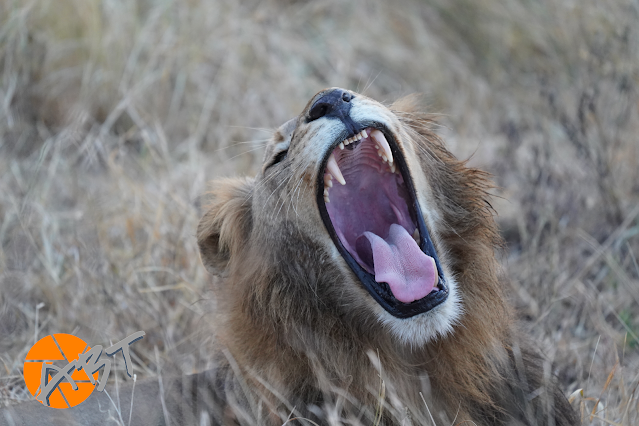
Humans are pushing big cats out of their habitats.#ConservationTuesday

Image
This African Lion's population is steadily decreasing in the wild. In just two decades, populations decreased by 43 percent, and it’s estimated that as few as 23,000 remain today. One of the main causes is the alarming rate at which they are losing their habitats due to expanding human populations and the resulting growth of agriculture, settlements, and roads. As lion habitats shrink, the big cats are being forced into closer quarters with humans. This, coupled with a decrease in their natural prey, causes them to attack livestock. In turn, farmers oftentimes retaliate and kill these big majestic cats.  These big cats are being killed in rituals of bravery, prized as hunting trophies, and, increasingly, for their body parts' perceived medicinal and magical powers. While most cat species are solitary, this big cat is an exception. It has developed a social system based on teamwork, division of labor, and an extended family unit. The average pride consists of about 15 indi...

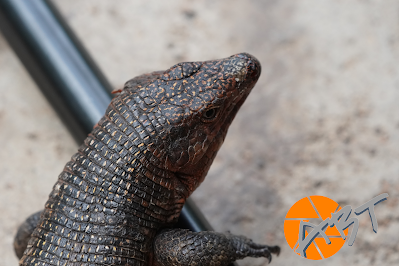
Giant Plated Lizard #ReptileMonday

Image
Giant plated lizard (English),  reusepantserakkedis   (Afrikaans),   uxamu   (isiZulu),   chamu   (siSwati) The giant plated lizard is the second largest lizard species found in South Africa, after the monitor lizard, and they are known to attain a body length of approximately 690 mm. Giant plated lizards are rupicolous, which means that they live among rocky outcrops, mostly on the upper slopes of granite hills. Giant plated lizards are shy and hard to approach – an individual will often retreat into rock crevices at the slightest disturbance and inflate its body, effectively wedging itself into the crevice and making it very difficult for anything to dislodge it.  They occur in most southern African countries including Angola, Botswana, Malawi, Mozambique, Namibia, South Africa, Swaziland, Zimbabwe and Zambia. They are widespread and generally common in their natural range and no conservation actions are recommended. Giant plated lizards have st...

GAME RANCHING / BREEDING COURSE

Image
Learn more at https://africanbushtraining.com COURSE TYPE : Full-time Training DURATION: 11-Days STUDENT FEE : R 14 700:00   INCLUDED: Meals, Accommodation, Study Material, Uniform Contribution, Membership-, Exam-, Assessment- & Moderation- Fees COURSE CREDITS: This course is accredited and fully endorsed by the ISCI (International Students Conservation Initiative). COURSE MODULES: Introduction to Game Ranching Ecosystems Planning & Management Nutrition in game animals Genomics as a tool for the wildlife industry Predator Management Game Capturing Methods Diseases & Parasites Animal Health Monitoring Species Accounts And much more… Contact us at info@africanbushtraining.com

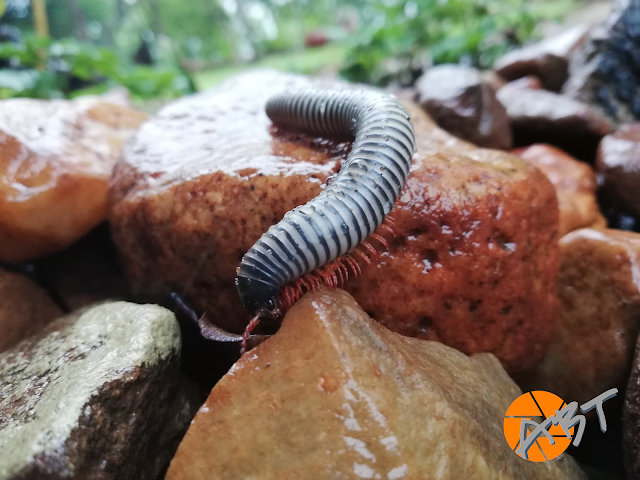
Millipedes have a lot of legs, but not as many as most people think...#CritterThursday

Image
Let's start with the basics: Millipedes are not worms, nor are they  insects . Insects have six legs, and obviously millipedes have many more. It turns out scientists did not choose the Latin prefix in their name, "milli-," meaning 1,000, as a way to convey the precise number of legs these organisms have. Their colloquial nickname "thousand leggers" is not accurate either. Millipedes fall within a phylum of organisms called  arthropods , a category that includes invertebrates as diverse as spiders, scorpions and butterflies. All arthropods have in common a hard exoskeleton, segmented bodies and jointed legs. What distinguishes millipedes is that for each segment of their body, they have two pairs of legs, instead of one pair as you would see with, say, centipedes. This gave way to the more accurate name used by scientists:  diplopoda , meaning "double foot." Having so many legs is part of what makes millipedes so adaptive.  Fossil evidence suggests  th...

Game Drives in Southern Africa #WildWednesday

Image
Learn more at https://africanbushtraining.com Searching for wild animals with a  safari vehicle, that’s what  ‘Game Drives’ are about... Morning game drive Wild animals are mostly active in the early mornings and late afternoons. That’s why the Game Drives always start early, about 5 o’clock in the morning. Game drives last 3 to 4 hours and include an extensive breakfast. Coffee and snacks are also included in the Game Drive. Afternoon game drive At around 16:00 o’clock the ‘afternoon game drive’ sets off, and also takes about 3 to 4 hours. Stops for snacks and drinks are often included, drinks appropriately called ‘sundowner drinks’, considering you’ll enjoy them simultaneously with the sunset. Afterwards, you’ll continue the ride in the dark, after the sun has set.  This enables you to admire the animals in both day and night. The Game Drive safari can be wrapped with up by a South African dinner, where you can relive and share your experience b...

Join ABT in learning more about the Emperor Moth #ConservationTuesday

Image
©Lafras Taljaard The moths are easily identifiable by their markings, which feature a large orange eyespot on each hind wing and two black and white bands isolating two smaller eyespots. Males have long, feathery antennae that they use to find a mate during their brief three-to-four-day lifespan. Gonimbrasia belina  is a species of  emperor moth  which is native to the warmer parts of  southern Africa . Its large  edible   caterpillar , known as the  mopane worm , feeds primarily but not exclusively on  mopane tree  leaves. Mopane worms are an important source of  protein  for millions in the region. The species was first described by  John O. Westwood  in 1849. Like most caterpillars, the mopane worm's life cycle starts when it hatches in the summer, after which it proceeds to eat the foliage in its immediate vicinity. As the  larva  grows, it moults four times in its five larval stages, after which the mopane w...

Have you ever seen a Brown - headed Parrot ?#BirdingSunday

Image
Appearance The Brown Headed Parrot is another green bird with a brownish grey head. It has yellow under the wings at the front which unfortunately can only be seen properly when in flight. The iris is a greyish yellow. Brown heads have a basically whitish beak, with black on the tip of the upper mandible. How much black is present depends on the individual. Some brown heads have yellow eyes but they are a dark, grayish yellow. Others have light gray eyes even as adults. All juvenile brown heads have dark gray, almost black eyes, which lighten to their adult color by the time the bird is a year old. Brown heads have a brown shade of gray which gradually fades into the green on the neck. The brown head's scientific name, cryptoxanthus, means literally 'hidden yellow' and refers to the yellow coloring on the underside of the wing. Brown heads are small parrots. They're about 9' long including the short tail. Diet They feed on a variety of seeds, nuts, berries, flowers,...

Recipe to being an excellent Field Guide #ABTRecipeFriday

Image
©Hannalize Van Der Colff A Field Guide needs the following traits : An inherent passion for observing, sharing and learning about wildlife. The ability to work on his/her own with enthusiasm. Flexible in that he/she is willing to change plans on the spur of the moment and is willing to innovate in the interests of the guest and the company.  Confident but humble.  Co-operative – and keen to work with the balance of the team in the interests of the lodge and the guests. Organized – with attention to detail and time. A developmental approach to his/her staff and colleagues. Professional and neat in personal appearance and image. A person who can live in remote places. A person with an upbeat, positive attitude. Must be willing to do physical, hard work, like mend a fence. May be able to host at dinner / drinks. Ensuring guest safety at all times. Helping problem animal controll. Learn more at https://africanbushtraining.com

Investigating Antlions with African Bush Training #CritterThursday

Image
Learn more at https://africanbushtraining.com ©Hannalize Van Der Colff The Antlion,  also known as Lacewings, are neither ant nor lion. It is actually the larvae of about 2000 species of the family myrmeleontidae. It got its name due to the fact that they are predators and mainly feed on ants. Antlions are found in sandy areas such as dry woodland, sandy river banks and even on roads. Antlion larvae eat small arthropods, while adults of some species eat pollen, nectar or other small insects. The  antlion  larva has a robust fusiform body, a very plump abdomen, and a thorax bearing three pairs of walking legs. Antlion larvae are very popular for their hunting habits. These tiny predators will dig small pits and wait under the sand with just its jaws above the surface waiting for insects such as ants to pass by. When the unsuspecting prey falls into the pit and try to escape, the antlion will alternate the sides of the pit causing it to collapse and bring their prey even cl...

The flightless ostrich is the world's largest bird.#WildWednesday

Image
Learn more at https://africanbushtraining.com They roam African savanna and desert lands and get most of their water from the plants they eat. Though they cannot fly, ostriches are fleet, strong runners. They can sprint up to 69 kilometers an hour. They may use their wings as "rudders" to help them change direction while running. An ostrich's powerful, long legs can cover 3 to 4 metre in a single stride. These legs can also be formidable weapons. Ostrich kicks can kill a human or a potential predator like a lion. Each two-toed foot has a long, sharp claw. Ostriches live in small herds that typically contain less than a dozen birds. Contrary to popular belief, ostriches do not bury their heads in the sand. The old saw probably originates with one of the bird's defensive behaviors. At the approach of trouble, ostriches will lie low and press their long necks to the ground in an attempt to become less visible. Their plumage blends well with sandy soil and, from a distanc...