Posts

Showing posts with the label arachnid

Jumping spiders are a group of spiders that constitute the family Salticidae.#CritterThursday

Image
Learn more at https://abt-edu.com As of 2019, this family contained over 600 described genera and over 6000 described species,making it the largest family of spiders at 13% of all species. –Wikipedia Jumping spiders have some of the best vision among arthropods and use it in courtship, hunting, and navigation. Although they normally move unobtrusively and fairly slowly, most species are capable of very agile jumps, notably when hunting, but sometimes in response to sudden threats or crossing long gaps. Both their book lungs and tracheal system are well-developed, and they use both systems (bimodal breathing). Jumping spiders are generally recognized by their eye pattern. All jumping spiders have four pairs of eyes, with the anterior median pair being particularly large. Although jumping spiders are generally carnivorous, many species have been known to include nectar in their diets. Jumping spiders conduct complex, visual courtship displays using both movements and physical bodily ...
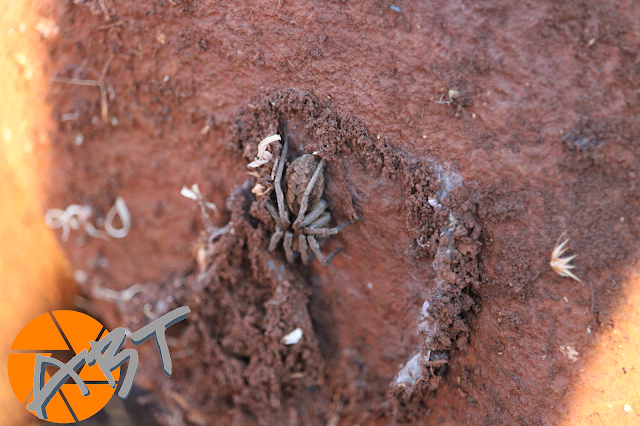
Spiders are arachnids, not insects. Other members of the arachnid family include scorpions, mites, ticks and harvestmen.#CritterThursday

Image
Learn more at https://abt-edu.com The greatest threat to spiders is habitat loss, although some spider species are also threatened by the pet trade. Most species are carnivorous, either trapping flies and other insects in their webs, or hunting them down. They can’t swallow their food as is, though—spiders inject their prey with digestive fluids, then suck out the liquefied remains. Though not all spiders build webs, every species produces silk. They use the strong, flexible protein fiber for many different purposes: to climb (think Spider Man), to tether themselves for safety in case of a fall, to create egg sacs, to wrap up prey, to make nests, and more. Most spider species have eight eyes, though some have six. Despite all of those eyes, though, many don’t see very well. A notable exception is the jumping spider, which can see more colors than humans can. Using filters that sit in front of cells in their eyes, the day-hunting jumping spider can see in the red spectrum, green s...