Posts

Showing posts with the label design

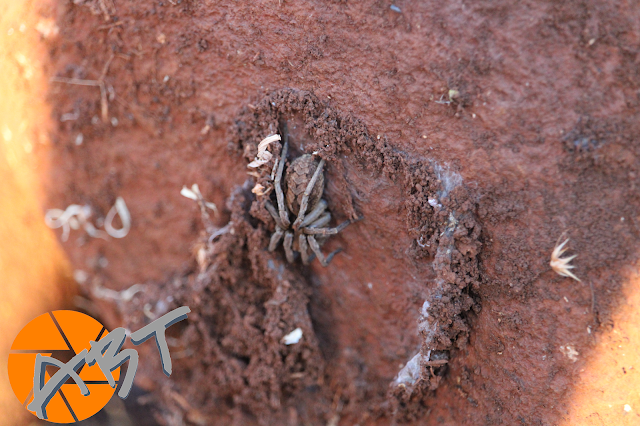
Jumping spiders are a group of spiders that constitute the family Salticidae.#CritterThursday

Image
Learn more at https://abt-edu.com As of 2019, this family contained over 600 described genera and over 6000 described species,making it the largest family of spiders at 13% of all species. –Wikipedia Jumping spiders have some of the best vision among arthropods and use it in courtship, hunting, and navigation. Although they normally move unobtrusively and fairly slowly, most species are capable of very agile jumps, notably when hunting, but sometimes in response to sudden threats or crossing long gaps. Both their book lungs and tracheal system are well-developed, and they use both systems (bimodal breathing). Jumping spiders are generally recognized by their eye pattern. All jumping spiders have four pairs of eyes, with the anterior median pair being particularly large. Although jumping spiders are generally carnivorous, many species have been known to include nectar in their diets. Jumping spiders conduct complex, visual courtship displays using both movements and physical bodily ...

The African dusky flycatcher, dusky-brown flycatcher or dusky alseonax (Muscicapa adusta)#BirdingSunday

Image
Learn more at https://abt-edu.com The African dusky flycatcher is 13 cm long and weighs around 11 g. Its upperparts are plain brown, with the only facial marking being an indistinct narrow eye-ring. The chin is plain pale grey, and the rest of the underparts are grey-brown with indistinct streaks. The short, straight, laterally flattened bill is black, the legs and feet are grey, and the eyes are brown. The sexes are similar, but the juvenile is spotted with buff above, and is whitish spotted with brown below. The African dusky flycatcher has soft, high-pitched "tzeeet" and tsirit calls. The African dusky flycatcher builds a cup-shaped nest in a tree cavity a few metres above the ground, and lays two or three green eggs. The hole in the tree is normally reused in the next breeding season. This species is monogamous, mating for life. The African dusky flycatcher is usually seen singly or in pairs. It forages from an open perch for insects typically taking its prey in a s...

Spiders are arachnids, not insects. Other members of the arachnid family include scorpions, mites, ticks and harvestmen.#CritterThursday

Image
Learn more at https://abt-edu.com The greatest threat to spiders is habitat loss, although some spider species are also threatened by the pet trade. Most species are carnivorous, either trapping flies and other insects in their webs, or hunting them down. They can’t swallow their food as is, though—spiders inject their prey with digestive fluids, then suck out the liquefied remains. Though not all spiders build webs, every species produces silk. They use the strong, flexible protein fiber for many different purposes: to climb (think Spider Man), to tether themselves for safety in case of a fall, to create egg sacs, to wrap up prey, to make nests, and more. Most spider species have eight eyes, though some have six. Despite all of those eyes, though, many don’t see very well. A notable exception is the jumping spider, which can see more colors than humans can. Using filters that sit in front of cells in their eyes, the day-hunting jumping spider can see in the red spectrum, green s...

GAME RANGER EXPERIENCE #CareerSaturday

Image
Learn more at https://abt-edu.com 7 Days full-time Follow in the daily footsteps of 'real' game rangers as they look after and protect one of Southern Africa's prime wilderness areas... During this course students will become part of our professional wildlife management team sharing in the daily tasks and duties; learning what it takes to effectively manage a game reserve... STUDENT FEE: R 8 700:00 INCLUDED: Meals, Accommodation, Study Material, Shirt, Cap & Certificate COURSE CONTENTS: Management Practices, Wilderness Protection (Anti-poaching), Field Ranger Training, Game Ranching/Breeding, Wildlife Research/Monitoring, Conservation Action Planning, Road Maintenance, Reserve Fences, Alien Plant Control, Game Capture, And much more... Contact us at info@africanbushtraining

The Impala Lily #BotanyFriday

Image
Learn more at https://abt-edu.com The impala lily is known in Africa and southern Africa as a source of fish poison and arrow poison. The poison is prepared from latex in the bark and fleshy parts of the trunk, but it is always used in combination with other poisons. Leaves and flowers are poisonous to goats and cattle, but the plants are sometimes heavily browsed and are not considered to be of much toxicological significance. Despite the toxicity, it is used in medicinal applications and in magic potions. Their striking forms and beautiful flowers borne in masses over a long period make them excellent garden and container plants. Impala Lily flowers mainly in July, but will also bloom as late as mid-September in places where it is cultivated. Flower size is about ± 5 cm across. Contact us at info@africanbushtraining.com

HOSPITALITY MANAGEMENT PROGRAM

Image
Learn more at https://abt-edu.com DURATION: 3 Months Full-time   The course centres around three primary topics of importance, which include an introduction to hospitality management, an overview of all the key operations in hospitality and the responsibilities to uphold industry standards.    This HOSPITALITY MANAGEMENT PROGRAM, offers a comprehensive introduction to this dynamic and diverse business sector.  The course is designed for those with a strong interest in hospitality management, though no specific experience. A series of eight detailed modules gradually introduces students to every important skill, trait and insight required to begin or advance an exciting career, followed by practical work experience in a typical bush camp and high profile guest lodge. QUALIFICATIONS INCLUDED: Lodge Leadership, Game Lodge Management, Accommodation Services, Professional Cookery & Kitchen Operations, Hospitality Reception, Food & Beverage Services, Ev...