Posts

Showing posts with the label kruger

Vervet Monkeys (Cercopithecus aethiops)#ConservationTuesday
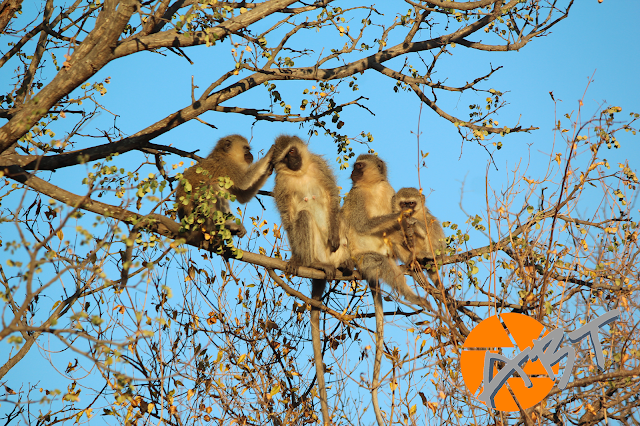
Image
Learn more at https://abt-edu.com ©Ludique Swart Vervets living near areas inhabited by people can become pests, stealing food and other items and raiding crops. This leads to a heavy annual slaughter by poison, traps, and guns. In recent years, vervet monkeys have been considered a valuable research animal, making live trapping prevalent as well. The have a life span up to 30 years. The males are slightly larger than the females and are easily recognized by their turquoise blue scrota. They form complex but stable social groups (also called troops) of 10 to 50 individuals mainly consist of adult females and their immature offspring. Males move freely in and out of these groups. Within the troop, each adult female is the center of a small family network. Females who have reached puberty generally stay in the troop. Females typically have few mates in their lifetime, whereas some males have numerous mates. Breeding is seasonal. After a gestation period of approximately 140 days, a s...

Fascinating Facts About Stick Insects #CritterThursday

Image
Learn more at https://abt-edu.com Stick Insects Can Regenerate Limbs. Stick Insects Can Reproduce Without Males. Stick Insects Even Act Like Sticks. Their Eggs Resemble Seeds. Nymphs Eat Their Molted Skin. Stick Insects Aren't Defenseless. Their Eggs May Attract Ants. Not All Stick Insects Stay Brown. Stick Insects Can Play Dead. Stick Insects Are the World's Longest Insect. AVERAGE LIFE SPAN IN THE WILD: Up to 3 years. Mainly nocturnal creatures, they spend much of their day motionless, hidden under plants. Contact us at info@africanbushtraining.com

Humans are the Sable antelope’s only real threat. The giant sable antelope subspecies is listed as endangered because of trophy hunting and habitat loss.#ConservationTuesday

Image
Learn more at https://abt-edu.com The Sable is a barrel-chested rotund antelope with a long face, short neck, and dark mane. They have impressive ringed horns rising vertically to curve backwards. When arching their necks and standing with their heads high and tails outstretched, these antelope look like horses. In this position they appear larger than they actually are. The males keep this position even when galloping, the arched neck being important to manifest dominance. Sables change color as they grow older. Calves are born with a reddish-brown color and virtually no markings. White markings appear as they grow older and their coat becomes darker, and the older the animal is, the more striking is the contrast. Sable antelopes are herbivorous. They are specialized browsing animals and feed upon foliage, leaves, medium length grass, and herbs, especially those growing on termite mounds. The leaves of trees provide 90% of their diet. Ask any lowveld old-timer and they will tell y...

The rainbow skink is one of many reptiles that can be found living in the Garden.#ReptileMonday

Image
Learn more at https://abt-edu.com The rainbow skink is a large, beautifully coloured skink with varied colouration, depending on sex and age. Juveniles and sub-adult males are dark olive-brown to black above, with three distinctive bluish-white stripes that are a brilliant electric-blue on the tail. Adult females retain their colouring, although the stripes may become subdivided and faint.   Adult males become buffy-olive to olive-brown above, each scale bearing a pearly white spot. The pale stripes become indistinct. The tail changes from yellowish to orange brown and the belly is creamy white.The rainbow skink is a rock dweller and can often be seen running around on exposed granite domes and other rock faces, feeding on insects.   During summer the female lays six to ten eggs which hatch after about 62 days. Northern populations of rainbow skink could lay two clutches of eggs per season. They are sometimes referred to as ‘margaritifera’ meaning ‘pearl containing’ be...

Recipe to become a better tracker #ABTRecipeFriday

Image
Learn more at https://abt-edu.com Learn to feel the heartbeat of your environment. Find somewhere to sit, then let your mind go blank. Get good at feeling, seeing, listening, tasting and smelling. We think vision is our strongest sense, but smell is our most primeval – it can deliver more information than any other. When you’ve honed your senses, they will combine into one super-sense: intuition. Getting to know where the food, water and barriers are will help you to find good tracks. Imagine flying above the landscape, gaining a bird’s eye view of the animal you’re tracking. Think as the animal is thinking. If I’m in dangerous-animal country I try to think ‘smarter’ than the animal. Find the shadows and you’ll find the leopard (they rely on them for camouflage). Find the prey and you’ll find the predator. Also, look for ‘track traps’ – soft or sandy patches, into which animals are funnelled; try trails – most animals opt for the path of least resistance. Keep your eyes peeled for colo...

Fact: Geckos' eyes are 350 times more sensitive to light than human eyes. #ReptileMonday

Image
Here are a few Gecko facts you need to know: Most species of gecko don’t have eyelids, so they lick their eyes to clean them. Geckos range in life span depending on the species, but many will live around five years in the wild. Geckos use their tails to store fat and nutrients for lean times. Most geckos can detach their tails — and regrow them later if necessary. Geckos are able to produce various sounds for communication, including barks, chirps and clicks. Geckos' amazing toes help them stick to any surface except Teflon. Geckos typically eat fruits, insects and flower nectar. Geckos give birth by laying eggs. The female can be pregnant with her eggs for years before she lays them. For example, the harlequin geckos' pregnancy lasts three to four years. When the eggs are ready, a gecko lays her eggs in leaves and bark. These lizards have sticky feet that allows them to climb up slick surfaces. Their toes have microscopic hairs called setae that give them this sticky ability. ...

Let's go Camping in The Kruger National Park #WildWednesday

Image
Learn more at https://abt-edu.com Tired of the hustle and bustle of the city? Get away for a day or two and experience Africa's  wildlife like never before ... Camping Trips often include watching the sunset , sitting by the fire and unwinding visits with friends or family. Here are a few simple tips to follow next time your in the Kruger : Take a camera. Always keep your permit in the car with you . Be careful of monkeys and baboons . Get up early and stay out late. Drive the dirt roads for less traffic. Look out for upset birds and monkeys. Dress for heat, even in winter. NEVER STOP LOOKING . Get two-way radios if with friends ! Walk around the camp perimeter at night. Be respectful of the animals. Have a cracking day ! Share , Share , Share....

Flying with Vultures #ConservatonTuesday

Image
Learn more at https://abt-edu.com Vultures face multiple man-made threats, including but not limited to poisoning, power line collisions and electrocutions, direct harvesting for cultural beliefs, and ever decreasing foraging ranges.  Some vulture species are threatened with possible extinction within our lifetime unless we can curb the ongoing downward spiral now! Some populations have plummeted by over 90% in the past 30 years. Vultures are scavenging birds of prey. A typical characteristic of most vultures is a bald head, devoid of normal feathers. Vultures are found on all continents except Australia and Antarctica. There are 11 species of vultures in Africa, with the majority listed as endangered, such as the Cape Vulture (Gyps coprotheres), which has already been classified as extinct in Namibia, Swaziland and Zimbabwe. Vultures clear up to 70% of Africa’s carrion and are extremely beneficial to humans, considerably reducing the spread of diseases, some of which can be fata...

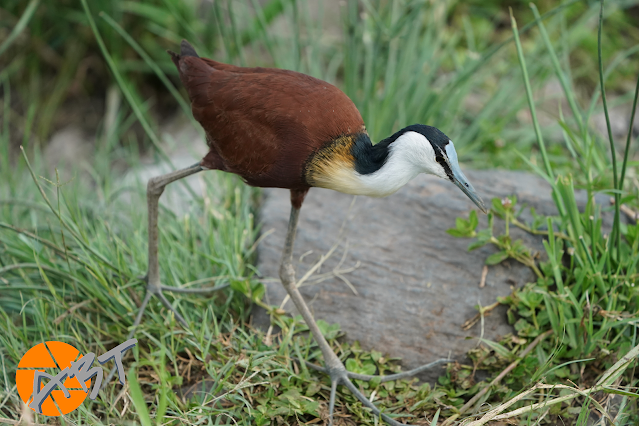
The African Jacana #BirdingSunday

Image
Learn more at https://abt-edu.com African jacanas are conspicuous and unmistakable  birds . They are about 30 cm long, but females are larger than males. They have chestnut upperparts with black wingtips, rear neck, and eyestripe. The underparts are also chestnut in the adults, only in juveniles they are white with a chestnut belly patch. The blue bill extends up as a  coot -like head shield, and the legs and long toes are grey. The jacana has evolved a highly unusually  polyandrous  mating system, meaning that one female mates with multiple males and the male alone cares for the chicks. Such a system has evolved due to a combination of two factors: firstly, the lakes that the jacana lives on are so resource-rich that the relative energy expended by the female in producing each egg is effectively negligible. Secondly the jacana, as a bird, lays eggs and eggs can be equally well incubated and cared for by a parent bird of either sex. This means that the rate-limi...

Becoming a good Birder #ABTRecipeFriday

Image
Learn more at https://abt-edu.com Have good eyes and ears, and a good brain. At its most fundamental level, birding involves seeing and hearing birds, and then processing the visual and aural input to the birder’s brain. Start young. It is more difficult if you begin as an adult or even a late teenager. Don’t get cocky. Teen birders, who, despite brilliant sensory and neural apparatus, are eerily capable of mistaking a common Savannah Sparrow for a mega-rarity Baird’s Sparrow. Stay with it. The longer you bird, the better you learn. Know status and distribution. This information makes a huge difference in the bird identification process. Learn vocalizations of as much birds as you possibly can. Understand behavior. Recognizing behavioral clues is a key component of bird identification. Go naked! You don’t necessarily notice stuff when you’re birding with binoculars or any other equipment. Have fun. Birding doesn’t promise a cure for cancer. Birding doesn’t provide a clear path to world...

FGASA APPRENTICE THEORY INDABA

Image
Learn more at https://abt-edu.com DURATION: 21 Days Full-time   The FGASA APPRENTICE THEORY INDABA is all about ensuring that the highest's standards are maintained in the introduction of new guides to the   industry?   The FGASA APPRENTICE THEORY INDABA brings ‘self-study” and part-time students together, once month, for three weeks in the bush at the AFRICAN BUSH TRAINING campus to attend lectures on all the modules prescribed by FGASA for the   Field Guide Level 1 (NQF2) qualification.   During the three weeks in the bush our qualified and registered FGASA trainers will ‘walk’ you through the syllabus preparing you the best they can for the national exam sittings.   Although the focus is primarily on theoretical training we also do practical work in the Kruger National Park to ensure that students are able to put the theoretical knowledge learned in the classroom into practice when operating out in the bush.   STUDENT FEE: R ...

CONSERVATION MANAGEMENT PROGRAM

Image
Learn more at https://abt-edu.com Duration: 3 Months Full-time   Join the ‘Conservation Services’ community today and contribute to wildlife conservation in Africa... The aim of this course is to provide students with the skills to succeed in a rapidly-changing nature conservation environment where innovation is key. Graduates are equipped with a comprehensive range of technical, managerial, research, communication and life skills for employment in the field of nature conservation. The purpose of this qualification is to supply the nature conservation industry with people who can competently contribute to the conservation of biodiversity and provide knowledgeable assistance to natural resource and reserve managers.   QUALIFICATIONS INCLUDED: Wildlife/Reserve Management, Wilderness Protection (Anti-poaching), Field Ranger Training, Game Ranching/Game Breeding, Wildlife Rehabilitation, Wildlife Research, Conservation Action Planning, And much more... Contact us at in...

3-MONTH GUIDING COMBO PROGRAM

Image
Learn more at https://africanbushtraining.com 3 Months Full-time This Course prepares students for active participation in the African Eco-tourism and Game Lodge industry, by nurturing competent guides, with well formulated career paths in the various speciality fields of a professional guide.  This includes a good knowledge and understanding of the African wilderness and the development of vitally important additional skills such as bush craft, snake handling, first aid, tracking, birding, wildlife photography and environmental education. COURSE CONTENTS: FGASA Apprentice Field Guide (NQF2), Snake Handling, First Aid, Environmental Education, Bush Craft/Survival, Wildlife Photography, Wilderness Tracks/Signs, Advanced Birds Birding Contact us at info@africanbushtraining.com

Become a part of nature with a walking safari #WildWednesday

Image
What better way to experience the ultimate in safari experiences - picture walking through the untouched wild of South Africa, to your left a 1000-year-old Baobab tree, to your right a herd of giraffes getting ready for the day ahead. Step by step, you’re connecting with nature in its rawest form. It’s a magical experience you will never forget. Kruger National Park walking safaris are guided by experienced rangers with an extensive knowledge of the area, the wildlife, birdlife and indigenous vegetation.The camp-staff cook and clean while your guide leads you into close encounters with the African wild. Feel your excitement build as you track the South African Big 5 on your walking safari. On your walk, you’ll learn about the ecology, the birds, the game, the plants and insects, and also how to interpret the signs of the wild, including animal spoor (footprints). When you come face to face with that elephant, or watch that dung beetle labouring with his ball of dung, you'll realise...

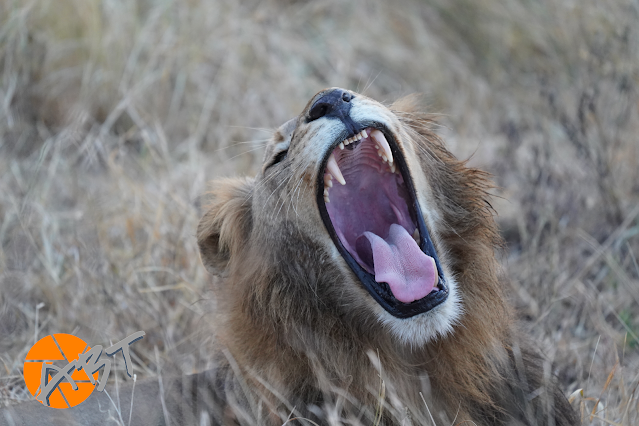
Humans are pushing big cats out of their habitats.#ConservationTuesday

Image
This African Lion's population is steadily decreasing in the wild. In just two decades, populations decreased by 43 percent, and it’s estimated that as few as 23,000 remain today. One of the main causes is the alarming rate at which they are losing their habitats due to expanding human populations and the resulting growth of agriculture, settlements, and roads. As lion habitats shrink, the big cats are being forced into closer quarters with humans. This, coupled with a decrease in their natural prey, causes them to attack livestock. In turn, farmers oftentimes retaliate and kill these big majestic cats.  These big cats are being killed in rituals of bravery, prized as hunting trophies, and, increasingly, for their body parts' perceived medicinal and magical powers. While most cat species are solitary, this big cat is an exception. It has developed a social system based on teamwork, division of labor, and an extended family unit. The average pride consists of about 15 indi...