Posts

STUDY WILDLIFE CONSERVATION

Image
    To succeed as global custodians and future stewards of our planet; conservationists and supporters of wildlife conservation should be well-versed in the underlying principles of natural ecosystems and the 'wilderness' concept...   Through training and educational programs focused on conservation and wildlife management knowledge, African Bush Training in partnership with the International Students Conservation Initiative (ISCI) provides ways to create a lasting base of environmental literacy, stewardship, and competency for people working in conservation.  The ISCI accredited courses introduces participants to the most up-to-date, in-field conservation techniques and practices. The six week full-time programme or one week short-course selection (6 courses), provides a stepping stone for nature lovers looking to possibly pursue a career in wildlife conservation, or are interested in how conservation organisations operate.  AFRICAN BUSH TRAINING  www.abt-...
 ABT WILDLIFE FACTS - VINE (SILVER STRIPED)  HAWK MOTH

Image
Hippotion celerio is a migratory Hawk Moth, restricted to the southern hemisphere. As caterpillars, they can sometimes be pests. The caterpillars grow large and need a lot of food to reach full size! Some of the food plants include Grapevines, Impatiens and Rumex. The adult moths are most active at night. During the day they might be seen resting on rocks and walls, or in the grass. They're common to gardens, but can be found in a variety of habitats where flowers are plentiful. (Brought to you by ABT CONNECT - "The voice for wildlife conservation in Africa") AFRICAN BUSH TRAINING - www.abt-edu.com #africanbushtraining #wildlife #conservation   #krugerpark #photooftheday   #school #Africa #fgasa #fieldguide #traveller #hospitality #training #southafrica #destination #ecotourism #hotelschool #nature #education #courses #wilderness #follow #tourism #travel

ABT WILDLIFE FACTS - FOAM NEST FROG-

Image
 ABT FUN FACT - FOAM NEST FROG: Driving around the bush in the summer months, you often see these foam “balls” hanging from branches over waterholes. These strange looking foam balls are in fact nests of the Foam Nest Frog, also known as the Grey Tree Frog. These frogs are arboreal, which means that they live in trees. To help them move in their arboreal surroundings, they have little sticky pads on the tips of their fingers and toes. These nests are formed when the females secrete a fluid from the oviduct, which they froth into foam, and then start to lay their eggs inside. Several males will join in and deposit their sperm into the nest. As this is a lengthy process, the female needs to rehydrate every so often. The foam will dry and harden around the eggs, and protect it against drought and predators. Once the tadpoles hatch, and grow to about one centimeter, they drop into the water where they continue their life cycle. This can take about 4-5 days. These frogs are also commonl...

WILDERNESS TRACKS & SIGNS COURSE

Image
  Learn more at https://abt-edu.com Contact us at Info@africanbushtraining.com DURATION: 7 Days Full-time Ever wondered what it was like before technology? When you had to follow an animal on foot to understand its habits and behaviour, if your answer is yes then this course is for you!!! Learning to track is a sacred art. It gives you the ability to merge with the wilderness and become one with nature... The course has been developed in partnership with renowned tracking specialists and experts, to provide students with an overview of animal tracks and tracking in remote wilderness areas. The course will give you a comprehensive understanding of the traditional skills of tracking animals, in their natural environment. During the course, learners will develop a keen awareness for all tracks and signs as well as following and finding animals in the bushveld. INCLUDED: Meals, Accommodation, Study Material, Shirt, Cap & Certificate STUDENT FEE: R 8 700:00

Take a look at the Winged Predatory Katydid (Clonia wahlbergi)

Image
  Learn more at https://abt-edu.com Katydids are identified by their long antennae that can grow up to two to three times the length of their body and is covered with sensory receptors to help find their way in the dark. They are notorious for their plant like appearance and for their ability to blend in with vegetation. The katydid gets its name from the way the male and female songs sound.   They create sounds by rubbing a scraper on one forewing against another forewing.   It has hearing organs located inside a slit on its front legs.   Male song organs are located on their front wings and females chirp in response to the males song that sounds like “katy did, Katy didn’t.”   The song is usually used for courtship during the late summer. Katydids have adapted and come up with ways to hide from their predators.   They have excellent camouflage capabilities and are able to pose like leaves and mimic other insects.   Their predators are bats, birds...

2-YEAR EXCLUSIVE BUSH CAREER PROGRAM

Image
  Learn more at https://abt-edu.com 2 Years = 20 Certificates + 1 Year Work Placement   This is the ultimate BUSH CAREER kick-starter...With no prior knowledge or experience needed, this 2-YEAR EXCLUSIVE BUSH CAREER PROGRAM could help you take the biggest step in your life towards a successful career in the African bush... There are few global sectors as large, lucrative or resilient as the Field Guiding, Wildlife and Hospitality industry. An incredibly diverse sector that creates millions of job openings each year, offering career opportunities that are enjoyable, accessible and rewarding in the extreme. Lodges, reserves and operators throughout Southern Africa and Africa are constantly on the lookout for talented individuals and leadership figures to add to their ranks. More importantly, the wildlife and hospitality sector is known for its commitment to promoting from within, investing heavily in the career development of employees at all levels. Even from an entry-l...

The purple-crested turaco (Tauraco porphyreolophus) is a species of bird in the family Musophagidae.

Image
  Learn more at https:abt-edu.com The purple-crested turaco (Tauraco porphyreolophus) is a species of bird in the family Musophagidae. It clambers acrobatically through riverine woodland and savanna thickets. In flight it explodes from the canopy with distinctive deep red panels in the wings. It produces a distinctive croaking “khoh-khoh-khoh-khoh….” that gets progressively louder before suddenly stopping. The Purple-crested Turaco is a fruit-eater. Its glossy and colourful plumage makes this bird very attractive for humans. Turacos have been hunted in the past for their beautiful red flight feathers used as adornments by African people. Today, this species has adapted to suburban life, especially in Durban. The Purple-crested Turaco is frugivorous and feeds on fruits from numerous plant species. It forages in canopy, picking the fruits by perching at the end of the branches. This bird does not feed on the ground, except in captivity. The small fruits are swallowed whole, whe...

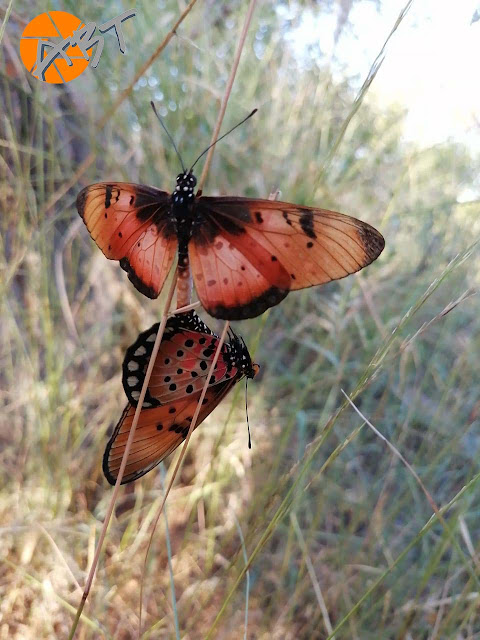
The Natal Acraea (Acraea natalica) is a butterfly of the Nymphalidae family.

Image
  Learn more at https://abt-edu.com ©Estian Kruger Butterflies have a Holo-metabolic lifecycle and belong to the Order Lepidoptera. They undergo complete physical changes, i.e. insects undergo four developmetal stages, the embryo, larva, pupa, and adult. This is a meduim sized butterfly with a wingspan of about 59mm. Males are pinkish red , females are brownish red. Their wings are spotted with black and with black bases. Adults are on wing year round, with a strong peak in late summer in southern Africa. v   What is the difference between a butterfly and a moth ?   Butterflies                                                                   ...

Argemone ochroleuca (Mexican Prickly Poppy) an invasive plant.

Image
  Learn more at www.abt-edu.com Invasive alien vegetation refers to plants brought to South Africa from other countries, both intentionally and unintentionally, that cause human, environmental or economic harm. Without natural enemies, these plants reproduce and spread rapidly, taking valuable water and space from our indigenous plants. This plant is native to Mexico and has also been introduced to many temperate and tropical regions of the world where is considered as an invasive weed. Commonly found as a weed of roadsides, mining dumps, rabbit warrens, recently cultivated paddocks, waste places, and over grazed pastures. It often occurs as dense stands in sandy stream beds and alluvial flats associated with intermittent inland streams. An extremely hardy pioneer plant, it is tolerant of drought and poor soil, often being the only cover on new road cuttings or verges. It has bright yellow latex. It is poisonous to grazing animals, and it is rarely eaten, but it has been used m...

ANTI-POACHING CAREER EXPERIENCE

Image
  Learn more at https://abt-edu.com 7 Days full-time Get a taste of what it takes to be at the front lines of wildlife conservation in Africa. During this action-packed 7 days students will be taken through the realities of wilderness protection and shown in true hands-on fashion what is being done to keep wildlife safe from poaching and illegal animal harvesting... STUDENT FEE: R 8 700:00 INCLUDED: Meals, Accommodation, Study Material, Shirt, Cap & Certificate COURSE CONTENTS: Anti-poaching Methods & Techniques, Patrols, Ambush, Survival & Bush Craft, Dealing with Dangerous Animals, and much more... Contact us at info@africanbushtraining.com

A Burchell's zebra ( Equus quagga burchellii), a subspecies of plains zebra.

Image
  Learn more at https://abt-edu.com AVERAGE LIFE SPAN IN THE WILD: 25 years No animal has a more distinctive coat than the zebra. Each animal's stripes are as unique as fingerprints—no two are exactly alike—although each of the three species has its own general pattern. Zebras are social animals that spend time in herds. They graze together, primarily on grass, and even groom one another. Plains zebras are the most common species. They live in small family groups consisting of a male (stallion), several females, and their young. These units may combine with others to form awe-inspiring herds thousands of head strong, but family members will remain close within the herd. Zebras must be constantly wary of lions and hyenas. A herd has many eyes alert to danger. If an animal is attacked, its family will come to its defense, circling the wounded zebra and attempting to drive off predators. Plains Zebra are much less numerous than they once were, because of human activities suc...

Drakensberg Creeper (Opisthacanthus validus) #CritterThursday

Image
Learn more at https://abt-edu.com Scorpions stridulate by rubbing their chelicerae (mouthparts) together to produce a hissing sound. In some cases, they may drag the telson (sting) over the body segments (tergites) to produce a sudden scraping sound in an attempt to frighten off a predator. This is a medium sized scorpion of around 9 cm with the tail extended.   It is black in colour, but often with a muddy appearance. It sometimes has lighter coloured legs and a lighter tipped tail. It is common across its range, occurring under rocks often at high altitudes in areas like the Drakensberg.The sting of this species may cause pain but is not medically important. Contact us at info@africanbushtraining.com

The lowland nyala or simply nyala (Tragelaphus angasii) #WildWednesday

Image
Learn more at https://abt-edu.com The nyala is mainly active in the early morning and the late afternoon. It generally browses during the day and during the night in the rainy season. As a herbivore, the nyala feeds upon foliage, fruits and grasses, with sufficient fresh water. As a shy animal, it prefers water holes rather than open spaces. The nyala does not show signs of territoriality, and individuals areas can overlap each others. They are very cautious creatures. Old males live alone, but single sex or mixed family groups of up to 10 individuals can be found. These inhabit thickets within dense and dry savanna woodlands. The main predators of the nyala are lion, leopard and, while baboons and raptorial birds hunt for the juveniles. Mating peaks during spring and autumn. Males and females are sexually mature at 18 and 11–12 months of age respectively, though they are socially immature until five years old. After a gestational period of seven months, a single calf is born. Cont...

The Puff adder is responsible for causing the most snakebite fatalities in Africa. - Wikipedia

Image
Learn more at https://abt-edu.com They are short stocky snakes that occur in a variety of colours, from sandy brown, grey, bright yellow & black in some parts of its range. As South Africa’s most widely-spread, venomous snake, the Puff Adder occurs in a large range of habitat, from coastal bush, grassland, fynbos habitat. The Puff Adder along withe the Mozambique Spitting Cobra account for the majority of serious snake bites South Africa. The Puff Adder is a snake with excellent camouflage, and it prefers to sit and wait for opportunity when it comes to feeding. These snakes may remain in an ambush position for several weeks, waiting for a potential meal to pass by. They have a powerful cytotoxic venom which can lead to extreme pain, severe swelling, and blistering of the skin. Anti-venom: Polyvalent anti-venom is used in the effective treatment of bites. The name ‘puff adder’ stems from the snake’s habit of inflating itself and hissing when threatened. The noise produced is a ...

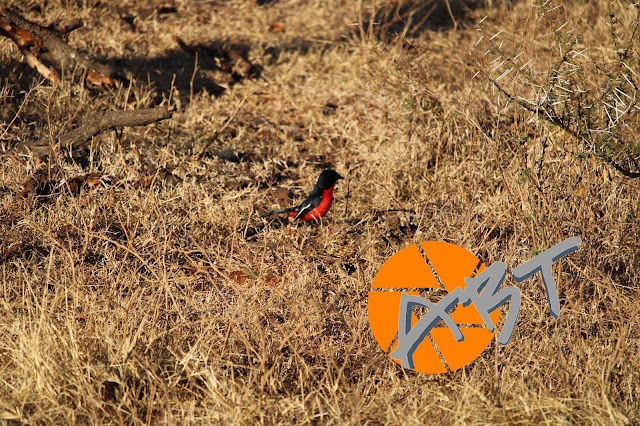
The crimson-breasted shrike is non-migratory. #BirdingSunday

Image
Learn more at https://abt-edu.com It mainly eats insects, gleaning prey from the leaves and trunks of trees, often flying to the ground to feed on ants or some fallen fruit. The following food items have been recorded in its diet: Invertebrates Formicidae (ants) Coleoptera (beetles) Lepidoptera (caterpillars) Fruit Both sexes construct the nest, which is a tidy cup made almost entirely of  Acacia  tree bark, collected from trunks and branches about 50-90 metres from the nesting site and lined with grass and rootlets. It is usually bound with spider web to a fork in the main stem of a plant, or occasionally onto a horizontal branch. Most of the construction work is done in the early morning, and it is usually complete after about 4-6 days. Egg-laying season is from August-january, peaking from October-November. It lays 2-3 eggs, which are incubated by both sexes for about 15-17 days.The chicks are fed and brooded by both parents, leaving the est at about 18-20 ...

The Mopane tree and its importance #BotanyFriday

Image
Learn more at https://abt-edu.com Colophospermum mopane, commonly called mopane,mopani,balsam tree,butterfly tree,or turpentine tree, is a tree in the legume family (Fabaceae), that grows in the far   very hot northern parts of southern Africa. The tree only occurs in Africa and is the only species in genus Colophospermum. Its distinctive butterfly-shaped (bifoliate) leaf and thin seed pod make it easy to identify. In terms of human use it is, together with camel thorn and leadwood, one of the three regionally important firewood trees. Mopane wood is one of southern Africa's heaviest and is difficult to work because of its hardness.However, this also makes it termite resistant. For this reason it has long been used for building houses and fences, as railway sleepers and as pit props. The termite-resistance and rich, reddish colouring also make it popular for flooring. Outside Africa, mopane is gaining popularity as a heavy, decorative wood, its uses including aquarium ornaments, ...

Jumping spiders are a group of spiders that constitute the family Salticidae.#CritterThursday

Image
Learn more at https://abt-edu.com As of 2019, this family contained over 600 described genera and over 6000 described species,making it the largest family of spiders at 13% of all species. –Wikipedia Jumping spiders have some of the best vision among arthropods and use it in courtship, hunting, and navigation. Although they normally move unobtrusively and fairly slowly, most species are capable of very agile jumps, notably when hunting, but sometimes in response to sudden threats or crossing long gaps. Both their book lungs and tracheal system are well-developed, and they use both systems (bimodal breathing). Jumping spiders are generally recognized by their eye pattern. All jumping spiders have four pairs of eyes, with the anterior median pair being particularly large. Although jumping spiders are generally carnivorous, many species have been known to include nectar in their diets. Jumping spiders conduct complex, visual courtship displays using both movements and physical bodily ...

The giant jewel beetle is a favourite protein-rich insect delicacy in many rural communities of Limpopo Province.#ConservationTuesday

Image
Learn more at https://abt-edu.com Their lazy nature makes them an easy catch, as they spend most of their time clinging to thorny bush trees. Adults feed on foliage (especially of Vachellia, Senegalia trees and Dichrostachys species) as well as nectar. Larvae are free-living root-feeders. Sternocera orissa displays sexual reproduction. Adult females are generally bigger than their male counterparts. Females lay eggs (during mid-December to late January) in bark crevices, and larvae tunnel into wood and plant stems. At times, eggs are laid into the soils or dropped onto the ground. Females have a single reproductive cycle annually. Adults are relatively short-lived, whereas the immature stages can take as long as 35 years to complete their development. Giant jewel beetles tend to be social and often semi-gregarious, occurring in small communities. No direct predators are known for Sternocera orissa. However, resource competition (i.e. for nectar and pollen) is common; since Vachellia ...

The African clawed frog (Xenopus laevis, also known as the xenopus, African clawed toad, African claw-toed frog or the platanna)

Image
Learn more at https://abt-edu.com These “flat frogs” live in natural water-bodies, but you might see them in your garden pond. They also don’t mind living in the local sewerage works. At the end of the rainy season, they bury themselves under wet mud, where they hibernate until the next rains. Common platannas feed in the water on any living creatures they can overpower. Their prey includes frogs and tadpoles (including their own kind), insects and other invertebrates (mosquito larvae are consumed by young frogs), small fish, young birds and mice that fall into the water. They even feed on carrion in the water. In the 1930s, it was discovered that a female common platanna would spawn if injected with the urine of a pregnant woman (the hormone chorionic gonadotropin being the active ingredient). In the 1940s and ‘50s, this was the only available pregnancy test and many hospitals around the world kept and bred platannas so that they could perform such tests. Contact us at info@africa...

The African dusky flycatcher, dusky-brown flycatcher or dusky alseonax (Muscicapa adusta)#BirdingSunday

Image
Learn more at https://abt-edu.com The African dusky flycatcher is 13 cm long and weighs around 11 g. Its upperparts are plain brown, with the only facial marking being an indistinct narrow eye-ring. The chin is plain pale grey, and the rest of the underparts are grey-brown with indistinct streaks. The short, straight, laterally flattened bill is black, the legs and feet are grey, and the eyes are brown. The sexes are similar, but the juvenile is spotted with buff above, and is whitish spotted with brown below. The African dusky flycatcher has soft, high-pitched "tzeeet" and tsirit calls. The African dusky flycatcher builds a cup-shaped nest in a tree cavity a few metres above the ground, and lays two or three green eggs. The hole in the tree is normally reused in the next breeding season. This species is monogamous, mating for life. The African dusky flycatcher is usually seen singly or in pairs. It forages from an open perch for insects typically taking its prey in a s...