Posts

The Mopane tree and its importance #BotanyFriday

Image
Learn more at https://abt-edu.com Colophospermum mopane, commonly called mopane,mopani,balsam tree,butterfly tree,or turpentine tree, is a tree in the legume family (Fabaceae), that grows in the far   very hot northern parts of southern Africa. The tree only occurs in Africa and is the only species in genus Colophospermum. Its distinctive butterfly-shaped (bifoliate) leaf and thin seed pod make it easy to identify. In terms of human use it is, together with camel thorn and leadwood, one of the three regionally important firewood trees. Mopane wood is one of southern Africa's heaviest and is difficult to work because of its hardness.However, this also makes it termite resistant. For this reason it has long been used for building houses and fences, as railway sleepers and as pit props. The termite-resistance and rich, reddish colouring also make it popular for flooring. Outside Africa, mopane is gaining popularity as a heavy, decorative wood, its uses including aquarium ornaments, ...

Jumping spiders are a group of spiders that constitute the family Salticidae.#CritterThursday

Image
Learn more at https://abt-edu.com As of 2019, this family contained over 600 described genera and over 6000 described species,making it the largest family of spiders at 13% of all species. –Wikipedia Jumping spiders have some of the best vision among arthropods and use it in courtship, hunting, and navigation. Although they normally move unobtrusively and fairly slowly, most species are capable of very agile jumps, notably when hunting, but sometimes in response to sudden threats or crossing long gaps. Both their book lungs and tracheal system are well-developed, and they use both systems (bimodal breathing). Jumping spiders are generally recognized by their eye pattern. All jumping spiders have four pairs of eyes, with the anterior median pair being particularly large. Although jumping spiders are generally carnivorous, many species have been known to include nectar in their diets. Jumping spiders conduct complex, visual courtship displays using both movements and physical bodily ...

The giant jewel beetle is a favourite protein-rich insect delicacy in many rural communities of Limpopo Province.#ConservationTuesday

Image
Learn more at https://abt-edu.com Their lazy nature makes them an easy catch, as they spend most of their time clinging to thorny bush trees. Adults feed on foliage (especially of Vachellia, Senegalia trees and Dichrostachys species) as well as nectar. Larvae are free-living root-feeders. Sternocera orissa displays sexual reproduction. Adult females are generally bigger than their male counterparts. Females lay eggs (during mid-December to late January) in bark crevices, and larvae tunnel into wood and plant stems. At times, eggs are laid into the soils or dropped onto the ground. Females have a single reproductive cycle annually. Adults are relatively short-lived, whereas the immature stages can take as long as 35 years to complete their development. Giant jewel beetles tend to be social and often semi-gregarious, occurring in small communities. No direct predators are known for Sternocera orissa. However, resource competition (i.e. for nectar and pollen) is common; since Vachellia ...

The African clawed frog (Xenopus laevis, also known as the xenopus, African clawed toad, African claw-toed frog or the platanna)

Image
Learn more at https://abt-edu.com These “flat frogs” live in natural water-bodies, but you might see them in your garden pond. They also don’t mind living in the local sewerage works. At the end of the rainy season, they bury themselves under wet mud, where they hibernate until the next rains. Common platannas feed in the water on any living creatures they can overpower. Their prey includes frogs and tadpoles (including their own kind), insects and other invertebrates (mosquito larvae are consumed by young frogs), small fish, young birds and mice that fall into the water. They even feed on carrion in the water. In the 1930s, it was discovered that a female common platanna would spawn if injected with the urine of a pregnant woman (the hormone chorionic gonadotropin being the active ingredient). In the 1940s and ‘50s, this was the only available pregnancy test and many hospitals around the world kept and bred platannas so that they could perform such tests. Contact us at info@africa...

The African dusky flycatcher, dusky-brown flycatcher or dusky alseonax (Muscicapa adusta)#BirdingSunday

Image
Learn more at https://abt-edu.com The African dusky flycatcher is 13 cm long and weighs around 11 g. Its upperparts are plain brown, with the only facial marking being an indistinct narrow eye-ring. The chin is plain pale grey, and the rest of the underparts are grey-brown with indistinct streaks. The short, straight, laterally flattened bill is black, the legs and feet are grey, and the eyes are brown. The sexes are similar, but the juvenile is spotted with buff above, and is whitish spotted with brown below. The African dusky flycatcher has soft, high-pitched "tzeeet" and tsirit calls. The African dusky flycatcher builds a cup-shaped nest in a tree cavity a few metres above the ground, and lays two or three green eggs. The hole in the tree is normally reused in the next breeding season. This species is monogamous, mating for life. The African dusky flycatcher is usually seen singly or in pairs. It forages from an open perch for insects typically taking its prey in a s...

Opuntia, commonly called prickly pear. #BotanyFriday

Image
Learn more at https://abt-edu.com They are a succulent shrub or small tree with paddle-shaped stems armed with spines. This plant is leafless. It is an invasive alien from Central America. The fruits are plum-shaped, spiny and edible. Habitat of the Sweet Prickly Pear  - It grows across South Africa, having spread over the centuries after been imported from Mexico. The Prickly Pear is one of the most used alien plants in South Africa, so much so that many now believe the plant is a South African species. The prickly pear is used to build stockades for domestic animals – and is used as feed for the animals. Many farmhouses in South Africa are enclosed in a Prickly Pear fence. The fruit is used today to make jams and various drinks. In many areas, such as wilderness areas the plant is seen as a pest and steps are taken to eradicate it. Contact us at info@africanbushtraining.com

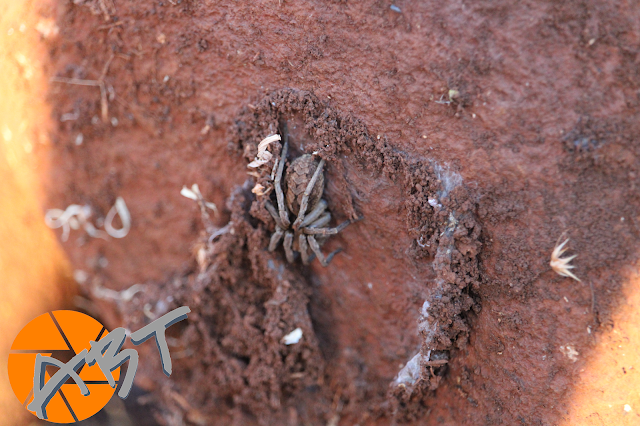
Spiders are arachnids, not insects. Other members of the arachnid family include scorpions, mites, ticks and harvestmen.#CritterThursday

Image
Learn more at https://abt-edu.com The greatest threat to spiders is habitat loss, although some spider species are also threatened by the pet trade. Most species are carnivorous, either trapping flies and other insects in their webs, or hunting them down. They can’t swallow their food as is, though—spiders inject their prey with digestive fluids, then suck out the liquefied remains. Though not all spiders build webs, every species produces silk. They use the strong, flexible protein fiber for many different purposes: to climb (think Spider Man), to tether themselves for safety in case of a fall, to create egg sacs, to wrap up prey, to make nests, and more. Most spider species have eight eyes, though some have six. Despite all of those eyes, though, many don’t see very well. A notable exception is the jumping spider, which can see more colors than humans can. Using filters that sit in front of cells in their eyes, the day-hunting jumping spider can see in the red spectrum, green s...