Posts

3 - Months Guiding Combo Course #CareerSaturday

Image
©Ludique Swart COURSE OVERVIEW The 3-MONTHS GUIDING COMBO PROGRAM prepares students for active participation in the African Eco-tourism and Game Lodge industry, by nurturing competent guides, with well formulated career paths in the various speciality field of a professional guide.  This includes a good knowledge and understanding of the African wilderness and the development of vital skills such as bush craft, snake handling, first aid, tracking, birding, wildlife photography and environmental education. The course has been structured to include the national skills programmes as required by the South African Tourism Act, to be recognized and registered as a legal nature and tourist guide. These skills programmes are trained using the syllabus of the Field Guides Association of Southern Africa (FGASA) for the Apprentice Field Guide (NQF2) Qualification and is fully endorsed by CATHSSETA (Culture, Arts, Tourism, Hospitality and Sport Sector Education Training Authority). In ad...

Recipe to being an excellent Field Guide #ABTRecipeFriday

Image
©Hannalize Van Der Colff A Field Guide needs the following traits : An inherent passion for observing, sharing and learning about wildlife. The ability to work on his/her own with enthusiasm. Flexible in that he/she is willing to change plans on the spur of the moment and is willing to innovate in the interests of the guest and the company.  Confident but humble.  Co-operative – and keen to work with the balance of the team in the interests of the lodge and the guests. Organized – with attention to detail and time. A developmental approach to his/her staff and colleagues. Professional and neat in personal appearance and image. A person who can live in remote places. A person with an upbeat, positive attitude. Must be willing to do physical, hard work, like mend a fence. May be able to host at dinner / drinks. Ensuring guest safety at all times. Helping problem animal controll. Learn more at https://africanbushtraining.com

Investigating Antlions with African Bush Training #CritterThursday

Image
Learn more at https://africanbushtraining.com ©Hannalize Van Der Colff The Antlion,  also known as Lacewings, are neither ant nor lion. It is actually the larvae of about 2000 species of the family myrmeleontidae. It got its name due to the fact that they are predators and mainly feed on ants. Antlions are found in sandy areas such as dry woodland, sandy river banks and even on roads. Antlion larvae eat small arthropods, while adults of some species eat pollen, nectar or other small insects. The  antlion  larva has a robust fusiform body, a very plump abdomen, and a thorax bearing three pairs of walking legs. Antlion larvae are very popular for their hunting habits. These tiny predators will dig small pits and wait under the sand with just its jaws above the surface waiting for insects such as ants to pass by. When the unsuspecting prey falls into the pit and try to escape, the antlion will alternate the sides of the pit causing it to collapse and bring their prey even cl...

The flightless ostrich is the world's largest bird.#WildWednesday

Image
Learn more at https://africanbushtraining.com They roam African savanna and desert lands and get most of their water from the plants they eat. Though they cannot fly, ostriches are fleet, strong runners. They can sprint up to 69 kilometers an hour. They may use their wings as "rudders" to help them change direction while running. An ostrich's powerful, long legs can cover 3 to 4 metre in a single stride. These legs can also be formidable weapons. Ostrich kicks can kill a human or a potential predator like a lion. Each two-toed foot has a long, sharp claw. Ostriches live in small herds that typically contain less than a dozen birds. Contrary to popular belief, ostriches do not bury their heads in the sand. The old saw probably originates with one of the bird's defensive behaviors. At the approach of trouble, ostriches will lie low and press their long necks to the ground in an attempt to become less visible. Their plumage blends well with sandy soil and, from a distanc...

Impacts and Control of Invasive Alien Plants in South Africa #ConservationTuesday

Image
Invasive alien species are plants of exotic origin, which are invading areas that were previously ecological niches containing only indigenous vegetation . Invasive alien plants are a significant problem in South Africa as they have negative impacts on the environment by decreasing both surface water runoff and groundwater recharge, causing direct habitat destruction, intensify flooding, and increasing the risk and intensity of wildfires (Görgens and Van Wilgen, 2004).  With invasive plants having high evaporation rates, they often use more water than surrounding indigenous plants, which has a direct impact on stream flows and groundwater reserves. In South Africa, an estimate of 1.44 billion m 3  of water is lost to invasive plants annually. To put it in perspective, this amount of water loss is enough to provide 3.38 million households with four inhabitants with water for a year or to irrigate 120 000 hectares of cropland (WWF, 2016). According to the Biodiversity Act 1...

Interesting Fact's about tortoises #ReptileMonday

Image
Tortoises Live on land. Have clawed feet. Heads are drawn back into the shell.  Tortoises and terrapins do not have teeth. Instead they have a beak or smooth cutting edge on the upper jaw, and a serrated cutting edge on the bottom jaw, both of which are composed of horn-like material. Tortoises all have eyelids as well as external ear openings, which are covered by a thin skin-like tissue called the tympanic membrane. Compensating for poor hearing, tortoises have a good sense of smell, very good vision and are able to distinguish certain colours. Water is stored in an anal sac called the bursa. This water is used when needed to soften the soil for egg- laying or reabsorbed for bodily functions. The gender of the hatchling is determined  by the egg incubation temperature : females at higher temperatures  (31 to 34°C) and males are produced at lower temperatures.(26 to 30°C) The leopard tortoise is a member of the Small 5 (along with the rhino beetle, th...

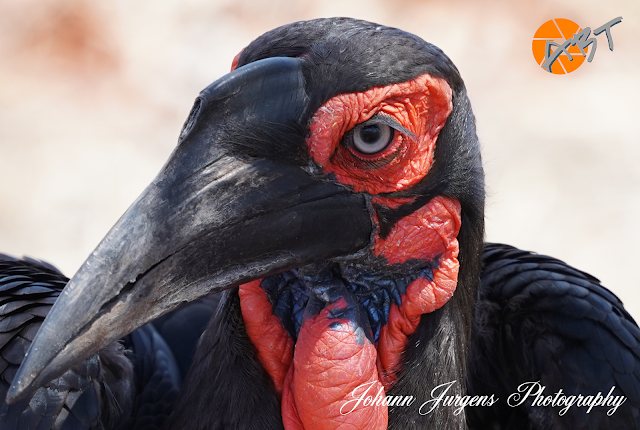
Southern Ground - Hornbill heading towards extinction #BirdingSunday

Image
Learn more at https://africanbushtraining.com These hornbills have one of the slowest reproductive rates in the bird kingdom, producing only one chick approximately every 9 years. They are co-operative breeders, with just one dominant breeding pair in a social group, and the rest of the birds being helpers. The ground hornbills are the only birds in the hornbill family which do not seal the entrances of their nests when eggs are laid. The nests, which are returned to every year, are created in crevices such as large holes in tree trunks, and are generally situated a few metres off the ground.  Although 2 eggs are laid in early summer, the chicks hatch between 3-14 days apart. Only one chick generally survives, with the other starving to death. For the first month of incubating her eggs, the female is fed by both her mate and the helpers. After about 4 weeks she begins to leave the nest. Juveniles are dependent on their parents for up to one year and will stay with them for several ...